.png)


Pest Profile: Squirrels
Squirrels may look harmless chattering in your yard but once they're inside your attic chewing wiring, shredding insulation, and breeding fast. Once they establish a den, they won't leave on their own.
Last Updated: September 9, 2026
Quick Facts about Squirrels
Physical Identification of a Squirrel
The Greater Toronto Area is home to two squirrel species commonly found in structures: the Eastern Grey Squirrel and the smaller American Red Squirrel. Correct identification matters because behaviour, den timing, and access patterns differ between the two.

Black Eastern Grey Squirrel
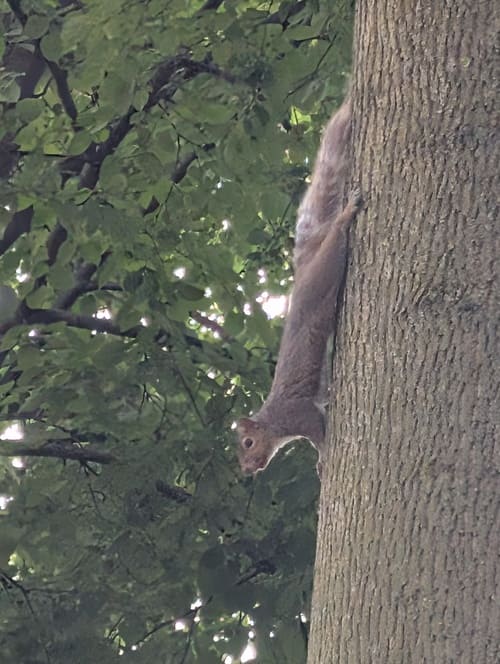
Grey Eastern Grey Squirrel
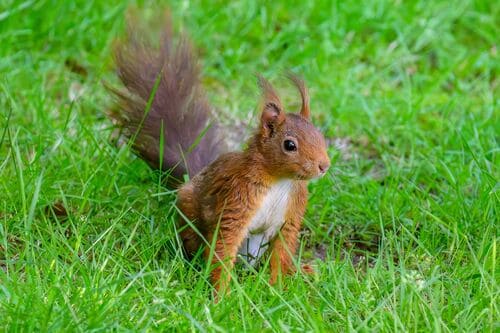
Red Squirrel (source: Pexels Royalty Free Stockphotos, Photographer: Adriaan Westra)
Squirrel Behaviour & Biology
Squirrels are highly active daytime rodents whose behaviour is driven by two priorities: food acquisition and shelter security. Both drives bring them into direct conflict with homeowners.
- Strictly Daytime Activity: Unlike raccoons or rodents, squirrels are active exclusively during daylight hours. If you hear rapid, scurrying movement and scratching sounds in the daytime are signs of squirrel activity. Nighttime sounds typically indicate rats, mice, or raccoons instead.
- Scatter Cache Storage: Grey squirrels cache food in thousands (up to 3,000 nuts per year) of separate locations rather than a single central store. They rely on spatial memory to recover caches but forget an estimated 25% of them which end up inadvertently planting trees across the landscape. This hoarding drive makes yards, gardens, and even attic insulation attractive food storage sites.
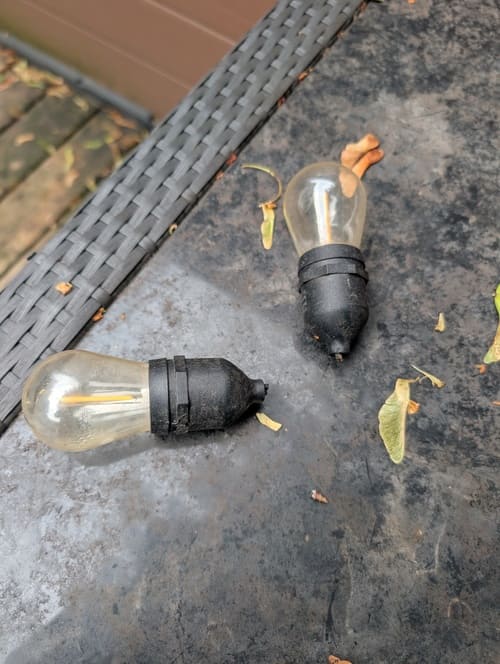
- Compulsive Gnawing: Squirrel incisors grow approximately 6 inches (15 cm) per year and must be constantly worn down through gnawing. This is not destructive behaviour by choice but a biological necessity. In attics and wall voids, squirrels will gnaw on whatever is available: roof timbers, insulation, PVC pipes, and electrical wiring.
- Drey & Den Site Selection: Squirrels build two types of nests: dreys (large leafy nests visible in tree branches) and cavity dens (inside hollow trees, attics, wall voids, and chimneys). Cavity dens are strongly preferred for raising young which is why attics become targets. A female will return to the same den site for multiple breeding seasons.
- Territorial Vocalizations: Squirrels are among the most vocal urban wildlife species. Red squirrels are particularly aggressive defenders of their territory and produce a rapid chattering calls when threatened. Grey squirrels use a variety of calls and tail-flagging signals to communicate danger, aggression, and mating availability.
- No True Hibernation: Squirrels do not hibernate. They remain active year-round relying on cached food stores and body fat during winter. In cold weather they may remain in their den for several days during severe weather but they emerge regularly to forage. This means squirrel attic activity continues through all four seasons.
Squirrel Diet & Foraging Habits
Squirrels are opportunistic omnivores whose diet shifts seasonally. The first step in prevention is understanding what attracts them to your property.
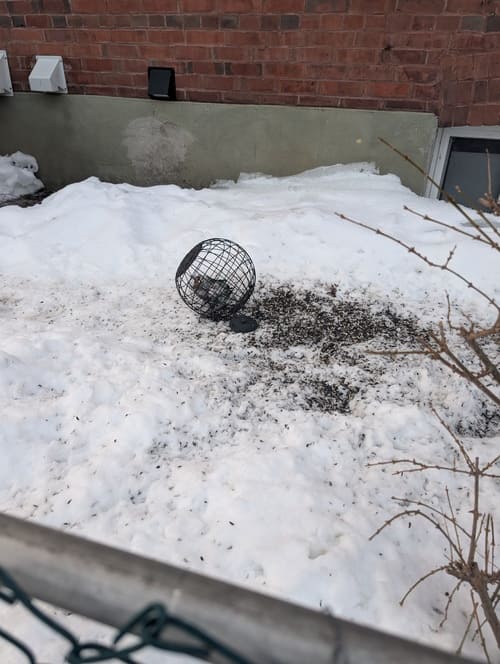
Bird Feeders Are Squirrel Magnets: Bird feeders are one of the single biggest contributors to squirrel activity near homes. Squirrels are capable climbers and jumpers capable of reaching a feeder within 3 metres of a roofline, fence, or tree. If squirrel activity is a concern, move your feeders well away from the structure or switch to squirrel-proof feeders with weight-activated shutoffs.
Squirrel Reproduction & Life Cycle
Squirrels breed twice a year with the spring litter being the most critical period for homeowners. A female that has found an attic den will be strongly motivated to return and even more difficult to remove when kits are present.
- Breeding Season 1 (December – February): The first breeding season occurs in late winter with peak mating activity in January and February. Males compete vigorously for access to females often chasing them for hours through trees. The first litter is born in March or early April.
- Breeding Season 2 (May – June): A second breeding cycle occurs in late spring. This litter is typically born in July or August when food resources are most abundant. Females that lost their first litter may attempt a second nesting. Two litters per year means squirrel populations can rebuild quickly after removal.
- Gestation period (44 Days): Gestation is short at just 44 days. Females seek a secure and sheltered den site. Den sites include hollow trees in wild areas, attics and wall voids in urban environments in the weeks before giving birth. This pre-birth denning drive is when most attic intrusions occur.
- Birth & Kit Development: Litters of 2–4 kits are born blind, deaf, and hairless. Their eyes open around 4–5 weeks. Kits begin venturing outside the den at 7–8 weeks and are weaned at 8–10 weeks. They become fully independent at 12–14 weeks but may stay near the mother's territory through their first season.
- Sexual Maturity (10–12 Months): Most grey squirrels reach sexual maturity within their first year and begin breeding in the spring following their birth. This rapid maturation combined with two litters per year enables squirrel populations to recolonize a location quickly if exclusion work is incomplete.
Baby Season Protocol (March–April and July–August): Squirrel kits are present in attics twice a year around March through April (first litter) and July through August (second litter). DO NOT Attempt removal or sealing entry points while kits are inside will trap them and the mother. This will result in the kits dying inside your walls creating a severe odour problem, secondary fly and beetle infestations, and potential structural contamination. Our technicians conduct a full inspection before any work begins to confirm the presence of kits.
Squirrel Habitat, Range & Urban Density
The Eastern Grey Squirrel is arguably the most urbanized wildlife species in North America. Its combination of intelligence, adaptability, and dietary flexibility has made it a fixture and frequent problem in residential neighbourhoods across southern Ontario.
✔ Native range — Eastern North America from Manitoba to the Atlantic coast.
✔ Urban population density — Urban and suburban areas support squirrel densities far exceeding what natural forests could sustain due to abundant food, minimal predation, and suitable den sites.
✔ Home range — Typically adults stay within 0.5–4 hectares; smaller range in food-rich densely concentrated urban areas.
✔ Vertical habitat use — Squirrels exploit the full vertical range of the urban landscape from underground bulb gardens to rooftops and attic vents near the roof. In cities, squirrels run along the electric wiring and jump from tree top to tree top.
✔ Year-round residency — Unlike migratory birds or hibernating mammals, squirrels remain active and present throughout all four seasons meaning structural entry points are in use all year-round.
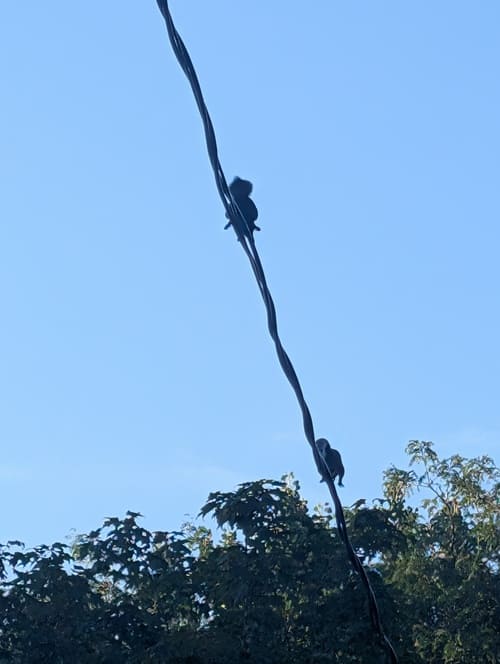
Eastern Grey Squirrels dominate most urban and suburban neighbourhoods in southern Ontario. American Red Squirrels are more commonly found in properties adjacent to or surrounded by mature conifer stands. Red squirrels are extremely territorial and a single resident red squirrel will aggressively exclude all others from its core territory while grey squirrel populations can reach high local densities with overlapping ranges.
Property Damage Squirrels Cause
Despite their small size, squirrels cause damage that is disproportionately costly and dangerous. Their compulsive gnawing behaviour and preference for attic denning make them one of the most destructive urban wildlife species.
- Electrical Wiring (Fire Hazard): Exposed electrical wiring is one of the leading causes of attic fires in North America. Squirrels are attracted to the warmth and texture of wire insulation. A single chewed wire can create an arc fault that ignites surrounding insulation. Any confirmed squirrel activity in an attic should prompt an electrical inspection.
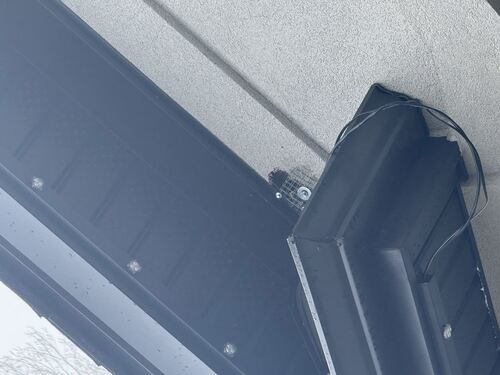
- Structural Damage to Entry Points: Squirrels enlarge natural gaps and weak points in the roofline to gain access. Rotting fascia boards, aging soffits, deteriorating roof vents, and poorly sealed gable end vents are all exploited. A gap as small as 4 cm (1.5 inches) similar to the size of a golf ball is sufficient for a grey squirrel to enter.
- Insulation Damage & Contamination: Squirrels flatten, compress, and displace attic insulation to create nesting cavities reducing its thermal performance dramatically. Nesting materials, food caches, urine, and feces contaminate the insulation. In severe cases, full insulation removal and replacement is required adding a significant expense to the clean up process.
- Water Infiltration from Entry Damage: The holes squirrels create or enlarge in the roofline allow water ingress during rain and snowmelt. Even a small breach in fascia or soffit can lead to rot, mould growth, and ceiling damage. Entry point damage caught early is a quick repair but if left unaddressed it can compromise the roof structure.
- Garden & Yard Damage: Squirrels dig up freshly planted bulbs, raid vegetable gardens, strip bark from young trees, and harvest fruit before it ripens. They will dig hundreds of food caches in lawn areas leaving the soil turf patchy and pitted. Bird feeders are routinely emptied overnight.
- Plumbing & HVAC Interference: Squirrels gnaw on PVC plumbing pipes, HVAC ductwork, and furnace flues in attic and crawl space areas. Chewed ductwork reduces heating and cooling efficiency and can introduce outside air and pests into the living space. Gnawed flue liners create carbon monoxide hazards.

Squirrel Health Risks & Disease Considerations
Squirrels present fewer direct disease risks to humans than raccoons, but they are not without health concerns — particularly once they are established inside a structure.
⚠ Salmonella — Squirrel droppings can harbour Salmonella bacteria. Contact with feces or contaminated surfaces such as the in attics where children play or HVAC systems draw air can pose a transmission risk. Attic cleanup after squirrel removal should always use proper PPE.
⚠ Leptospirosis — Like most small mammals, squirrels can carry Leptospira bacteria in their urine. Contamination of soil, standing water, or building materials poses a risk to humans and pets through skin contact or ingestion. More commonly a concern in crawl spaces and basements.
⚠ Ringworm (Dermatophytosis) — Squirrels can carry dermatophyte fungi that cause ringworm in humans and pets. Direct contact with an infected animal or its nesting materials is the primary transmission route. Risk is low with normal precautions but elevated during cleanup of nesting sites.
⚠ Fleas, Ticks & Mites — Squirrels introduce fleas, ticks, and mange mites into the structures they inhabit. Once the squirrel is removed, displaced parasites will actively seek new hosts often pets or humans. Flea and mite treatment of the affected attic area following squirrel removal is strongly recommended.
⚠ Tularemia — A bacterial infection (Francisella tularensis) that squirrels can carry. Transmission to humans is rare but possible through direct contact with an infected animal, its blood, or through tick or deer fly bites. Always use gloves when handling any wild animal carcass.
⚠ Secondary Pest Infestations — Squirrel nesting materials and cached food attract a variety of secondary pests into attics such as carpet beetles, clothes moths, grain beetles, and blow flies. These secondary infestations can persist and spread into the living space long after the squirrels themselves are removed.
Rabies Risk from Squirrels: The risk of rabies transmission from squirrels to humans is considered very low. Small rodents like squirrels, mice, and rats rarely survive a rabid animal attack and are almost never found to be infected with rabies in North America. Squirrel bites should still be cleaned thoroughly and assessed by a physician but rabies post-exposure prophylaxis is generally not recommended for squirrel bites unless unusual circumstances exist.
Signs of Squirrel Activity on Your Property
Squirrels are active during the day and often easy to observe outdoors but the signs of an indoor infestation can be subtler. Watch for:
✔ Rapid scurrying sounds in the attic during the day — They are heavier than mice and lighter than raccoons; the sounds starts suddenly at dawn.
✔ Gnawing or scratching sounds — Persistent chewing sounds near the roofline, in soffits, or from inside walls.
✔ Visible entry points on the exterior — Gaps in soffits, chewed roof vents, lifted shingles near the fascia, or damage around gable-end vents.
✔ Droppings in the attic — Small, oval pellets (8–10 mm long) similar to rat droppings but slightly smaller and with more rounded ends.
✔ Nesting materials in the attic — Leaves, twigs, insulation fibres, and shredded material piled in a corner or cavity.
✔ Flattened or disturbed insulation — A visible path or depression through blown insulation indicates regular squirrel traffic.
✔ Cached food in the attic — Nuts or seeds stockpiled in corners or between the batt insulation.
✔ Squirrels repeatedly running on the roof — Especially in the same path at consistent times of day indicates a den site nearby.
✔ Chewed wood, wires, or pipes — Visible orange-tinted gnaw marks with fresh, pale wood exposed.
✔ Increased yard digging activity — Shallow, small holes in lawn or garden beds. This food caching behaviour that intensifies near a den site.
Why Professional Removal Is Essential
Squirrel removal appears straightforward but has several critical failure points that make Do-It-Yourself approaches ineffective and sometimes counterproductive:
✔ Baby season timing: Removing adults while kits are present results in dying kits inside the structure that produces severe odour, secondary pest infestations, and distressed parents attempting to re-enter.
✔ Entry point identification: Squirrels often use multiple entry points and some can be hard-to-access areas of the roofline. Like the weakest link in the chain, missing even one gap renders all other work pointless.
✔ Homing instinct: Squirrels live-trapped and released nearby will return within days. Effective removal requires one-way exclusion devices combined with immediate comprehensive sealing.
✔ Structural repair expertise: Sealing squirrel entry points requires materials and techniques that squirrels cannot gnaw through.
✔ Electrical hazard: Confirming the extent of wiring damage before and after removal requires professional assessment. Not assessed wire damage is a latent fire risk.
✔ Re-entry prevention: Without complete exclusion, a new squirrel will occupy any unsealed cavity within days and the problem recurs indefinitely without permanent sealing.
Our licensed technicians inspect the full exterior roofline and attic, identify all active and potential entry points, check for the presence of young before any work begins, install one-way exclusion devices at active entry points, seal all secondary gaps with galvanized steel mesh and professional sealants, and return to remove exclusion devices and perform a final seal once all squirrels have vacated. Our squirrel removal & exclusion work is backed by our 30-day guarantee.
Related Squirrel Articles
Keep Your Home/Business Pest-Free Today
Do you have a pest problem that needs to be looked at right away? Contact Guard More Pest Control about your pests and we'll work on solving your pest problem within 24 hours.