Toronto’s top pests are evolving and adapting to urban life. If you spot any of these Top 5 Pests, early intervention is key to preventing a long-term battle.
Bed bugs consistently rank as the most difficult pest to eradicate in Toronto. According to the 2024 Toronto Community Housing Annual Pest Report, bed bugs accounted for roughly 35% of all pest-related work orders. We've serviced apartments with severe bed bug infestations and one unit can spread it throughout the entire building. In one case, the apartment management office had a sign that saying "do not come into the office, please email or call us instead".
Why they are hard to kill: They have developed a high resistance to common over-the-counter pesticides (often called "Super Bed Bugs"). They can survive for months without a meal and hide in microscopic cracks in furniture or behind baseboards. Read more about why bed bugs are called "Super Bed Bugs" and how they have developed a multi-layered resistance to poisons over time. The most effective way to instantly kill the Bed Bug is using a heat treatment that exceeds 51 Celsius (123.8 Fahrenheit). Heat combined with chemical treatments is the ideal way to kill and keep away bed bug problems.
Local Trend: Toronto is frequently cited as the top city in Canada for bed bug treatments, largely due to high density and international travel.
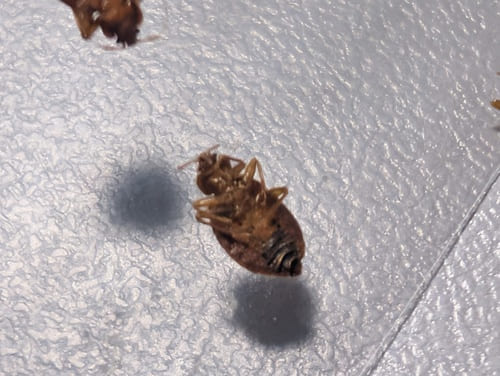
Dead Bed Bug underbelly and legs
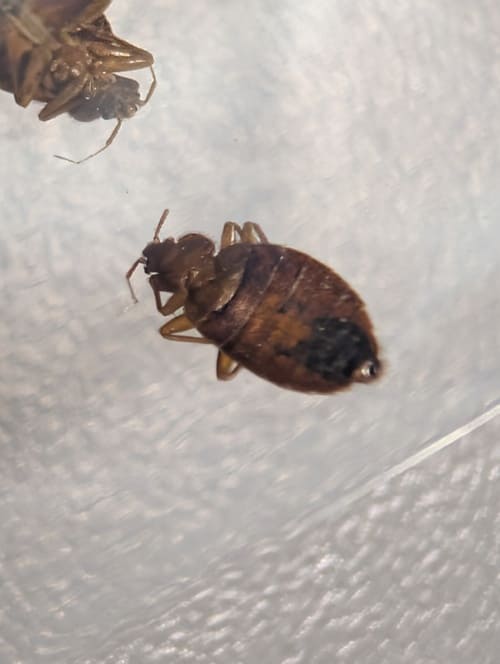
Bed Bug Top View
2. Termites
While they don't carry disease, termites are a structural nightmare. A 2023–2024 CBC investigation noted that termite infestations are no longer just a downtown problem but have spread across the GTA, including the suburbs. According to CCMPA statistics, termites cause an estimated $120 million in property damage a year in Toronto which can then drop neighbourhood property values by up to 25%.
Why they are hard to kill: They live deep underground or inside the "bones" of a house. A single colony can span an entire city block, making it nearly impossible to treat just one house effectively without the neighbors also participating.
Fun Fact: Toronto actually used to publish "Termite Maps" to warn home buyers but stopped in the 1990s.
Very Interesting Fact: A mature termite queen can lay up to 30,000 eggs per day which is roughly one egg every three seconds. Over a lifespan that can stretch 15 to 50 years, a single queen can produce 150 million to over 270 million eggs.
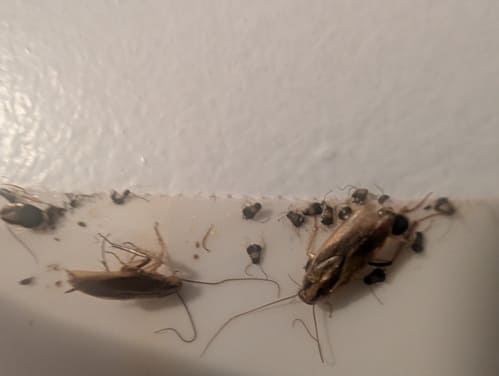
These are the primary "building-wide" pests in Toronto's high-rises. In the same TCH data, cockroaches actually surpassed bed bugs, accounting for 37% of treatments.
Why they are hard to kill: They reproduce faster than almost any other household pest (one female can lead to thousands of offspring in a year). They are "thigmotactic," meaning they prefer tight spaces where sprays often can’t reach.
The "Super Roach" factor: Like bed bugs, they have begun to show resistance to traditional baiting methods.
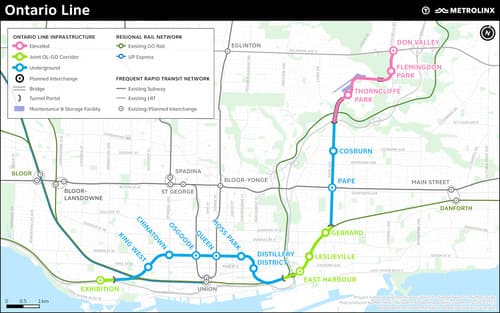
Toronto was recently ranked as the "Rattiest City in Canada" by Orkin for 2024. The rodent population has surged by an estimated 180% over the last decade due to mild winters and constant construction. We've received an moderate increase in rodent control requests around areas that surround the construction of the Ontario Line by Metrolinx. The construction digging has upended mice and rat from their homes and they're looking around for shelter.
Ontario Line Construction Sites
Thorncliffe Park: Work is centered at 1 and 2 Thorncliffe Park Drive for the Operations, Maintenance, and Storage Facility (OMSF) and a future community station.
Don Valley: Piling and pier construction are ongoing for the elevated bridge crossing near 40 Beth Nealson Drive.
Riverside & Pape: Utility and excavation work is ongoing near the future connection at 810 Danforth Avenue and adjacent to Queen Street East and De Grassi Street.
Downtown Stations: Overnight excavation and acoustic shelter construction are active at major nodes including 663 King Street West (King West Station), 2 Queen Street East (Queen Station), and Strachan Avenue near Liberty Village.
Ontario Line Station Construction Points
Why they are hard to kill:Rodents are highly intelligent and "neophobic" (afraid of new things), meaning they often avoid traps for weeks. Toronto’s aging infrastructure and the "Green Bin" program provide them with nearly infinite hiding spots and food. Also, they flatten their bodies and contort themselves to squeeze through the tiny 1/4 inch (about 6 to 7 mm) gaps. To illustrate the size of 1/4, it is the same width of a dime.
Local Hotspots: Neighbourhoods like the Downtown Core, Etobicoke-Lakeshore, and Scarborough report the highest activity.
Often mistaken for common black ants, Carpenter Ants are far more destructive because they tunnel through wood to build nests. They eat moisture damaged wood signalling a bigger issue of moisture within the property structure.
Why they are hard to kill: They often establish "satellite colonies." You might kill the ants in your kitchen, but the main queen could be 50 feet away inside a rotting fence post or a damp wall void. An Carpenter Ant colony takes 3 to 5 years to mature, so prevention is the best defence to reduce your chances of Carpenter Ant sightings. Learn how to ant proof your home with our homeowner ant prevention guide.
Peak Season: They are most active in Toronto from March to May as they emerge from winter dormancy.
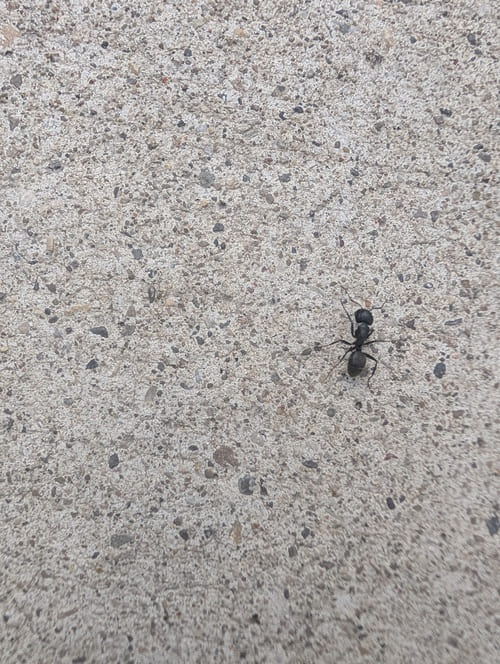
Carpenter ant on cement ground
If you find our content useful, please add guardmorepests.com as a preferred source on Google.
Keep Your Home/Business Pest-Free Today
Do you have a pest problem that needs to be looked at right away? Contact Guard More Pest Control about your pests and we'll work on solving your pest problem within 24 hours.
.png)