Understanding which pests are most active during a Toronto summer can help you protect your property and your peace of mind.
Last updated:
July 31, 2026
As temperatures across the Greater Toronto Area climb above 25°C and the humidity settles, summer brings the most intense pest activity of the year. Within the period of late June through August, several species will reach peak population from the combo of heat, moisture, and foods sources meaning any pest problem that starts in June will develop into a serious infestation by August if left untreated.
While wasps appear in spring, wasp colonies reach their maximum size and aggression in the summer. A nest that started as a few dozen workers in May can grow rapidly to 5,000 to 10,000 workers by late August.
The Warning Sign: Steady wasp traffic in and out of a single point indicates an active nearby nest. These single points include a soffit gap, a ground hole in the lawn, or a gap in exterior cladding.
The Risk: Unlike honey bees, wasps sting repeatedly because their stingers don't detach after stinging and will swarm in numbers if the nest is disturbed. Late-summer foraging makes them aggressive near food and garbage. For anyone with a venom allergy, an untreated nest is a genuine medical risk.
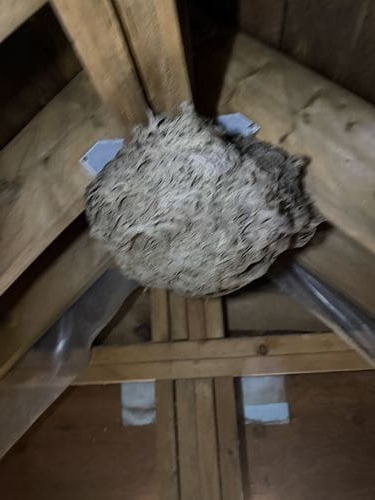
Wasp nest in attic
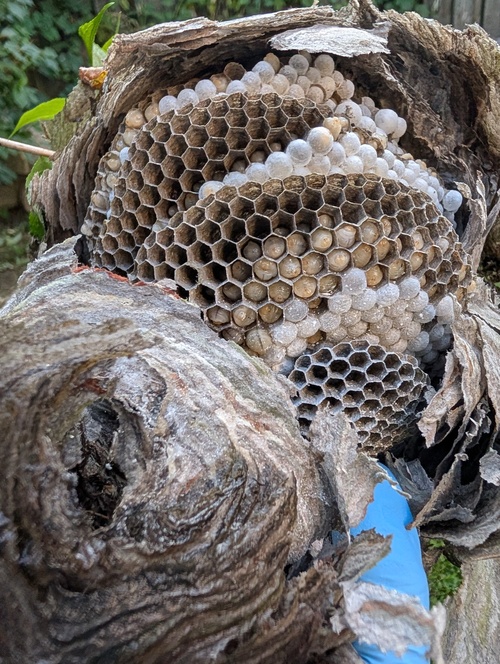
Broken Yellowjacket Wasp nest containing larvae
2. The Structural Threat: Carpenter Ants (Peak Activity)
Carpenter Ants reach peak foraging activity in June and July after emerging from their satellite colonies started in spring. Mature colonies (3+ years old) will start producing their first batch of winged ants (also known as alate) that emerge on warm humid days to start new ant colonies.
The Warning Sign: Winged ants appearing inside your home near windows or light sources almost always indicates a mature colony already established inside your walls or nearby your property.
The Risk: Carpenter Ants excavate smooth galleries inside wood to build nests resulting in weakened structural framing over time. Carpenter Ants prefer wood with existing moisture damage as it is easier to gnaw through. Keep a look out for any damage on window frames, roof structures, or deck ledger boards.
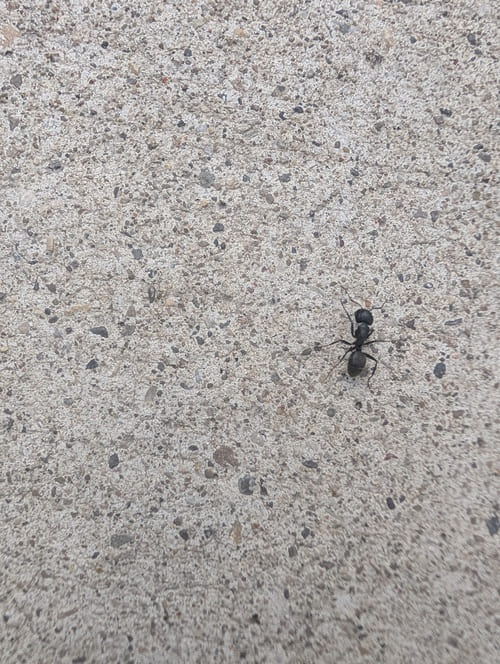
Carpenter ant
3. The Summer Surge: Cockroaches
The Greater Toronto Area's most common cockroach, the German Cockroach thrives in temperatures above 25°C. Their reproductive cycle accelerates significantly in summer heat and cockroach populations that takes two months to double at room temperature can double in under six weeks under these higher temperatures.
The Warning Sign: Seeing a cockroach during daylight hours is the most urgent indicator. Cockroaches are strongly photophobic meaning light causes discomfort causing them to hide during the day. A daytime sighting means the population is overcrowded and the infestation is large.
The Risk: Cockroaches can transfer pathogens including Salmonella and E. coli to food preparation surfaces. Their droppings and shedded skin can trigger of asthma espectially in children.
4. The Slow Hitchhikers: Bed Bugs
Summer is the peak season for bed bugs across the Greater Toronto Area. Hotel stays, short-term rentals, air travel, and even second-hand furniture left on the side of the road are their primary travel methods.
The Warning Signs: Red itchy welts appearing overnight in a line or cluster on arms, neck, or shoulders. Another sign are small rust-coloured spots (bed bug fecal matter or dried blood from a crushed bed bug) on bedding.
The Risk: A single mated female can establish a population of several hundred individuals within three months. Early treatment is far simpler and less expensive than treating an advanced infestation.
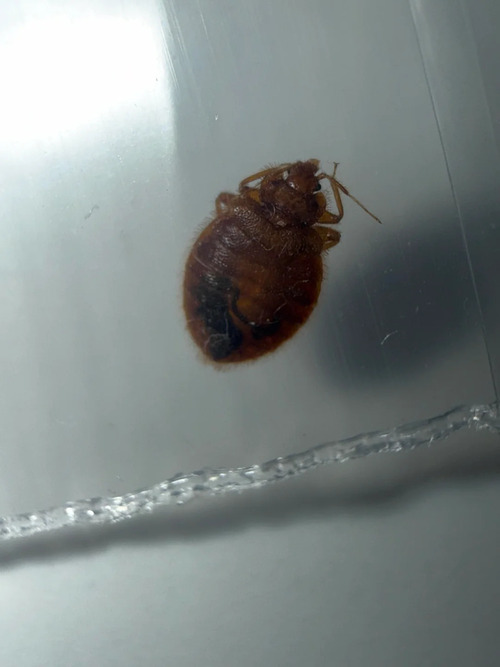
Bed bug
5. The Wildlife Peak: Raccoons with Their Young (Kit)
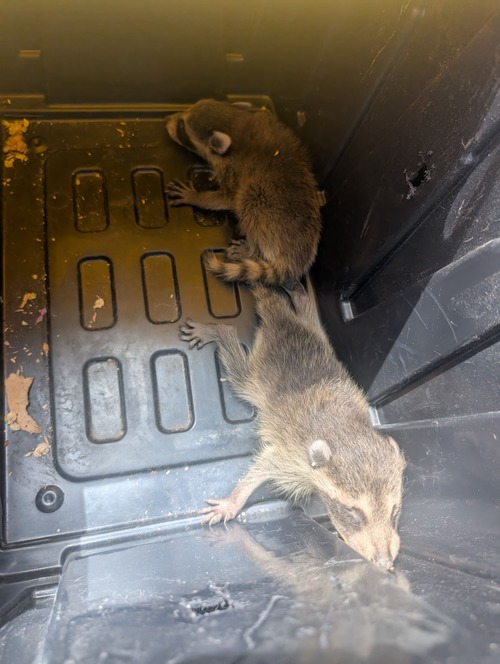
By June, kits born in April and May are mobile and beginning to forage alongside their mother. GTA raccoon families are at peak activity through August with juvenile raccoons exploring new territory account for most late-summer entering attics for shelter and foraging garbage bins/dumpsters for food.
The Warning Sign: Thumping or heavy movement in the attic heard around dusk and dawn, knocked-over garbage bins, or new damage to soffits/roof vents are indicators of potential raccoon activity.
The Risk: Raccoons contaminate attic insulation with urine and feces can spread Baylisascaris procyonis (raccoon roundworm) and chew wiring causing a fire hazard. A family that establishes in June will remain through fall unless the raccoon family is removed.
Kits (baby raccoons) are born blind, deaf, no teeth, barely use their back legs, and cannot regulate body heat thus needing to huddle together.
6. The Summer Biter: Mosquitoes and West Nile Virus
Mosquitoes are at peak breeding and activity across the GTA from late June through August. The primary species of concern is the Culex mosquito, which Toronto Public Health identifies as the most common carrier of West Nile virus in the city.
In July 2026, Toronto Public Health confirmed the city’s first West Nile-positive mosquito batch of the year, followed by York Region confirming positive traps in Markham and Halton Region also reporting positive tests. On July 30, 2026, Toronto Public Health confirmed the city’s first human case of West Nile virus of 2026. The virus has already been confirmed in mosquito populations across Toronto, York, and Halton this summer.
Every year from mid-June to mid-September, Toronto Public Health runs 22 mosquito traps weekly across the city, sending samples to a laboratory for identification and West Nile testing. The 2026 season has already produced positive results in multiple regions simultaneously resulting from the consistent warmer, wetter conditions that accelerate mosquito breeding.
The Warning Sign: Standing water anywhere on your property is a breeding site. Female mosquitoes can lay up to 300 eggs in less than a tablespoon of water. Increased activity at dawn and dusk around your yard, particularly near vegetation or water features, indicates an active local population.
The Risk: Most people infected with West Nile virus experience no symptoms, but adults aged 50 and older and those with weakened immune systems face a significantly higher risk of severe illness. Symptoms of West Nile typically develop two to 14 days after a bite and include fever, headache, body aches, nausea, and skin rash. In rare cases, the virus causes neurological illness. The primary prevention is avoiding bites and eliminating standing water on your property.
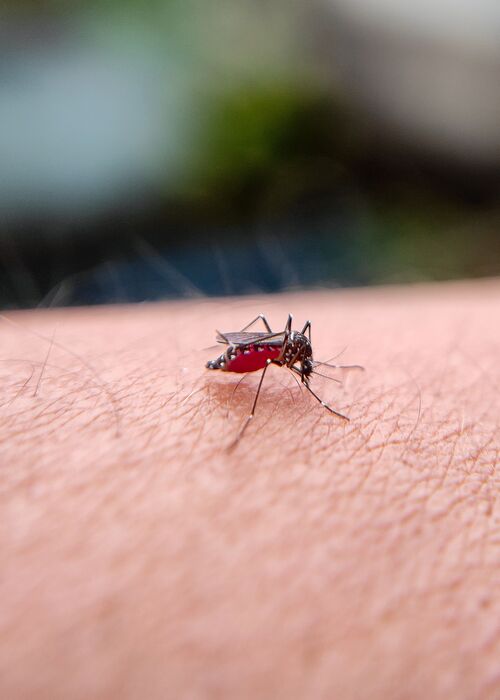
Image: Full Mosquito sucking blood on human skin (source: Pexels Royalty Free Stockphotos, Photographer: Shyamli Kashyap)
7. The Hidden Threat: Blacklegged Ticks and Lyme Disease
Ticks have become one of the most significant and fastest-growing pest health concerns in Ontario with 2026 has been widely reported in Canadian media as a record-breaking year. eTick.ca (an academic run tick resource for identifying and tick incident tracker) shows that tick reports across Canada are up 38.5 per cent nationwide in 2026 compared to last year, with Ontario experiencing a 50.2 per cent increase in overall tick submissions and a 72.8 per cent jump specifically for blacklegged ticks.
The numbers behind this trend are striking. Public Health Ontario confirmed 3,614 cases of Lyme disease in 2025. This is a 30-fold increase from 119 cases in 2010 and a 19% increase over 2024 alone. Lyme disease is now one of the fastest-growing infectious diseases in Canada. In 2010, only two regions in Ontario were classified as established Lyme-endemic areas. By 2026, eight Public Health Units hold that designation and seven more are classified as emerging. These designated areas are covering most of southern and eastern Ontario, including the entire Greater Toronto Area.
The key tick corridor in the GTA runs through the Oak Ridges Moraine (Richmond Hill, Markham, and into Vaughan) where blacklegged tick populations are confirmed at Boyd Conservation Area, Kortright Centre for Conservation, and along King Township forest edges. Properties in Halton Hills, Milton, and Caledon near the Niagara Escarpment and Bruce Trail face some of the highest tick densities in the GTA. Toronto ravines, Mississauga conservation areas, and suburban backyards backing onto any naturalized or wooded space are all realistic exposure sites.
Unlike mosquitoes, ticks do not fly or jump. They wait in tall grass, leaf litter, and low brush at the edge of wooded areas and latch onto a host that brushes past. The blacklegged tick’s nymph stage (active through June and July) is smaller than a poppy seed and responsible for the majority of Lyme disease transmissions in Ontario each year. Because it injects a numbing agent when it attaches, a tick can feed undetected for days.
The Warning Sign: Finding a small dark speck attached to skin. Ticks are commonly drawn to warm, hidden areas such as the scalp, behind the ears, under the arms, behind the knees, or in the groin. It is recommended to perform a thorough check for ticks after spending time outdoors in any green space, park, trail, or yard with wooded edges. Blacklegged tick nymphs are often mistaken for a speck of dirt.
The Risk: If an infected blacklegged tick remains attached for more than 24 to 36 hours, it can transmit Borrelia burgdorferi, the bacterium that causes Lyme disease. In established Ontario risk areas, between 20 and 40 percent of blacklegged ticks carry the bacterium. Early-stage Lyme disease symptoms include a bull’s-eye rash around the bite site, fever, fatigue, headache, and joint pain. Left untreated, the disease can progress to affect the heart, nervous system, and joints. Blacklegged ticks in Ontario can also transmit Anaplasmosis, Babesiosis, and the rare but severe Powassan virus.
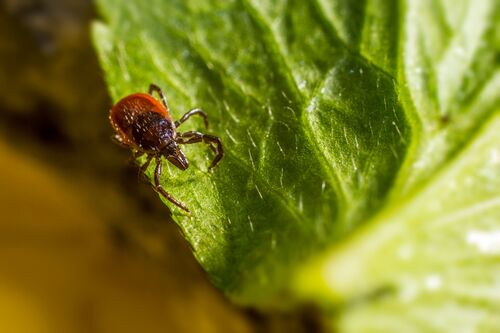
Image: Blacklegged Tick on leaf (source: Pexels Royalty Free Stockphotos, Photographer: Erik Karits)
Summer Pest Prevention Checklist for GTA Homeowners
Inspect eaves and overhangs weekly in June and July:Wasp nests start the size of a golf ball in June can be knocked down with a garden hose. By August, professional treatment is required as they have established their nest heavily increasing the number of workers.
Secure outdoor garbage bins: Use locking lids and rinse bins monthly. Wasps and raccoons are aggressively attracted to food waste in summer heat.
Check under sinks and behind appliances: Summer heat increases water condensation in these areas. A slow drip under the kitchen sink in July can sustain a cockroach colony through to fall.
Inspect luggage after any travel: Bed bugs are introduced almost exclusively through passive transport. Check all seams before bringing bags inside and launder clothes on high heat immediately. If you spot any bed bugs on your body, bed bugs can be washed off and killed with water.
Trim tree branches away from the roofline:Squirrels and raccoons use overhanging branches as a bridge to your roof. Regular trimming of nearby trees help maintain at least three metres of clearance from any branch to the structure.
If you find our content useful, please add guardmorepests.com as a preferred source on Google.
Keep Your Home/Business Pest-Free Today
Do you have a pest problem that needs to be looked at right away? Contact Guard More Pest Control about your pests and we'll work on solving your pest problem within 24 hours.
.png)