Understanding which pests are most active during a Toronto spring can help you protect your property and your peace of mind.
Last updated:
August 2, 2026
As the snow melts and the ground thaws in the Greater Toronto Area (GTA), the city wakes up to a flurry of biological activity. In Southern Ontario, the transition from March to May marks a "peak season" for several pests that have spent the winter in a dormant state (diapause) or tucked away in the warmth of your home's walls.
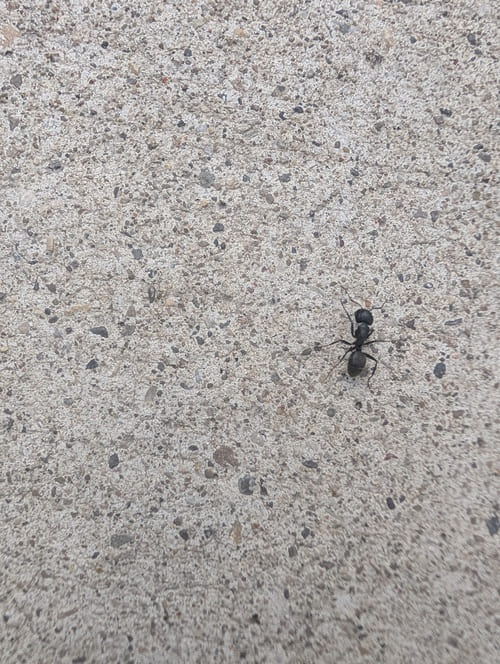
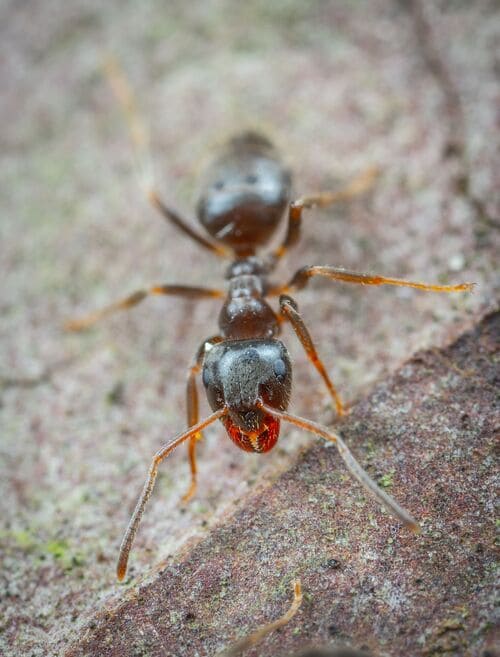
Unlike less common termites in the GTA, Carpenter Ants are the primary structural pest for Ontario homeowners. As temperatures consistently hit double digits, these ants begin foraging for water and sweets.
The Warning Sign: Seeing large black ants inside your house in April is usually a sign of a "satellite colony" already established within your walls.
The Risk: They don't eat wood but they make holes in it to build nests which can weaken structural beams over time.
Carpenter ant on cement ground
2. The Early Bloomers: Boxelder Bugs and Western Conifer Seed Bugs
If you notice shield-shaped insects crawling on the sunny side of your brickwork or appearing suddenly on your curtains, you're likely dealing with "overwintering" pests.
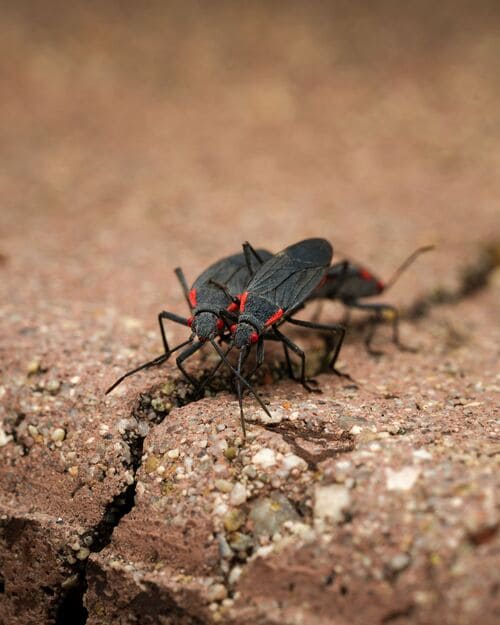
Boxelder Bugs: Identifiable by their black bodies with red or orange markings. Eastern boxelder bugs are a native species in North America. Boxelder bugs are harmless to people and pets.
Western Conifer Seed Bugs: Often mistaken for "stink bugs" due to their appearance and the odour they release when crushed.
The Behaviour: These insects spent the winter inside your attic or wall voids. When the spring sun warms the house, they think it is time to go outside but often end up crawling into your living space instead.
Image: Two Boxelder Bugs on brick crack (source: Pexels Royalty Free Stockphotos, Photographer: Yuanda "Darian" Shen)
3. The Garden Raiders: Ticks
With the GTA seeing a steady rise in temperatures over the last few years, Black-legged Ticks (Deer Ticks) are becoming active much earlier in the spring.
Where they hide: Tall grass and leaf litter in areas like the Don Valley, High Park, or the Rouge Valley.
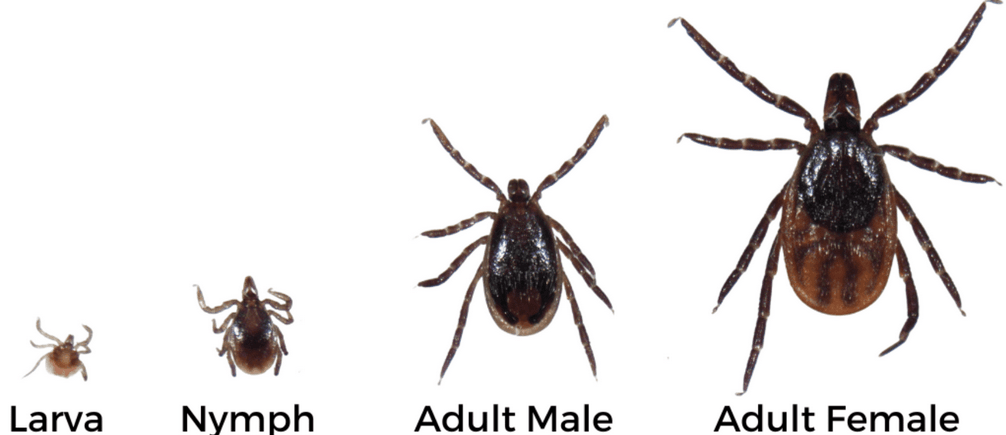
The Risk: They are active as soon as the temperature reaches 4°C. In the spring, they are often in their "nymph" stage—about the size of a poppy seed—making them very difficult to spot.
Deer tick life cycle stages
4. The Nuisance: Termites
While not as widespread as ants, certain pockets of the GTA (especially the East End, Danforth, and parts of North York) are known "termite zones." Spring is swarming season.
The Swarm: On warm, humid days following a spring rain, winged "reproductives" emerge to start new colonies.
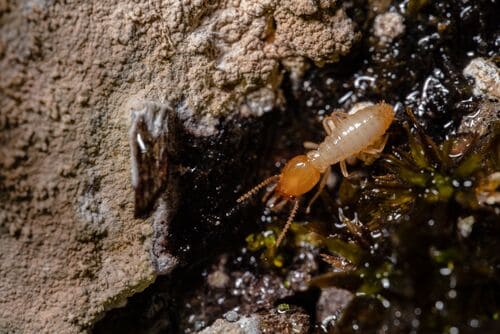
How to tell them apart: People often mistake winged termites for flying ants. Termites have straight antennae and equal-length wings whereas ants have elbowed antennae and wings of different lengths.
Image: Termite worker on wood (source: Pexels Royalty Free Stockphotos, Photographer: Jimmy Chan)
5. Urban Cement Residents: Pavement Ants Swarming in Spring
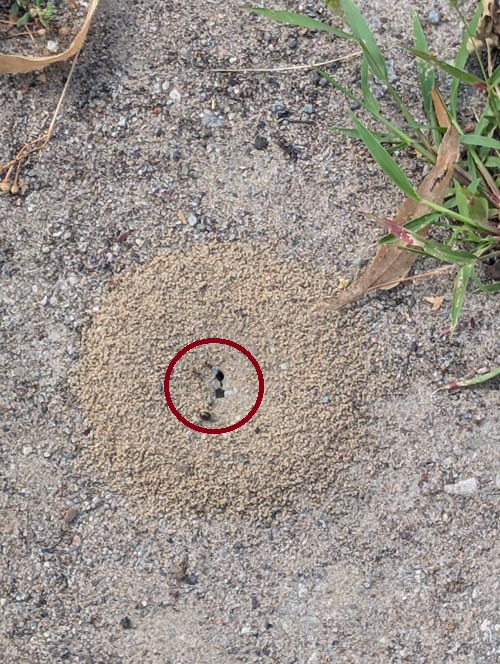
Pavement ants (Tetramorium immigrans) are the small dark ants. They are most commonly seen in GTA driveways, sidewalk cracks, and patio joints around the spring period. They are one of the most widespread ant species in urban southern Ontario, having established themselves across the GTA over the past century after introduction from Europe.
As soil temperatures rise above 10°C and frost leaves the ground, colonies become active and begin expanding their underground territory. This expansion frequently brings them into conflict with neighbouring colonies, producing the characteristic “ant wars” visible on sidewalks and driveways in April and May with large numbers of small ants fighting in a dense cluster, often with hundreds of dead ants scattered across the pavement afterward.
The Warning Sign: Small dark ants (2–3mm, uniformly dark brown to black) emerging from cracks in driveway concrete, patio joints, along the base of the foundation, and from under stepping stones. The characteristic ant war clusters on pavement in April. Fine soil or sand mounded up through pavement cracks or deck board joints as the colony expands galleries near the surface.
The Risk: Pavement ants forage for sugar, grease, and protein indoors. They are small enough to enter through foundation cracks, gaps around utility penetrations, and any gap at the base of exterior walls. A large pavement ant colony under or adjacent to the foundation can establish multiple entry points into the basement and ground-floor living areas simultaneously. Unlike carpenter ants, they do not damage wood structure but they contaminate food and become a persistent indoor nuisance through summer if not treated at the source.
The Timing: Spring is the best time to treat pavement ants because the colony is concentrated near the surface as it warms up and workers are actively foraging, making bait pickup rates high. Granular perimeter bait applied along the foundation line in April reaches the colony before it fully disperses underground for summer.
6. The Textile Threat: Carpet Beetles Emerging in Spring
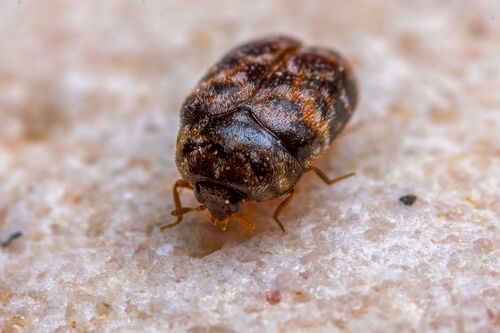
Carpet beetle emerge as adults in the Spring. These carpet beetle adults have been overwintering in walls, stored clothing, or fibre materials. Adult carpet beetles are small (2–4mm), oval, and strongly attracted to light. They are commonly noticed as they climb towards interior and exterior windowsills in March and April as they navigate toward outdoor light sources to feed on pollen and nectar.
The adult beetles themselves cause no household damage. The problem is what they do next: they lay eggs in natural fibre materials. These natural materials include wool, silk, fur, leather, feathers, and stored food products. It is the larvae that hatch from those eggs through late spring and summer that cause the characteristic irregular holes and thinning in textiles that goes unnoticed until significant damage has already been done.
The Warning Sign: Small oval beetles (mottled pattern of white, brown, and orange or yellow scales on a black body for the Varied Carpet Beetle; uniformly dark brown for the Black Carpet Beetle) found on interior windowsills in March, April, and May. Finding shed larval skins (small, brown, and bristly) near stored wool clothing, area rugs, or natural fibre upholstery. Irregular holes or thinning patches in wool garments or rugs discovered when pulling items out of winter storage.
The Risk: Spring emergence of adults is the annual signal to inspect stored natural fibre items before eggs are laid for the new generation. A single female can lay 50–100 eggs in a protected location. Larvae that hatch in May and June can cause significant, irreversible damage to stored clothing, antique rugs, taxidermy, and natural fibre upholstery over the following months before adults emerge again the following spring.
The Action: Inspect all winter-stored wool garments, down items, and natural fibre rugs before putting them away for the season. Dry-cleaning before storage kills any eggs or larvae present. Store items in sealed, airtight bags or hard containers rather than open boxes. Vacuum thoroughly along baseboards, under furniture, and inside closets in April to remove larvae and food sources.
Image: Brown Carpet Beetle (source: Pexels Royalty Free Stockphotos, Photographer: Rafael Minguet Delgado)
Spring Pest Prevention Checklist for GTA Homeowners
To keep the "uninvited guests" at bay this season, consider these quick maintenance steps:
Clear the Gutters: Clogged gutters create the damp wood conditions that Carpenter Ants and termites love.
Inspect Windowsills: Check for gaps in screens or cracks in the caulking where boxelder bugs or spiders might enter.
Manage Mulch: Keep garden mulch at least 12 inches away from your home's foundation to prevent it from acting as a "pest highway".
Dry Out the Basement: Use a dehumidifier to reduce moisture as spring brings dampness which attracts silverfish and centipedes.
If you find our content useful, please add guardmorepests.com as a preferred source on Google.
Keep Your Home/Business Pest-Free Today
Do you have a pest problem that needs to be looked at right away? Contact Guard More Pest Control about your pests and we'll work on solving your pest problem within 24 hours.
.png)