.png)

Winter Pests in the Greater Toronto Area
Understanding which pests are most active during a Toronto winter can help you protect your property and your peace of mind.
Last updated:
September 20, 2026

Understanding which pests are most active during a Toronto winter can help you protect your property and your peace of mind.
Even in the winter, pest activity around the Greater Toronto Area sadly does not end instead it is concentrated even more. Any intruders that may have ventured into your home before the first hard frost hits is now denning it producing offsprings, causing damage (wiring, insulation, HVAC), and throughout the coldest months of the year. The indoor warmth makes GTA homes an ideal year-round habitat for serval species regardless of the outside temperature.
When the trifecta of warmth, food, and shelter are all present, the house mouse has no reason to slow down reproducing. A single female is sexually mature at six weeks and can produce a new litter every three weeks. The average litter size is 5-8 and an average female can have 5-10 litters a year. A colony of 2 can grow to between 25 to 80 in one year.
Carpenter Ant satellite colonies established inside walls during spring and summer and but dormant during colder months. The first warm days of late winter can cause workers to become active and appear inside living spaces.

Unlike raccoons, Eastern Grey Squirrels do not hibernate or enter torpor* state. They actually remain fully active through every winter relying on cached food stores and body fat to sustain them. A squirrel that gained attic access in the fall is generating damage continuously through January and February going undetected until the spring.
*torpor: decreased physiological activity in animals characterized by reduced body temperature, metabolism, heart rate, and respiration to conserve energy during harsh conditions or food shortages.
On unexpectedly warm winter days in January where the Greater Toronto Area temperatures briefly reach above 10°C. The overwintering cluster flies, Asian lady beetles, and western conifer seed bugs inside wall voids can mistake the warmth for spring and begin moving toward light sources inside the home.
The Indian Meal Moth, Red Flour Beetle, and Drugstore Beetle are active year-round pests found in heated GTA homes. Winter is when pantry pest infestations that began in fall are most commonly discovered after a holiday baking session reveals webbing in flour or small moths in the cereal cupboard.
Silverfish (Lepisma saccharina) are year-round indoor pests that become most visible in GTA homes during winter. During this season, residents will spend more time in lower-level living spaces and the difference between interior humidity and outdoor dryness creates condensation in basements, crawlspaces, and around cold-water pipes. Silverfish require high humidity (75–95%) and moderate warmth to thrive within a GTA basement.
They are one of the most ancient insects on earth. Silverfish have existed essentially unchanged for over 400 million years. Their survival is attributed to an ability to go without food for up to a year, their fast movement that makes them difficult to catch, and their preference for environments humans rarely inspect closely. Silverfish feed on starch, sugar, and protein. Their ideal food in these forms are paper, cardboard, glue, wallpaper, book bindings, and fabric sizing.
Raccoons do not hibernate but enter a state of torpor. Torpor is a shallow sleep characterized by reduced metabolic rate, heart rate, and body temperature that occurs during sustained cold snaps. A raccoon that established an attic den in October or November will typically be in torpor through the deepest cold of December and January, becoming more active again in February as temperatures fluctuate and as breeding season approaches.
The critical wildlife management fact about winter raccoons is what comes next: GTA raccoons breed from January through March, and females give birth in April and May. A raccoon in torpor in your attic in December is in the early stages of pregnancy by February. By the time a homeowner notices the resumption of activity in late February or March, a litter is typically already present or imminent which is a situation that significantly complicates removal and exclusion.

The GTA’s specific challenge is the freeze-thaw cycle. Toronto winters swing repeatedly above and below zero, and each cycle causes soil and building materials to expand and contract. Gaps that were properly sealed in October can open again by January. This is why winter prevention here is not a one-time autumn task because a mid-winter re-inspection could catch the openings that the freeze-thaw cycle has created since the fall.
Inspect your foundation, doors, and windows, and seal any cracks or gaps you find. This is the single highest-impact winter prevention measure because it addresses the root cause rather than the symptom — no amount of trapping resolves an infestation if new animals can keep entering.
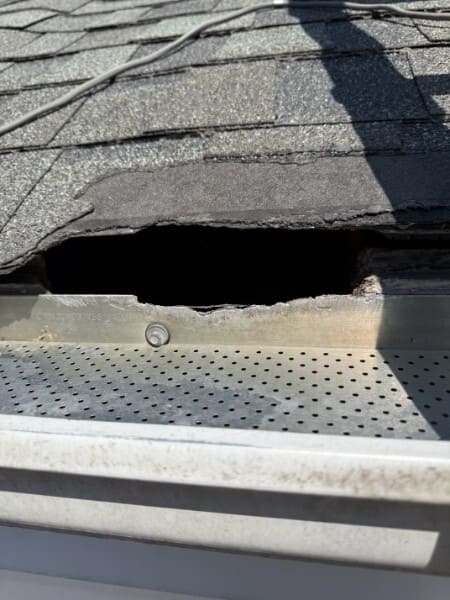
Work methodically around the full perimeter of the building at ground level, then check upward. Priority areas for GTA homes:
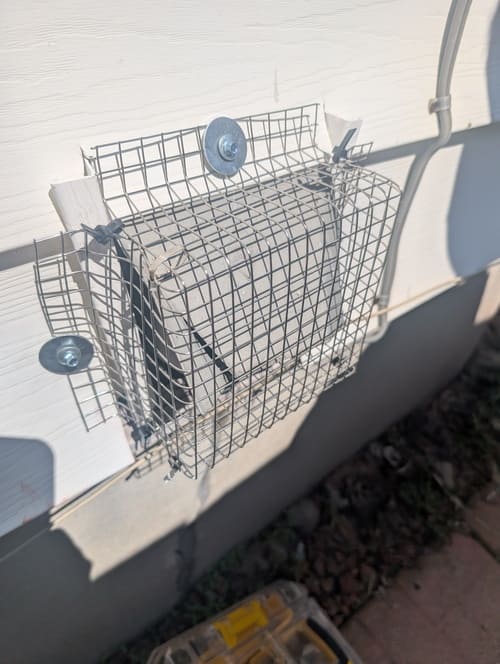
Material selection matters more than most homeowners expect. Mice chew through expanding foam within hours and through soft caulk within days. The correct material depends on the size of the gap:
A practical note for older Toronto housing stock: homes built before roughly 1960 frequently have rubble or fieldstone foundations with mortar joints that deteriorate over time. These foundations rarely have a single clean entry point but instead might have dozens of small voids. Sealing them individually is often impractical, and a professional assessment to determine whether interior exclusion or a perimeter bait programme is the better approach will save considerable time and money.
Store pantry items, pet food, and dry goods in airtight glass or hard plastic containers. Cardboard boxes, paper bags, and thin plastic packaging offer no protection — mice chew through all three easily, and pantry moth larvae penetrate sealed factory packaging.

Winter adds a timing consideration that most food-storage advice misses: the holiday period. A significant proportion of GTA pantry pest infestations are traced back to a single item brought into the home during holiday grocery and bulk-food shopping in November and December. Inspect flour, nuts, dried fruit, and baking supplies when you buy them, and again in January. You know if you are finding webbing or small beetles in one item at that point means checking every adjacent item on the same shelf before the infestation spreads through the pantry.
Fix leaks and ensure proper ventilation in attics, basements, and crawl spaces. Moisture is the condition that sustains cockroaches, silverfish, carpenter ants, and mould, and winter creates moisture problems in GTA homes that do not exist at other times of year.
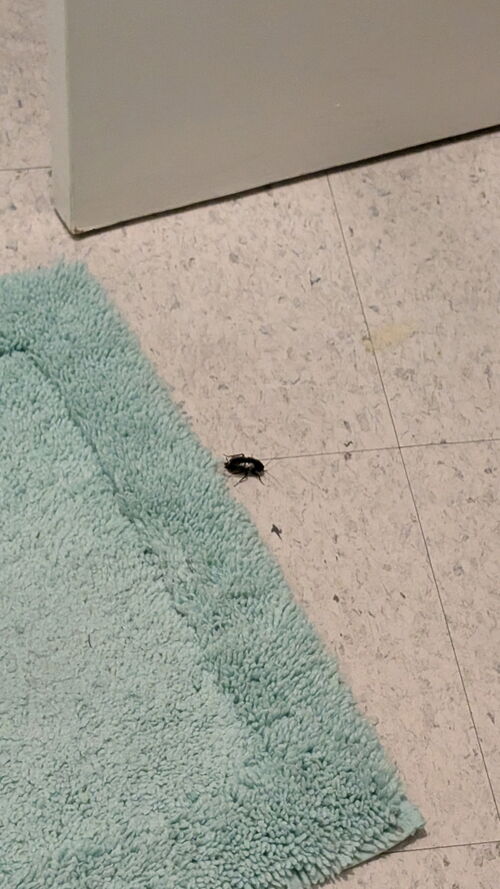
The winter-specific moisture issue in Toronto homes is condensation driven by the temperature differential between heated interiors and freezing exteriors. When a furnace runs continuously through January, the interior air holds more moisture, which condenses wherever it meets a cold surface — basement walls below grade, cold water pipes, poorly insulated rim joists, and the underside of roof sheathing. This is why silverfish and cockroach activity in GTA basements frequently peaks in midwinter rather than in summer, and why a dehumidifier running through the heating season is more useful than one running in August.
Ice dams are the other winter moisture concern worth checking. When heat escaping through an under-insulated attic melts roof snow that then refreezes at the eaves, water backs up under the shingles and into the roof structure and wall cavities. The resulting damp framing is exactly what carpenter ants seek out for nesting. An ice dam is a roofing problem, an energy-efficiency problem, and a pest problem simultaneously.
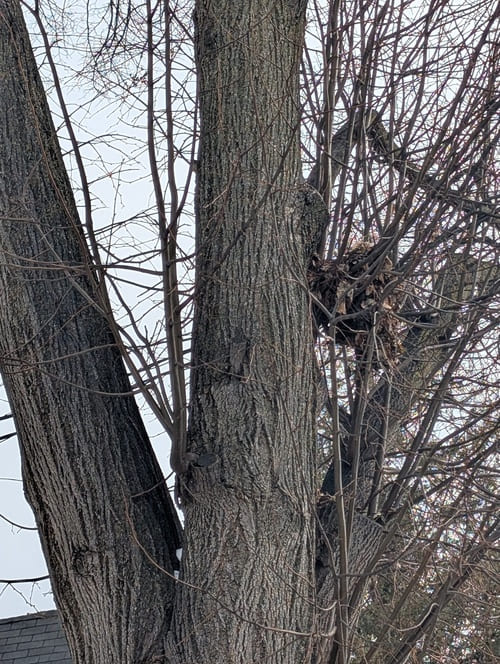
Trim tree branches away from your roof and secure chimney caps and vent screens. Rooflines are the primary wildlife entry route in the GTA, and the overhead access points that allow squirrels and raccoons onto the roof are almost always vegetation.
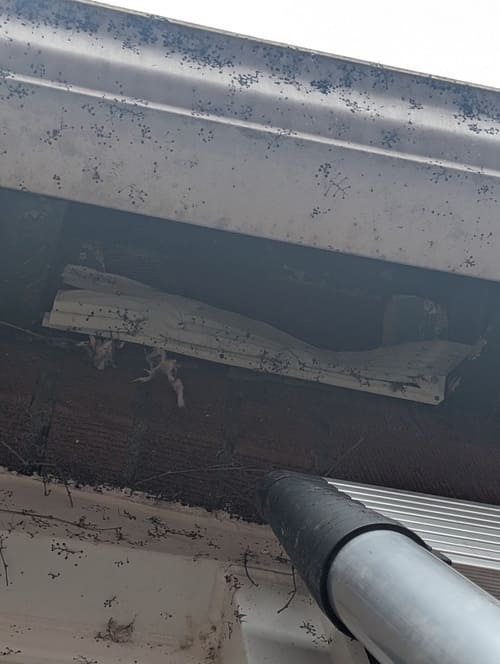
Winter changes the practical calculation on tree trimming. Late autumn and winter, once deciduous trees are dormant and leafless, is the best time of year to do this work: the branch structure is fully visible, the trees are not stressed by pruning, and the routes to your roof are obvious in a way they simply are not in July. If you have had squirrel or raccoon activity, booking tree work for a dormant-season window is both better for the trees and more effective for pest exclusion.
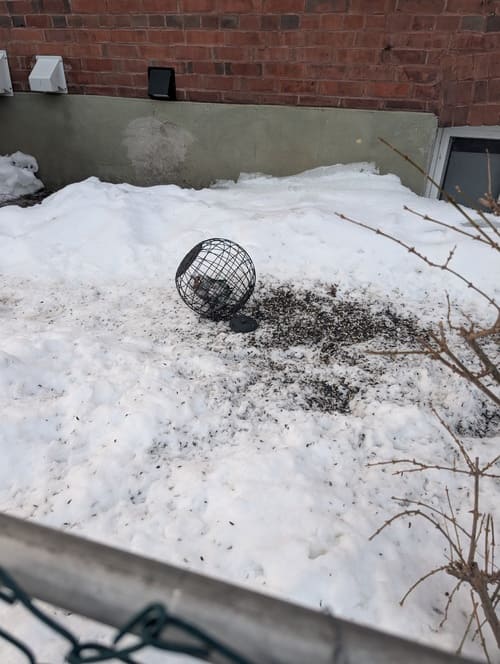
One winter-only inspection worth adding: after any significant snowfall, look at your roofline and the ground beneath it. Fresh tracks in snow leading to a specific point on the roof, or a clear path along a fence line or branch to the eaves, show you exactly where animals are travelling. This is the single easiest time of year to identify an active wildlife route, and the evidence disappears with the next thaw.
There is a practical argument for doing this work in winter specifically, and it applies to every pest covered in this article.
In summer, a pest population has options. Mice, cockroaches, and insects can move between indoors and outdoors, find alternative shelter, and disperse when conditions become unfavourable. In a GTA winter, they cannot. The population inside your home is concentrated, committed, and has nowhere else to go. This is why sealing entry points in January is so effective — you are not just preventing entry, you are preventing the reinforcement that would otherwise replace the population you remove. It is also why professional treatment during the heating season frequently produces better and faster results than the same treatment applied in July.
The trade-off is that winter exclusion work has practical limits. Exterior caulk and sealant do not cure properly below roughly 5°C, frozen ground prevents some foundation work, and snow cover obscures parts of the building perimeter. The realistic approach for most GTA homeowners is to complete as much exterior sealing as possible in the autumn, do interior sealing and food and moisture management through the winter, and schedule any remaining exterior work for the first mild stretch in late February or March.
Do you have a pest problem that needs to be looked at right away? Contact Guard More Pest Control about your pests and we'll work on solving your pest problem within 24 hours.