.png)

WILDLIFE CONTROL SERVICES - SQUIRREL REMOVAL & EXCLUSION
Guard More Pest Control provides professional squirrel removal, one-way exclusion and wildlife proofing for homes across Toronto and the surround areas.
Our technicians identify where squirrels are entering, assess for dependent young, install an appropriate removal system and protect the entry point once the animals have exited.
Humane removal · Structural exclusion · Lifetime guarantee on coverings · Working at Heights certificated technicians
Last Updated: September 27, 2026



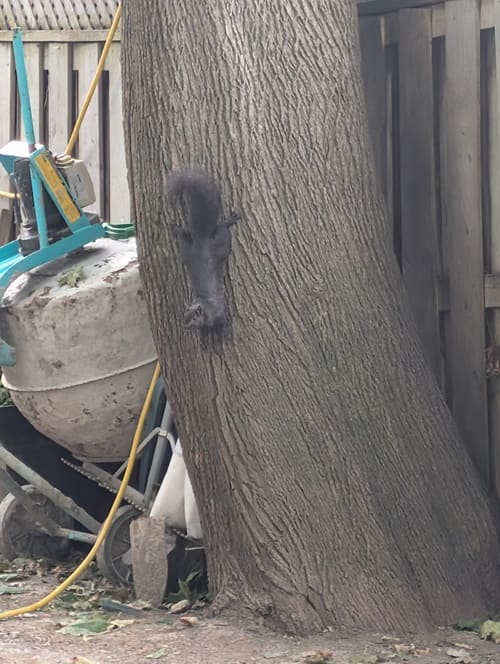
Eastern Grey Squirrels are the most frequently encountered squirrels around many Toronto neighbourhoods, while Red Squirrels can also enter structures in suitable areas. Both can exploit roof and soffit openings, so the removal process is based primarily on the active entry point, nesting situation and structure rather than species alone.
Common Squirrel Entry Points in GTA Homes
Squirrels are agile climbers and persistent chewers. They require a gap of only 3-4 cm depending the species and will actively enlarge small gaps by gnawing. These are the most common entry points found during inspections performed by Guard More pest technicians:
Roof Vents
The standard aluminium attic vents are the most common squirrel entry as they can chew through the screen or pop the vent cover.
Soffits & Fascia
Any gaps in your soffits, loose fascia boards, and the junction where soffit meets fascia are all primary squirrel routes.
Gable End Vents
The triangular vents at each end of the roofline are a classic squirrel entry especially in older Toronto homes where vent screens have deteriorated.
Roof-Wall Junctions
The area where a lower porch or addition roof meets the main wall as any gap can become a direct highway for the quick moving squirrels.
Chewed Fascia Boards
Squirrels actively chew water-soft or rotted fascia wood to enlarge natural gaps with a 2 cm gap easily becoming a 5 cm gap within a day.
Ridge Cap & Flashing
Lifted ridge cap shingles, failed plumbing stack flashing, and any point where two roof planes meet.

Squirrel chewed and ripped out shingle, wood, and metal roofline/eavesthrough
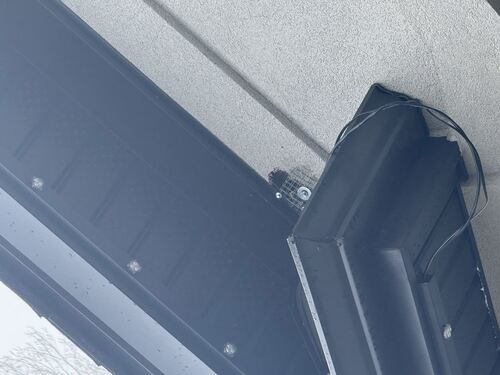
Squirrel chewed new hole beside mesh exclusion
Eastern Grey Squirrels use overhanging tree branches as a direct bridge to your roofline. A branch within 3 metres horizontal or vertical of your roof eliminates the barrier between the tree canopy and your attic. In established GTA neighbourhoods with mature trees (such as Annex, Leaside, Rosedale, Forest Hill, Sunnybrook area), the need for trimming overhanging branches is the single most important prevention step before exclusion work is installed. Guard More can advise on branch clearance requirements as part of every inspection.
Our Step-by-Step Squirrel Removal Process
Squirrel removal requires a careful sequence of inspection, exclusion door installation, monitoring, and permanent sealing. The rushing of any step especially the baby assessment in spring and summer is the most common reason squirrel jobs fail or create a worse problem than they started with.
- Full Roofline & Attic Inspection: Our licensed technician inspects the complete exterior roofline covering every vent, every soffit section, all fascia, gable ends, roof-wall junctions, and the full perimeter plus the attic interior via the hatch. We identify all active entry points (typically recognizable by chew marks, staining, and wear on surrounding material), all potential secondary entry points, and any evidence of nesting or young animals before any work begins.
- Baby Season Assessment (March – April and July – August): Before installing any exclusion device, our technician confirms whether kits are present in the nest using a Borescope camera. Kits in their first 6–7 weeks are not yet mobile and cannot exit through a one-way door. Installing an exclusion door with immobile kits inside seals them in the structure and if they will die, it will result in an extreme odour and secondary pest problem. If kits are present, we schedule return visits when the young are mobile enough to exit.
- One-Way Exclusion Door: Once the structure is confirmed clear of immobile young, we install a one-way exclusion door at the primary active entry point. Squirrels are strictly diurnal so they are active from shortly after sunrise to before sunset. The exclusion door allows the squirrel to exit during its normal activity period but prevents re-entry. We monitor for 3–5 days minimum or longer if cool weather reduces squirrel activity.
- Permanent Sealing of Primary Entry Point: After confirming the structure is clear, we remove the one-way door and permanently seal the primary entry point using galvanized steel mesh or flashing rated for squirrel resistance. Squirrels are persistent chewers so standard foam sealant, aluminium mesh, and wood repair alone are not adequate. All materials used are squirrel-resistant and warranted for the life of the structure.
- All Secondary Entry Points Sealed: Every additional vulnerability identified during the initial inspection is sealed in the same visit. Sealing the primary entry while leaving secondary gaps open guarantees that the squirrel (or a new one) will find and use the next weakest point within days. Complete exclusion means every gap is addressed and not just the one the squirrel is currently using.
- Attic Assessment & Wiring Inspection Recommendation: After the exclusion work is complete, our technician assesses the attic for insulation damage, nesting material accumulation, and wiring. Any home with a confirmed squirrel history in the attic should have its attic wiring inspected by a licensed electrician.
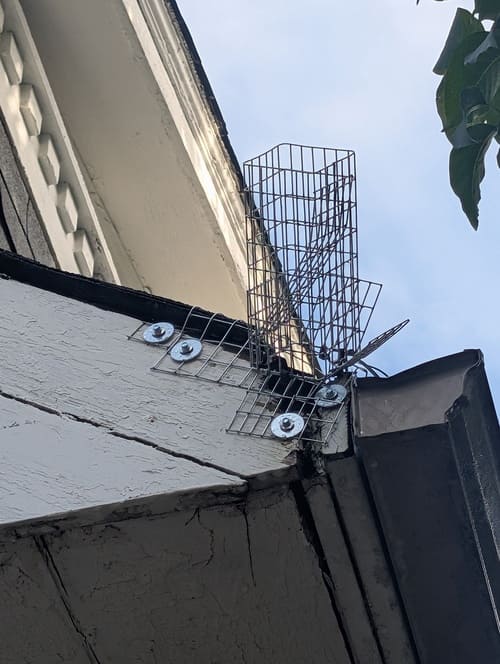
Steel one-way door for squirrels
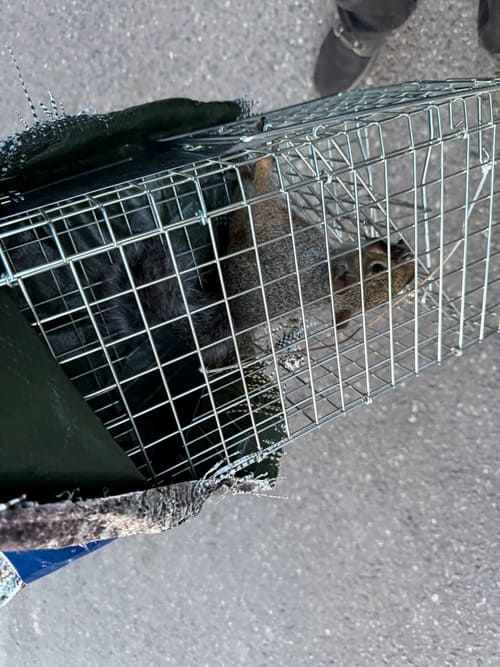
In some cases, we may be required to use squirrel cages to remove the squirrels depending on the affected area.
Incompleted Sealing is the Most Common Squirrel Job Failure: One common reason squirrel problems return is incomplete exclusion. If the active entrance is secured but other vulnerable roof openings remain accessible, squirrels may investigate and use another weak point. Squirrels are persistent creatures and a squirrel that has lost access to its den will systematically probe every other weakness in the structure. The only permanent solution is sealing every gap on the entire roofline and not just the one the squirrel(s) is currently using today.
What and Why We Install Exclusions
The difference between a squirrel exclusion that lasts and one that fails within a season comes down to material specification. Squirrels can chew through foam, aluminium, wood, and plastic. Every exclusion installed by Guard More Pest Control uses squirrel-rated materials and every covering is backed by a lifetime guarantee (if not tampered with by humans).
*Lifetime guarantee is valid provided coverings are not removed or modified by human activity. Guard More Pest Control stands behind every installation for the life of the structure.
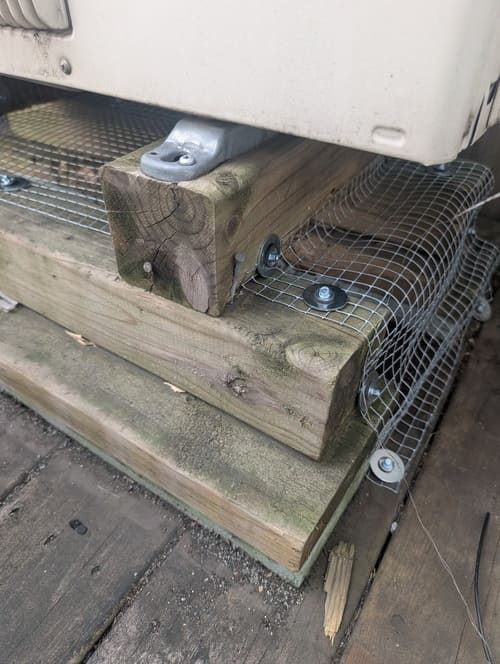
Image: Steel mesh exclusion under HVAC unit
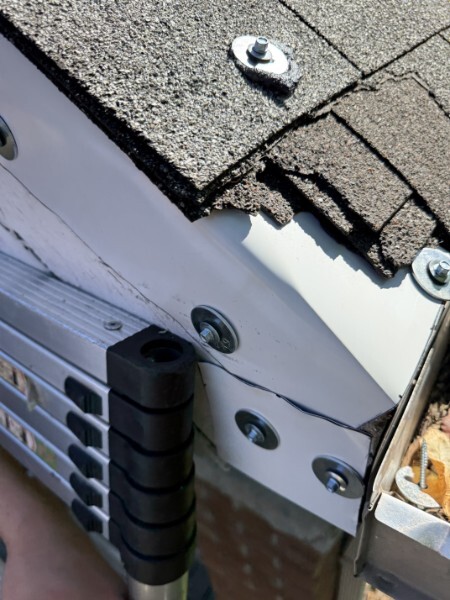
Image: White flashing Squirrel exclusion on roofline hole
Why We Don't Recommend Using Foam or Aluminium as Standalone Seals? Consumer grade expanding foam sealant and standard aluminium window screen are the two most commonly used and end up failing as squirrel exclusion materials. A squirrel can bite through expanding foam in under 60 seconds. The standard aluminum screen mesh tears under sustained chewing pressure within minutes. All Guard More Pest Control installed primary seals use minimum 16-gauge galvanized steel mesh or 20-gauge steel flashing. These materials are physically impossible for a squirrel to chew through.
How Much Does Squirrel Removal Cost in Toronto?
Squirrel removal and exclusion pricing depends on the size and complexity of the property. These factors include the number of entry points identified, whether young are present (requiring the baby season protocol), and the scope of exclusion work required. The following pricing reflects typical GTA market rates for 2025–2026.
Pricing varies according to roof height, accessibility, number of entry points, presence of young and the amount of proofing required. We provide an itemized quote before additional exclusion work is completed.
The Hidden Cost of Incomplete Exclusion: Choosing the cheapest squirrel removal quote often means paying for the same job two or three times. A service that seals only the primary entry point without addressing secondary vulnerabilities will result in squirrel re-infestation within weeks. The cost of a second removal and partial exclusion quickly exceeds the cost of a complete exclusion on the first visit. Guard More Pest Control provides itemized written quotes covering all identified entry points to tackle.
Does Home Insurance Cover Squirrel Damage? Standard Ontario home insurance policies do not cover squirrel removal, exclusion costs, or the damage squirrels because these acts are classified as gradual and preventable maintenance issues under typical policy exclusion language. However, if squirrel gnawing on electrical wiring causes a fire to breakout, the resulting fire damage may be covered as a sudden accidental loss. By addressing confirmed squirrel activity promptly protects both your property and your insurance position.
What Squirrel Damage Actually Costs And Why Speed to Act Matters
Many homeowners delay squirrel removal because the problem seems manageable like a bit of noise in the morning and some marks on the fascia. The cost of that delay compounds quickly:
✔ Electrical wiring damage — squirrel incisors grow 15 cm (6 inches) per year and must be continuously worn down; attic wiring is among the most commonly gnawed materials. Arc faults from gnawed wiring causes attic fires.
✔ Insulation compression and contamination — squirrels flatten and burrow through blown insulation, reducing R-value and creating nesting cavities saturated with urine. With a serious infestation, a full insulation removal and replacement is required at $2,000–$10,000+.
✔ Structural framing damage — persistent gnawing on rafters, joists, and sheathing weakens structural members.
✔ HVAC and plumbing interference — squirrels gnaw on PVC supply lines and HVAC ductwork in attic spaces. A chewed supply line can cause a concealed leak for weeks before detection.
✔ Second litter compounds damage — each 6-week litter cycle means new kits who begin their own gnawing behaviour as a squirrel that enters in October with one season of damage becomes a multi-animal infestation by August.
What happens when parents don't come back for their squirrel baby or babies?
We surrender the animals to a wildlife partner, Toronto Wildlife Centre, that takes in animals and rehabilitate the orphaned animals. You can see all IDs of that animals that Guard More Pest Control surrenders to Toronto Wildlife Centre at https://www.guardmorepests.com/humane-wildlife-surrendering
We send the same IDs to the client's serviced property where we removed the surrendered animal(s) from.
Related Squirrel Articles
Related Wildlife Management Services
Keep Your Home/Business Pest-Free Today
Do you have a pest problem that needs to be looked at right away? Contact Guard More Pest Control about your pests and we'll work on solving your pest problem within 24 hours.