Is it worth hiring a wildlife pest management professional for squirrels?
Last updated:
June 12, 2026
Squirrels are one of the most common and underestimated wildlife intrusion problems for homeowners in Canada. What begins as a squirrel in the attic can quickly become significant structural damage, chewed electrical wiring, and a recurring problem if the entry points are not properly sealed. A pest management professional addresses the problem completely, not just temporarily.
The short answer: yes, if the squirrel inside your home. Squirrels in your yard or garden can often be managed with deterrents and exclusion measures you handle yourself. But squirrels inside your attic, walls, or crawl space require professional squirrel removal and exclusion. The structural and fire risks alone make it worth acting quickly.
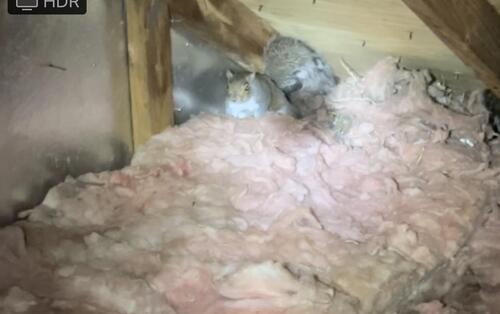
Squirrel in attic on insulation
The real cost of ignoring a squirrel intrusion
Many homeowners delay calling a wildlife management professional because squirrels seem harmless. But an unaddressed attic intrusion can result in:
Chewed electrical wiring which is a leading cause of attic fires. Squirrels gnaw continuously to wear down their teeth and will chew through any wiring they encounter. Squirrel incisors grow approximately 6 inches (15 cm) per year.
Damaged insulation from the squirrel's use for nesting materials compact and soil insulation. The damaged insulation's thermal efficiency is significantly reduced resulting in increased heating and cooling costs.
Structural damage to roof decking, joists, and fascia board as squirrels enlarge entry points and establish nesting galleries.
Water intrusion from squirrel tearing gaps in the structure allowing rain and snowmelt to enter, leading to mould, rot, and secondary structural damage.
Secondary infestations from fleas, mites, and other parasites associated with squirrel nests can spread into the living area of the home.
How does Do-It-Yourself vs Wildlife Management Professional compare?
Do-It-Yourself
Pest Management Professional
- Trimming tree branches away from the roof is effective prevention - Motion-activated deterrents can discourage garden squirrels - Live trapping can work for isolated outdoor squirrels - Sealing entry points without confirming all squirrels have left traps them inside - Trapped squirrels cause major damage trying to escape - Wood, foam, and basic mesh are quickly chewed through - Does not address squirrels already nesting in wall voids - Trapping without sealing leads to new squirrels entering the same points
- Full exterior inspection identifying all entry and potential entry points - One-way exclusion doors allow squirrels to leave without re-entering - Confirms all squirrels have exited before permanent sealing - Heavy-gauge galvanized steel mesh that squirrels cannot chew through - Addresses wall void and soffit infestations not accessible by DIY - Inspects for and addresses chewed wiring and structural damage - Follow-up visits to confirm success and address any new activity
Signs that You should call a Wildlife Professional Now
You can hear scratching, rolling, or running sounds in the attic:The sound of small rapid footsteps or rolling objects (squirrels cache food and nuts in attic insulation) during the early morning or late afternoon is a reliable sign of an established attic squirrel. The longer they have been present, the more nesting material, contamination, and structural damage is likely.
You have found a chewed entry point on your roofline: Gnaw marks around roof vents, soffit joins, fascia board, or the roofline itself indicate an active or recent entry point. These openings will be enlarged and re-used indefinitely unless sealed with appropriate materials. Inspect the entire roofline because squirrels typically maintain multiple access points.
You have spotted squirrels on your roof repeatedly: Squirrels regularly seen on the roof (look closely around eaves and vents) are assessing or actively using entry points. Tree branches contacting or near the roofline are the most common access route. A professional can identify and seal entry points while recommending landscaping changes to reduce ongoing access.
Traps are catching squirrels but the problem is not resolving:Ongoing trap activity after weeks of DIY trapping indicates that the entry points have not been found and sealed. New squirrels are entering to fill the territory of those removed. Trapping without exclusion is an indefinite process because sealing the entry points is what ends the cycle.
You have noticed a burning or unusual smell from the attic: A burning smell associated with attic squirrel activity is a serious warning sign of chewed electrical wiring. This requires immediate professional attention with a wildlife removal specialist to seal the entry points and an electrician to inspect the wiring before it becomes a fire hazard.
What does a wildlife management professional do?
A wildlife management professional performs a complete exterior inspection of the roofline, soffits, fascia, vents, and foundation, identifying every actual and potential entry point. The removal and exclusion process typically involves:
Installing one-way exclusion doors at active entry points, allowing squirrels inside to leave but not re-enter. This the most humane and effective removal method for squirrels.
Sealing all secondary and potential entry points with heavy-gauge galvanized steel mesh, metal flashing, and exterior-grade sealant during the exclusion period.
Confirming over a monitoring period (typically 5 to 7 days) that all squirrels have exited before making the exclusion permanent.
Recommending or assisting with tree trimming to remove overhead access routes to the roofline.
Providing an assessment report (with pictures) of all entry points found, repairs made, and recommended follow-up landscaping or maintenance to prevent future intrusions.
What does squirrel inspection or removal and exclusion cost?
A standard squirrel inspection is $200 but this amount goes to the final total for extra services (removal and exclusions) that would be required. The amount is high but you have to consider that the wildlife management professional will need to climb high up beside your roofline and your roof to check for any entry points and access the damage for a proper quote. Squirrel removal for baby squirrels is charged on a per squirrel basis ranging between $150-200 based on their age and complexity of removal. Exclusion service typically costs $300+ based on complexity of exclusions required and number of entry points that require covering. Attic cleanouts including insulation removal and sanitization are quoted separately and vary by the extent of contamination. This service is typically $1,500 or more for significant infestations.
If you find our content useful, please add guardmorepests.com as a preferred source on Google.
Keep Your Home/Business Pest-Free Today
Do you have a pest problem that needs to be looked at right away? Contact Guard More Pest Control about your pests and we'll work on solving your pest problem within 24 hours.
.png)