.png)

The Most Expensive Pests in Ontario: What They Cost Homeowners
Last updated:
August 2, 2026

Most Ontario homeowners think about pest control in terms of extermination costs but instead it should be the fee to get the pest out of their home. The real cost of a pest infestation is the damage it leaves behind: structural repairs, insulation replacement, wiring remediation, mould treatment, decontamination, and in some cases, complete attic restoration or foundation repair.
Ontario's homeowner insurance policies almost universally exclude pest damage by treating the issue as a preventable maintenance issue rather than an insurable event. That means every dollar of pest-related repair comes out of the homeowner's wallet and the bills are significantly larger than most homeowners expect until they're already paying them.
This article ranks the most expensive pest problems facing Ontario homeowners along realistic repair cost ranges, the conditions that drive costs to their worst-case levels, and what early intervention actually saves you.
A note about the numbers: Every cost range in this article separates treatment cost (getting rid of the pest) from repair and remediation cost (fixing what the pest destroyed). These are billed separately, by different companies, and are both your responsibility. Extermination without repair leaves a damaged home. Repair without extermination means the pest returns.
*Repair costs are for property damage remediation only and do not include personal property loss (furniture, clothing, food contamination). All figures represent Ontario/GTA market rates as of 2025-2026.
Treatment cost: $500 – $3,000
Repair cost: $3,000 – $50,000+
Total exposure: $3,500 – $53,000+
Termites are ranked first not by how common they are instead because when they are present, they produce the largest single-property damage bill of any pest species on this list. The Eastern Subterranean Termite (Reticulitermes flavipes) is established in Toronto and has been documented across older neighbourhoods including Cabbagetown, the Annex, and the Beaches.
The defining characteristic of termite damage cost is time. Termites are silent, hidden, and cause no symptoms visible to the homeowner until the structural damage is already severe. A mature subterranean termite colony can contain 60,000 to 250,000 workers and consumes roughly one pound of wood per day. Termite queens can provide up to 30,000 eggs a day and roughly 1 egg every 3 seconds. The colony can expand at a rapid pace increasing the daily wood consumption level will keep increasing until the infestation is eliminated. A colony active for three to five years inside a Toronto home's framing, floor joists, or sill plates produces compounding structural damage that is not apparent until a floor sags, a door stops closing, or a wall begins to bow.
Detection latency is the primary cost driver. A termite infestation detected in its first or second year produces cosmetic damage. An infestation detected after five or more years can require structural engineering assessment, permit-required framing replacement, and in extreme cases, temporary relocation during major structural remediation.
The other cost driver is location. Termite damage to a basement sill plate or a first-floor beam requires opening floors and walls to assess and repair which add significant labour and material costs beyond the repair itself.
What early detection saves:
A termite colony caught in year one or two produces a treatment bill of $500 to $3,000 and cosmetic repair costs of $500 to $2,000 making it a total of roughly $1,000 to $5,000. The same colony caught after four or five years can produce a total bill of $15,000 to $50,000. Annual professional termite inspection is the only reliable early detection method because homeowners cannot identify termite activity from surface signs alone.
Removal cost: $300+ (based on complexity of space and number of raccoons that require removing)
Repair & remediation cost: $3,000 – $15,000
Total exposure: $3,300 – $15,300

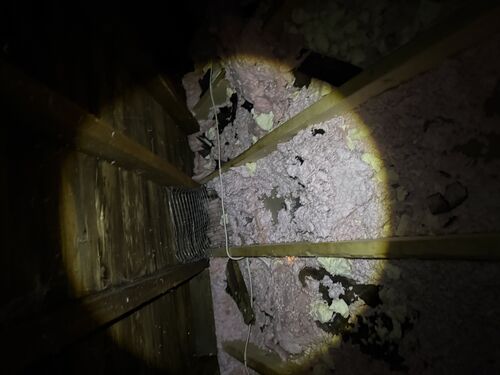
Toronto has an estimated 100,000 raccoons within the world's highest known urban density. With 63.9% of the city's housing stock built before 1981, the aging rooflines, weathered soffits, and deteriorated fascia boards that characterize Toronto's residential neighbourhoods create hundreds of thousands of potential raccoon entry points. Raccoon attic intrusions are the single most common high-cost wildlife scenario in the GTA.
The treatment, in the form of professional wildlife removal and exclusion, is the smallest number. It is what happens during and after the animal's occupation of the attic that produces the real bill.
A raccoon that successfully raises a litter in your attic returns to the same site the following spring. Female offspring from that litter, born in your attic, imprint on the site and return to it for their own litters two to three years later. An attic that is not properly excluded after the first intrusion sees compounding damage over multiple seasons with the insulation contamination that costs $2,000 to address after one season costing $6,000+ after three.
Treatment cost: $400 – $1,200
Repair cost: $1,000 – $12,000
Total exposure: $1,400 – $13,200
The City of Toronto's own data shows rodent service requests more than doubled from 1,165 in 2015 to 2,523 in 2024. Ontario Line TTC construction has added documented rat displacement into East Toronto neighbourhoods, and the City's 2026 Rat Response Plan acknowledges the scale of the problem.
The cost drivers for rat damage are wiring and structural integrity. Norway rats, the primary species in Toronto, are powerful gnawers capable of chewing through concrete block, lead pipe, and every commonly used building material.
Rat damage cost breakdown:
Why Toronto homeowners face higher-than-average rat repair bills:
Toronto's pre-1960 housing stock (32.6% of all dwellings) has aging clay tile sewer laterals that tree roots have cracked over decades. These cracks provide direct rat access from the municipal sewer into the foundation. Unlike above-ground entry points that are visible during an exterior inspection, sewer lateral cracks are invisible without a drain camera scope. An unaddressed sewer access point means recurrent infestation regardless of how many times surface exclusion work is done.
Treatment cost: $395 – $1,200
Repair cost: $2,000 – $20,000
Total exposure: $2,395 – $21,200
Carpenter ants are consistently underestimated as a property damage threat. Toronto homeowners who discover them trailing across a kitchen counter or appearing as winged swarmers (alates) in May often assume the problem is minor but it rarely is. A carpenter ant colony large enough to produce swarmers (alates) has typically been established for 3 to 5 years which is the time it takes a colony to mature from founding queen to reproductive population.
In that time, the satellite colony inside the structure has been excavating galleries through the building's framing, floor joists, window headers, and porch posts. Carpenter ants do not eat wood but instead they excavate it which means the damage is structural void creation, weakening the member from the inside.
What carpenter ant damage looks like in dollars:
The moisture connection and why it matters for cost:
Carpenter ants are a moisture indicator species. They do not attack dry sturdy structural wood, they colonize wood that has been softened by moisture damage: roof leaks, failed flashing, condensation around plumbing, ice-dam damage, and clogged eavestroughs. This means that every carpenter ant structural repair job has an underlying moisture problem in the structure that must also be addressed. Without tackling the moisture problem, the carpenter ant infestation will return within a few years.
Removal and exclusion cost: $300 – $700
Repair cost: $1,500 – $8,000
Total exposure: $1,800 – $8,700
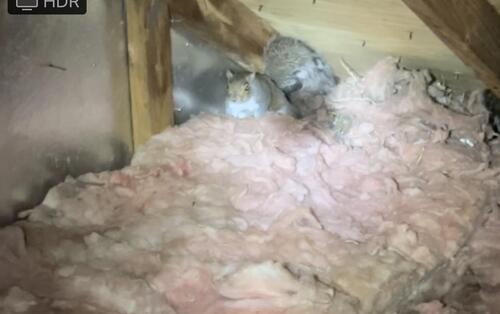
Squirrel attic damage is defined by one factor above all others: wiring. Grey squirrels gnaw continuously because their incisors grow throughout their lives and must be worn down by constant chewing. Rodent teeth grow up to 15 cm (6 inches) per year. Electrical wiring in an attic is a preferred chewing target which is a fire hazard.
Toronto Fire Services responds to residential fires attributed to rodent wiring damage every year. The combination of an attic with chewed wiring, compressed insulation, and dried nesting material creates a fire scenario in which every element accelerates the other. A wiring fire in an attic typically involves the full roof structure before fire suppression arrives.
Squirrel damage cost breakdown:
The two-litter complication:
Grey squirrels have two litter seasons in Ontario, the periods are March through April, and July through August. A property that has squirrels in the attic without addressing them through a full year therefore experiences two periods of active nesting, wiring damage, and insulation destruction. The cost of remediation after a squirrel has occupied an attic for a full year with two litters is typically two to three times the cost of addressing the infestation after a single season.
Treatment cost: $500 – $2,500
Remediation cost: $200 – $2,000
Total exposure: $700 – $4,500
Bed bugs represent the one entry on this list where the treatment cost, not the property damage, is the primary financial exposure. Bed bugs do not damage structural materials. But the treatment of a significant bed bug infestation particularly in a Toronto condo where multiple units must be treated simultaneously. The replacement cost of heavily infested mattresses, upholstered furniture, and bedding produces a meaningful bill.
The city's high-density condo stock creates the conditions for rapid multi-unit spread. 44% of Toronto's residents live in a condo and in a building where building management coordinates treatment across multiple floors, the total cost across all affected units can reach tens of thousands of dollars.
Bed bug cost breakdown:
Treatment cost: $400 – $800
Repair cost: $500 – $10,000
Total exposure: $900 – $10,800
Mice are the pest most Ontario homeowners treat as a minor inconvenience. This pest most frequently becomes an expensive problem through inaction. A mouse infestation that is managed with snap traps and no exclusion work recurs every fall indefinitely. An infestation that goes unaddressed for multiple seasons produces compounding contamination, wiring damage, and in some cases insulation saturation that rivals the remediation cost of a single-season raccoon occupation.
Mouse damage cost breakdown:
The insurance gap:
Standard Ontario homeowner insurance explicitly excludes rodent damage including chewed wiring, contaminated insulation, and structural damage. If a house fire is caused by rodent-chewed wiring, the fire damage itself may be covered, but the wiring repair that would have prevented it was not. This exclusion applies regardless of how the infestation began.
Treatment cost: $275 – $800
Remediation cost: $0 – $500
Total exposure: $275 – $1,300 (residential)
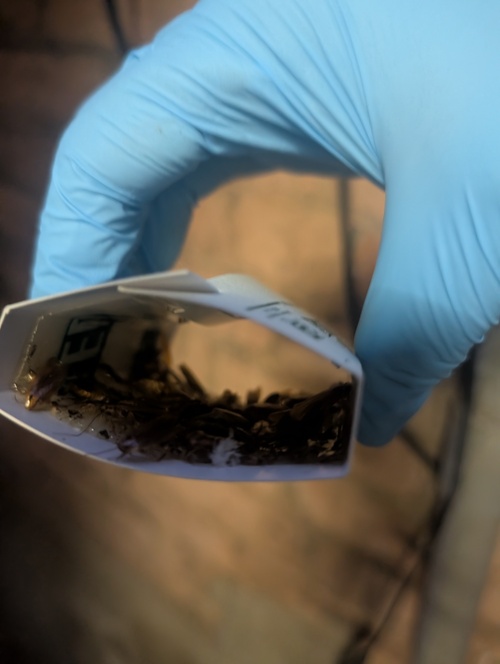
Cockroaches cause minimal structural property damage in Ontario homes unlike the species mentioned earlier, cockroaches do not chew structural materials, contaminate insulation, or create fire hazards. Their primary residential cost is the treatment itself, plus the replacement of contaminated food items.
The commercial cost is a different matter entirely. A DineSafe crucial infraction for cockroaches in a Toronto restaurant triggers immediate closure and public posting on the DineSafe website. The cost of a closure to a restaurant is coupled with lost revenue during closure, emergency treatment costs, staff wages during downtime, and the reputational impact of a public closure notice. All these items typically runs $2,000 to $10,000 per incident, and repeat infractions can threaten the operating licence.
Where cockroach costs escalate:
Treatment cost: $150 – $500
Repair cost: $200 – $2,000
Total exposure: $350 – $2,500
Wasp and hornet property damage is limited but wall void nests can damage drywall and wall finishing materials when colonies grow large enough to expand. Also nests in soffits can cause water infiltration through damaged material. The true financial risk of wasps is medical. Anaphylactic reactions to wasp stings are a genuine medical emergency. A single allergic reaction can produce emergency medical costs, time off work, and potentially long-term medical management.
For Ontario homeowners without a known venom allergy, the property damage cost of wasps is real but manageable. For households with a venom-allergic member, the risk profile changes completely when professional removal of any wasp nest on the property is not optional.
Wasp repair cost breakdown:
Every pest on this list follows the same cost curve: early detection and treatment cost is measured in hundreds of dollars. Delayed detection or inaction allows populations to grow and damage to accumulate and potentially pushing up the cost to thousands to tens of thousands. The cost multiplier between early and late intervention is typically 5x to 20x depending on species.
The three interventions that provide the highest return on pest-management investment for Ontario homeowners are:
The cost of an annual professional inspection is $150 to $300. The cost of the damage it might detect and prevent early can save homeowners a headache in the thousands to tens of thousands.
Standard Ontario homeowner policies exclude damage caused by pests, insects, birds, and rodents as a maintenance issue. The specific exclusions typically include: termite structural damage, rodent damage to wiring, raccoon and squirrel damage to attics and insulation, carpenter ant structural damage, and bed bug treatment costs.
What may be covered: if a pest-related event causes a secondary insurable loss like house fire caused by rodent-chewed wiring with the fire damage potentially be covered even though the wiring repair is not. Please contact your insurance company to confirm details of what your home insurance policy covers.
The practical implication: every dollar of pest damage repair in Ontario comes out of pocket. The total exposure figures in this article represent uninsured out-of-pocket costs.
Do you have a pest problem that needs to be looked at right away? Contact Guard More Pest Control about your pests and we'll work on solving your pest problem within 24 hours.