.png)

What is the 5 7 9 rule for Squirrels?
Last updated:
July 15, 2026

You may have come across the phrase "5 7 9 rule" while researching how to deal with squirrels. While it isn't an official wildlife management term, it captures a practical framework used by pest control professionals by referring to the key distances and timing that determine whether squirrel removal and relocation will actually work.
Here's what the term means in practice.
The minimum distance to relocate a trapped squirrel so it cannot find its way back.
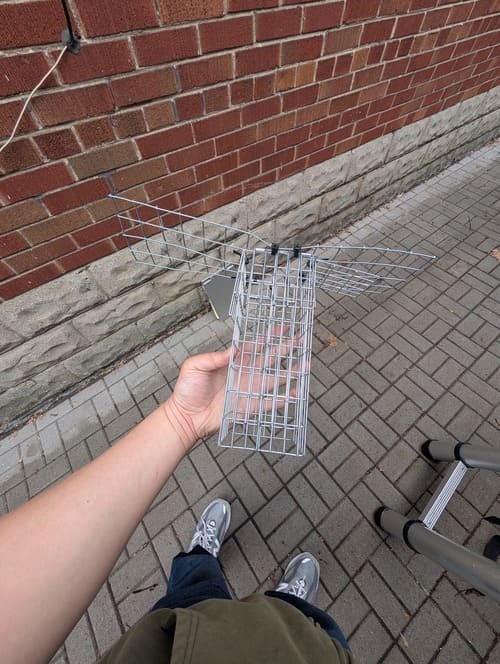
Squirrels have a strong homing instinct and a well-documented ability to navigate back to familiar territory. Studies have shown they can return from distances of 2–3 km with relative ease. Relocating at least 5 km away to a wooded area well away from residential neighbourhoods. This relocation distance will significantly reduces the chance of the same animal coming back. Some wildlife professionals recommend up to 10 km to be safe.
The window to watch for re-entry after removal before permanently sealing entry points.
After a squirrel has been removed or has left through a one-way exclusion door, it's critical to wait and observe the entry point for at least 7 days before permanently sealing it. Squirrels often travel in and out over several days, and sealing too soon can trap animals inside. Any trapped animals can lead to damage, odour problems, and in some cases, a far more difficult removal job. Seven days is the standard observation window used by professional wildlife technicians.
The recommended distance to keep tree branches away from your roofline to block access.
Tree branches that hang near or over your roofline are the number one access route squirrels use to reach attics and upper structures. Maintaining at least 2–3 metres of clearance between any branch and your roofline is a widely recommended standard. For larger and more agile squirrel species common in Canada, up to 9 metres of clearance provides a more reliable barrier. Combine this with metal squirrel guards on drainpipes to eliminate climbing routes entirely.
Do you have a pest problem that needs to be looked at right away? Contact Guard More Pest Control about your pests and we'll work on solving your pest problem within 24 hours.