.png)

How to tell the difference between Carpenter Ants and Termites in Ontario
Last updated:
August 2, 2026

Misidentifying carpenter ants as termites and termites as carpenter ants is one of the most expensive pest mistakes an Ontario homeowner can make. Carpenter ants and termites both damage wood and both produce winged reproductive swarmers that trigger homeowner alarm. But they require completely different treatment protocols, and getting it wrong means paying for the wrong treatment, delaying the right one, and potentially allowing an established infestation to grow significantly while you act on bad information.
Ontario does have termites. Reticulitermes flavipes, also known as the Eastern Subterranean Termite, is present in Toronto and has been documented across Cabbagetown, the Annex, and the Beaches. These are the same older neighbourhoods where carpenter ants are most active. Both species respond to the same environmental conditions: moisture-damaged wood and aging structures.
Carpenter ants have a clearly pinched waist — the narrow connection between the thorax and abdomen is visible to the naked eye. Termites have no visible waist — their body is uniform in width from head to abdomen, giving them a soft, slightly cylindrical appearance. This difference is visible without magnification and is the single most reliable identification tool.
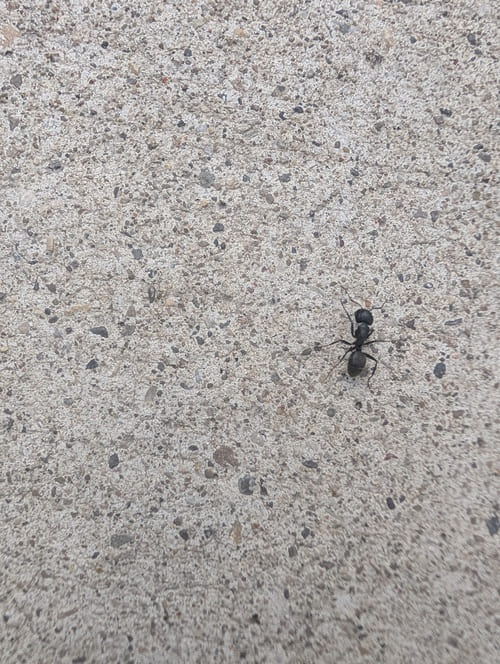
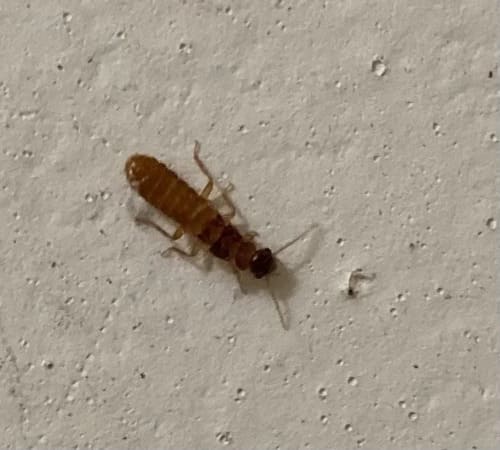
Carpenter ant antennae are elbowed. Carpenter ant antenna bend at a distinct angle approximately halfway along their length similar to human elbows. Termite antennae are straight and beaded, with a slight droop. It's much easier to tell the difference between antenna under a magnifying glass, this distinction is definitive.
Both carpenter ants and termites produce winged reproductive individuals known as alates or swarmers that emerge in spring. On a carpenter ant swarmer, the front pair of wings is noticeably larger than the rear pair. On a termite swarmer, all four wings are equal in length. Shed wings found near windows and doors in spring are one of the most common homeowner discovery scenarios by examining the wings: equal length means termites; unequal length means carpenter ants.
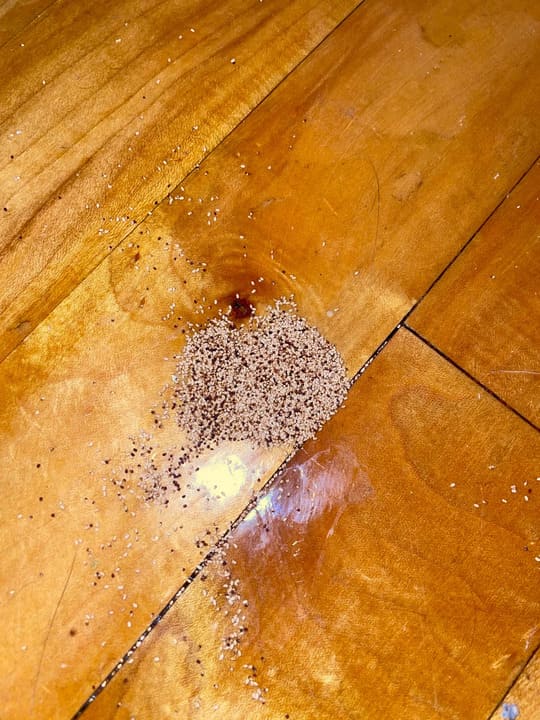
Carpenter ants do not eat wood but instead excavate it to build their galleries. The resulting damage has a characteristic appearance: smooth, sandpapered interior surfaces, as if sanded with fine-grit paper. Galleries follow the grain of the wood, particularly in softer, moisture-damaged zones. The most diagnostic sign of carpenter ant activity is frass which is the debris they push out of their galleries. Carpenter ant frass looks like pencil shavings or coarse sawdust, mixed with insect body parts (legs, antennae segments) and insulation material if present. It accumulates in small piles below entry holes in the wood.

Termites eat wood and they digest cellulose. Termite galleries are packed with mud (for subterranean species) which have a rough, soil-packed interior making it look like opposite of the smooth carpenter ant gallery. The most definitive termite field indicator is the mud tube. A mud tube is a pencil-width or wider tunnel of mud built along the exterior of foundation walls, piers, and sill plates, connecting the soil (where the colony lives) to the wood above. No carpenter ant produces a mud tube. If you find a mud tube, call a termite specialist immediately.
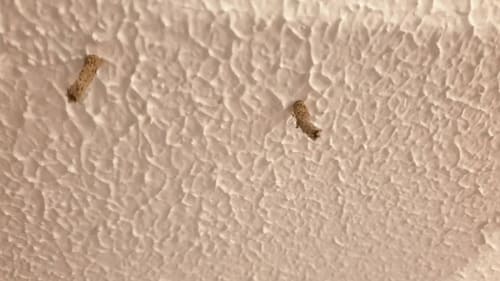
Carpenter ant frass: dry, coarse, sawdust-like, mixed with insect body parts. Looks like pencil shavings.
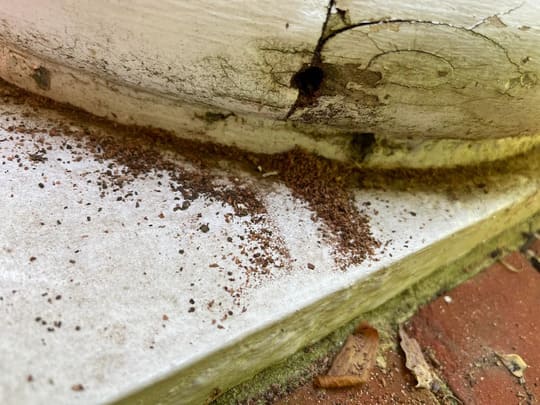
Termite frass: either mud-packed galleries (subterranean species) or tiny, hard, six-sided pellets (drywood species). No insect parts present.
Both carpenter ants and termites produce swarmers in spring which causes homeowners to misidentify the pests.
In Ontario, the timing differs slightly:
Carpenter ant swarmers emerge when daytime temperatures consistently exceed 15°C usually around May and June. Finding winged ants inside your home in May is the most diagnostic sign that a mature carpenter ant satellite colony is established inside your structure.
Termite swarmers in Ontario emerge a bit earlier usually often on warm days in March and April. Finding any swarmers inside in early spring (before Carpenter Ant season) strongly suggests termites.
Both species lose their wings shortly after emerging. A pile of shed wings near a window in spring warrants close examination.
Carpenter ant treatment focuses on finding and treating the satellite colony inside the structure (where queen, workers, larvae, and pupae are located). The process is locating and treating the parent colony outdoors (usually in dead wood within 100 metres of the home), and applying non-repellent residual treatments to prevent re-establishment.
Termite treatment in Ontario involves soil treatment with termiticide, bait system, or mix of both. There's also termite foam that kills them directly on contact used for inside the structure. The termite treatment targets the underground colony that carpenter ant treatment does not directly address.
Do you have a pest problem that needs to be looked at right away? Contact Guard More Pest Control about your pests and we'll work on solving your pest problem within 24 hours.