.png)



Last Updated: September 12, 2026
Professional Dead Animal Removal
Dead Raccoon, Squirrel, Skunk, Rodent & Opossum Removal
A strong unexplained odour inside your home can sometimes mean an animal has died somewhere inside or around the structure.
Guard More Pest Control provides professional dead animal removal for carcasses involving animals such as:
- Raccoons
- Squirrels
- Opossums
- Rats and mice
- Opossums
- Other accessible wildlife
Dead animals may be found in:
- Attics
- Wall voids
- Crawlspaces
- Garages
- Chimneys
- Under decks
- Under porches
- Sheds
- Roof spaces
- Exterior structural cavities
Our service focuses on finding the likely source, accessing the carcass where practical, removing it and assessing why the animal was able to enter or become trapped in the first place.


What Our Dead Animal Removal Customers Say
Signs There May Be a Dead Animal in Your Home
The most obvious sign is usually odour.A decomposing animal can create a strong smell that may become noticeable in one room or area before spreading through the property.
Other signs can include:
- Sudden foul or decaying odour
- Smell strongest near a wall, ceiling or attic
- Flies appearing indoors
- Insect activity around one specific area
- Staining around drywall or ceilings
- Previous scratching or wildlife noise that suddenly stopped
- Odour coming from beneath a deck or porch
- Strong smell near vents or attic access
An odour alone does not prove there is a dead animal.Other causes such as plumbing, drains, waste or moisture problems can produce unpleasant smells as well.
The first job is therefore to identify the likely source rather than immediately opening walls at random.
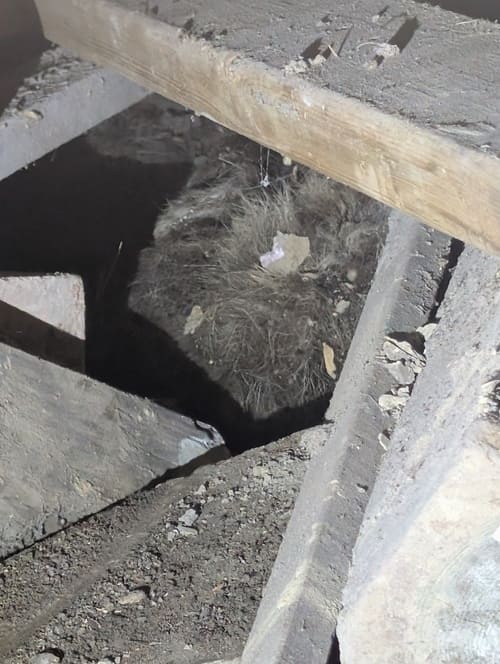
Image: Dead raccoon corpse under backyard deck
Where Dead Animals Are Commonly Found
Attics
Every Guard More Pest Control attic remediation follows this sequence. Skipping steps produces incomplete results that require costly re-treatment.

Wall Voids
Every Guard More Pest Control attic remediation follows this sequence. Skipping steps produces incomplete results that require costly re-treatment.
Under Decks & Porches
Every Guard More Pest Control attic remediation follows this sequence. Skipping steps produces incomplete results that require costly re-treatment.
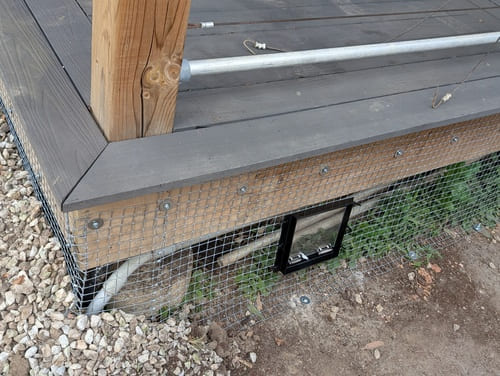
Crawlspaces
Crawlspaces provide concealed areas where rodents and wildlife can enter unnoticed.
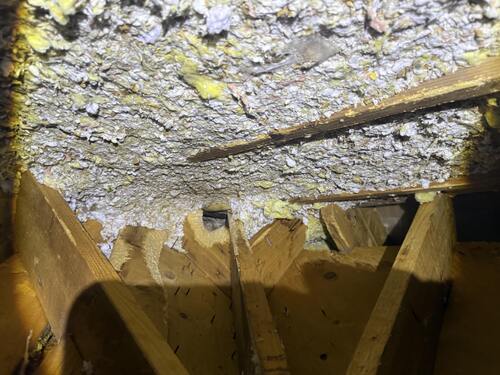
Chimneys
Wildlife can occasionally become trapped inside chimneys or related structural areas.
Garages & Sheds
Animals may enter garages, sheds and other outbuildings through open doors or structural gaps.
Our Toronto Dead Animal Removal Process
1. Identify the Likely Source
We start by determining where the odour or suspected carcass appears to be coming from.
This can involve checking:
- Attics
- Roof areas
- Crawlspaces
- Basements
- Garages
- Exterior voids
- Decks and porches
- Known wildlife entry points
The objective is to narrow down the location before recommending access work.
2. Locate the Animal Where Possible
If the carcass is visible or accessible, removal can usually be straightforward.
If it is inside a concealed wall or structural void, the situation may require more investigation before opening finished surfaces.
3. Remove the Carcass
Where safely accessible, the dead animal is removed and contained for appropriate disposal.
4. Assess the Contaminated Area
Depending on where the animal died, surrounding materials may have been affected by:
- Decomposition fluids
- Nesting material
- Droppings
- Odour
- Insect activity
The extent of cleanup depends on the location and amount of contamination.
5. Inspect for Wildlife Entry Points
If the animal died inside the structure, one of the most important questions is:
How did it get inside?
Where relevant, Guard More can inspect for wildlife access around:
6. Recommend Exclusion or Proofing
Where an entry point is identified, wildlife exclusion or proofing may be recommended to reduce the chance of another animal accessing the same area.
- Roof vents
- Soffits
- Fascia
- Foundations
- Utility openings
- Decks and sheds
- Other structural gaps
Dead Raccoon Removal
Raccoons commonly access attics and roof spaces through vulnerable vents, soffits and damaged roof areas.
A dead raccoon can create a particularly strong odour because of the animal's size.
Potential locations include:
- Attics
- Roof voids
- Chimneys
- Under decks
- Under sheds
- Exterior crawlspaces
If a raccoon has died inside an attic, the job may involve both carcass removal and inspection of the wildlife entry point.
Dead Squirrel Removal
Squirrels can enter attic and roof spaces through vents, soffits and small structural openings.
Because squirrels are smaller than raccoons, they may also enter tighter voids and become difficult to locate.
Possible signs include:
- A persistent odour near a ceiling
- Flies appearing around an upper floor
- Previous scratching or running in the attic that suddenly stopped
Where the carcass is accessible, it can be removed directly.
If it is inside a wall or inaccessible roof cavity, additional investigation may be required.
Dead Skunk Removal
Skunks commonly use sheltered ground-level areas such as:
- Under decks
- Under porches
- Under sheds
- Crawlspaces
- Woodpiles or exterior voids
A dead skunk can produce particularly difficult odour conditions because normal decomposition can combine with the animal's natural scent.
The first step is to determine whether the smell is coming from:
- A dead skunk
- A live skunk that has sprayed
- Another decomposing animal
- Another odour source entirely
Where a carcass is found under a structure, removal may require access beneath the deck, porch or crawlspace.
Dead Opossum Removal
Opossums are part of Toronto's urban wildlife population and can use sheltered spaces around residential properties.
Potential locations include:
- Under decks
- Under sheds
- Garages
- Crawlspaces
- Exterior voids
If an opossum dies in a confined area near the structure, decomposition odour may become noticeable indoors.
Where accessible, Guard More can remove the carcass and assess the surrounding area for wildlife access conditions.
Dead Animal in a Wall
This is one of the most common reasons homeowners search for professional dead animal removal.
If the smell is strongest around one wall or ceiling area, the carcass may be inside a concealed void.
The difficulty is that opening drywall without knowing the location can create unnecessary damage while still missing the animal.
Before recommending access, the objective should be to narrow down the likely location using:
- Odour concentration
- Previous wildlife or rodent activity
- Structural layout
- Access from attics or crawlspaces
- Insect activity (flies and/or beetles)
- Visible staining where present
If opening finished surfaces is required, the amount of access work depends on the specific property and location.
Dead Animal in the Attic
Attic carcass removal is generally easier when the animal is accessible above the insulation.
However, wildlife can also die:
- Beneath insulation
- Behind attic framing
- Inside inaccessible roof cavities
- Near soffits
- Inside wall transitions
After removal, the surrounding insulation or nesting material may need to be assessed for contamination.
If significant attic contamination is present, attic decontamination services will be required.
Why Does a Dead Animal Smell So Strong?
As an animal decomposes, biological processes produce volatile compounds that create a strong, distinctive odour.
The intensity depends on factors such as:
- Animal size
- Temperature
- Airflow
- Moisture
- Location
- Amount of surrounding material absorbing the odour
A raccoon carcass in a warm attic can create a very different odour problem from a small mouse behind a basement wall.
Removing the source is generally more effective than simply trying to mask the smell.
Will the Smell Go Away If I Leave the Animal There?
Eventually, decomposition odours can reduce but waiting for the smell to go away has disadvantages.
The carcass may:
- Continue producing strong odour
- Attract flies and other insects
- Contaminate nearby insulation or materials
- Leave decomposition fluids
- Create a longer cleanup problem
Where the carcass is reasonably accessible, source removal is usually preferable to simply masking the odour.
Flies After a Dead Animal Dies
A sudden increase in flies can sometimes accompany a decomposing animal.
Depending on the species and location, flies may lay eggs on the carcass and emerging adults may later appear inside the building.
This can be particularly noticeable when an animal dies inside:
- A wall
- An attic
- A chimney
- A crawlspace
Removing the carcass helps address the source rather than treating only the adult flies appearing indoors.
Dead Animal Odour Removal
Odour treatment should come after the source is located and removed where possible.
Trying to deodorize a room while leaving a carcass inside the structure may provide only limited relief.
Depending on the condition of the site, cleanup can involve:
- Carcass removal
- Removal of affected nesting material
- Removal of heavily contaminated insulation where necessary
- Surface cleaning
- Targeted deodorizing treatment
- Ventilation
- Additional remediation where contamination is extensive
The exact scope should be based on what is actually found.
What If the Animal Cannot Be Reached?
Some dead animals are located inside structural areas that cannot be reached without opening walls, ceilings or other finished surfaces.
In these situations, the options depend on:
- Confidence in the carcass location
- Severity of the odour
- Accessibility from another area
- Amount of structural opening required
- Potential damage caused by access
- Whether waiting is reasonable
We do not recommend blindly cutting open multiple areas of a home just because there is an unexplained smell.
The likely source should be narrowed down first.
Should You Handle a Dead Animal Yourself?
Avoid touching wildlife with bare hands.
The City of Toronto specifically advises residents to use face mask (P100 filter ideally), gloves, and a double plastic bag (even triple plastic bag) when handling dead animals and to wash hands thoroughly afterwards.
Professional removal is particularly useful where:
- The animal is inaccessible
- The carcass is inside an attic or wall
- The animal is large
- Significant decomposition has occurred
- There is contamination
- Wildlife entry needs to be investigated
- You are uncertain what animal is involved
Dead Animals on Toronto Public or Private Property
Toronto Animal Services handles certain dead-animal pickup requests, call 311 to find more details about the program at https://www.toronto.ca/community-people/animals-pets/enforcement-assistance/
The City states that service requests can be made for larger dead wildlife such as raccoons and skunks, including assistance with dead animals on private property. Small dead animals such as squirrels, mice, rats and small birds are generally not picked up by the City and should be safely bagged for regular garbage collection.
However, municipal pickup is not the same service as locating and removing a carcass from:
- An attic
- A wall
- A crawlspace
- Beneath a deck
- Inside a roof
- Another inaccessible structural area
If the animal is inside your home or building, a wildlife/pest-control company may be the more appropriate call.
For an animal lying openly on City property, contacting 311 may be the better first step.
Why Did the Animal Die Inside the House?
The cause is not always obvious.
Possible scenarios include:
- The animal entered the structure and became trapped
- An injured or sick animal sought shelter
- Wildlife entered through an existing opening
- A rodent consumed bait elsewhere before entering a concealed area
- An animal became separated from an exit route
- Young wildlife died inside a nesting area
Whatever the cause, a carcass inside the property is often also evidence of a structural access problem.
That is why dead animal removal should sometimes be followed by wildlife or rodent exclusion.
Dead Animal Removal + Wildlife Proofing
Removing the carcass solves the immediate problem but it does not address the fact regarding how wildlife entered the property.
Where applicable, Guard More can inspect for structural access and recommend:
- Roof vent protection
- Soffit repair or reinforcement
- Entry-point sealing
- Wildlife-resistant coverings
- Deck or shed exclusion
- Rodent proofing
- Other structural prevention measures
This is particularly important if the dead animal is found in an attic or other part of the building envelope.
How Much Does Dead Animal Removal Cost in Toronto?
Dead animal removal pricing depends heavily on accessibility.
Factors can include:
- Animal size
- Animal location (in an attic, under a deck, inside a wall, within a crawlspace)
- Whether the carcass is visible
- Attic or crawlspace access
- Whether drywall or other materials need to be opened
- Amount of contamination
- Odour treatment required
- Exclusion or proofing work
An accessible squirrel under a deck is a very different job from a raccoon carcass inside a difficult attic void.
Current Toronto-area competitors advertise dead animal removal starting around $395, but final pricing depends on location, access and additional work required.
Guard More should quote based on the actual site conditions rather than presenting one universal price.
Dead Animal Removal FAQs
Can you find a dead animal if I can smell it but cannot see it?
Often, yes. The first step is narrowing down the likely source using the strength and location of the odour, building layout, previous wildlife activity and other evidence. Some concealed carcasses may still require access work to retrieve.
Do you remove dead animals from walls?
Where the likely carcass location can be identified and reasonably accessed, removal may be possible. Wall jobs vary because the amount of finished-surface access required depends on the structure.
Do you remove dead raccoons?
Yes. Guard More can provide dead raccoon removal where the carcass is on or within an accessible part of the property.
Do you remove dead squirrels?
Yes. Dead squirrels may be found in attics, roof spaces, walls, sheds and other structural locations.
Do you remove dead skunks?
Yes, where the carcass is accessible on private property or inside a structure. Dead skunk jobs can involve particularly strong odour conditions.
Do you remove dead opossums?
Yes, where the animal is accessible on or within the property.
Can you remove the smell after the animal is gone?
Odour can often be reduced by removing the carcass and affected contaminated material first. Additional cleaning or deodorizing may be appropriate depending on the site.
How long does dead animal smell last?
There is no fixed time frame. It depends on the size of the animal, temperature, airflow, moisture and whether the carcass remains in place.
Should I call 311 for a dead animal?
For larger wildlife lying openly on Toronto public or private property, 311 may be appropriate. For a carcass inside a wall, attic, roof, crawlspace or other inaccessible part of a building, a private wildlife-removal company is generally the more relevant service.
Can a dead animal attract insects?
Yes. Decomposing carcasses can attract flies and other scavenging insects. Removing the source is generally more useful than treating only the insects.
Need Dead Animal Removal?
If you've noticed a strong unexplained odour, flies or a suspected dead animal inside your attic, wall, crawlspace, garage or beneath a deck, the first job is locating where the source is coming from.
Guard More Pest Control provides professional dead animal removal in Toronto for raccoons, squirrels, skunks, opossums and other accessible wildlife.
We can help locate the source, remove the carcass where practical and assess whether wildlife or rodents are entering through a structural opening.
Related Wildlife Management Services
Keep Your Home/Business Pest-Free Today
Do you have a pest problem that needs to be looked at right away? Contact Guard More Pest Control about your pests and we'll work on solving your pest problem within 24 hours.