Bed Bug Case Study: Two-Bedroom Apartment in Toronto
Last updated:
November 4, 2026
Case snapshot
An airborne treatment arranged by property management left a live bed bug infestation untouched. Guard More Pest Control's targeted heat, steam and chemical treatment found and treated the bugs where they were actually hiding.
Airborne application of an unidentified chemical, arranged by the property management's pest control company
Prior result
Bed bugs still active after treatment
Our treatment
Targeted inspection, then heat, steam and chemical treatment of harbourage sites
Where bugs were found
Underside of the couch, underside of the box spring, top of one mattress
Service date
November 3, 2026
Technician
Jason Chan (License #: L-206-1475007783)
The problem
The resident reported bed bug activity in their two-bedroom apartment and two fumigation style treatments have been preformed prior to Guard More Pest Control visiting. Building management sent its contracted pest control company, which treated the unit by releasing a chemical into the air. The product used was never identified to the resident.
After that treatment, the resident was still seeing signs of bed bugs and receiving bites every couple days. Isolated apartment unit air treatments are a common first response in multi-unit housing because they are fast and cover a whole unit at once. For bed bugs, though, speed and coverage of open air are not what decide the outcome.
Why the fumigation style bed bug treatment failed
Bed bugs don't live in open air. They hide in tight, covered spots close to where people sleep and sit, and an airborne mist settles on exposed surfaces without reaching underneath them.
They hide under cover. Bed bugs pack into seams, folds, fabric linings and the undersides of furniture. In this unit they were under the couch, under the box spring and on a mattress, all places shielded from a mist that drifts down onto top surfaces.
Fabric and wood block contact. Most residual chemicals have to touch the insect, or a surface it crawls over, to work. Dust covers, upholstery and box spring frames keep the product from reaching the bugs inside.
Eggs survive. Bed bug eggs are glued into cracks and seams and are hard to kill with contact sprays. Any eggs that survive hatch and restart the infestation.
Bugs can scatter. Airborne treatments can push/repell bed bugs deeper into furniture or into wall voids and neighbouring units, which makes the problem harder to find later.
Note: A true structural fumigation uses a sealed gas that penetrates furniture and walls, which is a different process. What was described here, a chemical released into the air of an occupied unit, works like a fogger or space spray.
Our inspection findings
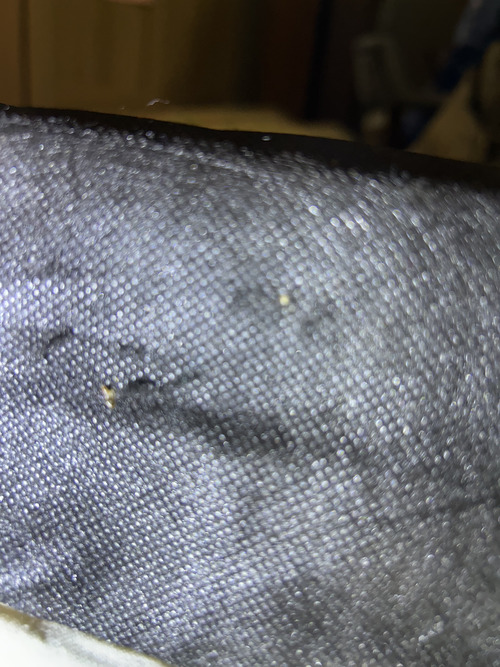
A hands-on inspection found live bed bugs in three spots, two of them on the underside of furniture where an airborne treatment could not reach.
Location
Room
What we found
Reached by air treatment?
Underside of couch
Living Room
Shed Skin, Dead Bed Bug
No, the affected area is covered by couch bottom flaps
Underside of box spring
Bedroom 1
Dead Bed Bug
No, the affected area is covered by box spring's underneath black fabric
Top of one mattress
Bedroom 1
Dead Bed Bug
Yes, the applying chemicals to any area that touches human skin is dangerous
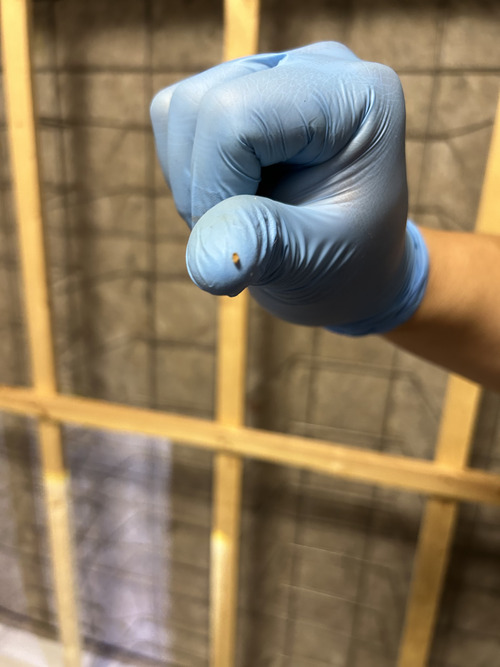
Bed Bug in mattress box spring
Bed Bug on couch underside fabric
Our treatment
We treated the bugs where they were found, combining both steam heat and chemical methods so each one covers what the others miss. The steam heat provided immediate extermination with residual chemical providing long term protection. We provide pre-treatment and post-treatment bed bug guides to all clients.
Inspect first. Flipped and checked the couch, box spring, mattresses, bed frames and nearby baseboards before any product is applied. Treatment follows the evidence, not a guess.
Steam Heat. Applied heat to infested furniture and items with our industrial steamer. In this case, we steamed the mattress seams and piping, the box spring underside and the couch frame and upholstery. Steam pushes heat into seams and folds where eggs are glued. Heat kills bed bugs at every life stage, including eggs, and leaves no chemical residue. Bed Bugs instantly die on contact with temperatures above 51°C. This is the safest removal method for items that chemicals cannot be applied on.
Targeted chemical. Applied a residual product into cracks, crevices, frame joints and baseboards near the beds and couch. This catches any bugs that move after treatment or hatch later. The chemical used was Aprehend PCP Reg. No. 33745
Results
Update on treatment results to be provided in 2-3 weeks.
Key takeaways
For tenants
If bugs are still around after an air treatment, it likely didn't reach where they hide.
Check the undersides of couches, box springs and mattress seams before and after any treatment.
Ask what product and method were used, and whether a follow-up visit is included.
For property managers
Bed bugs need a hands-on inspection and treatment at the harborage sites, not a whole-room air spray.
A failed first treatment costs a second visit and can spread bugs to neighbouring units.
Heat and steam treat furniture without heavy chemical use in occupied homes.
If you find our content useful, please add guardmorepests.com as a preferred source on Google.
Keep Your Home/Business Pest-Free Today
Do you have a pest problem that needs to be looked at right away? Contact Guard More Pest Control about your pests and we'll work on solving your pest problem within 24 hours.