.png)

Chelsea Hotel Toronto Bed Bug Incident: What Travellers Should Know
Last updated:
September 9, 2026

A viral video alleging a bed bug encounter at the Chelsea Hotel in downtown Toronto has put hotel bed bugs back into the spotlight.
On September 1, 2026, TikTok user @temkaslife posted a video showing red welts on his body and insects appearing to be bed bugs moving across hotel bedding. The guest said he discovered the insects after waking during a stay at the Chelsea Hotel Toronto.
CityNews Toronto reported on the video on September 3, 2026. At the time its story was published, CityNews said it had contacted the Chelsea Hotel for comment but had not received a response.
The incident should therefore be described as a reported or alleged bed bug encounter, rather than proof that the hotel as a whole has a widespread infestation.
But the post is a useful reminder that Bed bugs can be encountered in hotels, apartments, condos and homes regardless of how clean or expensive the property appears.
Toronto Public Health specifically states that bed bugs can occur in hotels, motels, apartments, condos, private homes and other public or commercial environments.
According to CityNews, the guest's TikTok video showed multiple insects on the pillow and bedding along with clusters of red welts on his upper body.
The video quickly went viral, receiving millions of views and generating discussion about bed bugs in Toronto hotels and rental properties.
The Chelsea Hotel is a major downtown Toronto hotel near Yonge and Gerrard.
Importantly, a social-media video involving one room does not establish that an entire hotel is infested.
Bed bug activity can sometimes be highly localized, particularly when the insects have recently been introduced into a room through luggage or personal belongings.
A proper investigation would require inspection of the affected room and potentially nearby areas depending on what evidence was found.
No.
Bed bugs are not a reliable indicator of cleanliness.
Toronto Public Health specifically notes that anyone can get bed bugs, regardless of income or housing conditions. The insects can occur in hotels as well as homes, apartments and other properties.
Bed bugs are effective hitchhikers.
They can be transported between locations in:
A clean hotel room can therefore receive bed bugs when an infested item is brought into it.
The more important question is how quickly activity is identified, contained and professionally treated once it is reported.
Hotels experience constant movement of people and belongings.
Every day, guests arrive from different:
That creates repeated opportunities for a bed bug to be accidentally transported into a room.
Unlike cockroaches or rodents, bed bugs do not require exposed food or poor sanitation.
They primarily need access to a host and suitable hiding areas.
Typical hotel harbourage can include:
Toronto Public Health also describes hotels and other transient accommodation as environments where bed bugs can occur.
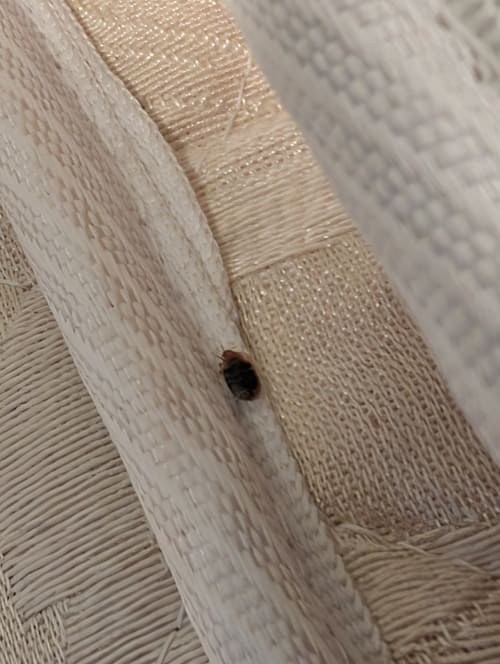
Whether you're staying at the Chelsea Hotel or any other hotel, a quick inspection before unpacking can reduce the risk of bringing bed bugs home.
When you first enter the room, avoid immediately placing your suitcase on:
A luggage rack or hard surface can be preferable while you inspect the sleeping area.
Pull back the bedding and look around:
Signs can include:
Bed bugs commonly harbour close to where people sleep.
Where practical, inspect:
You do not need to dismantle the hotel room.
You're looking for obvious evidence before settling in.
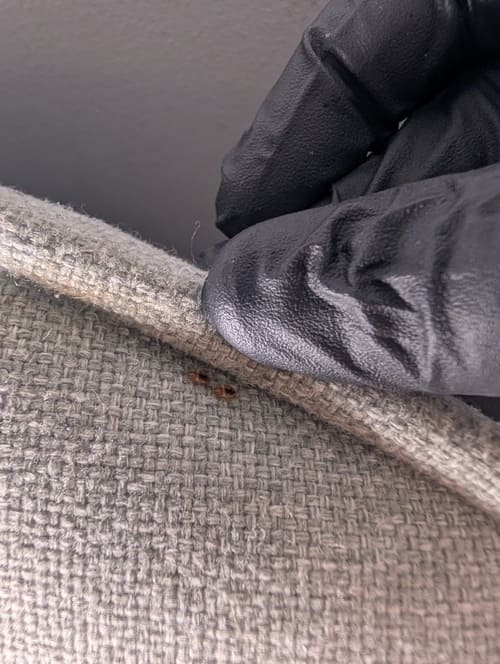
Despite the name, bed bugs are not restricted to beds.
They may also hide around:
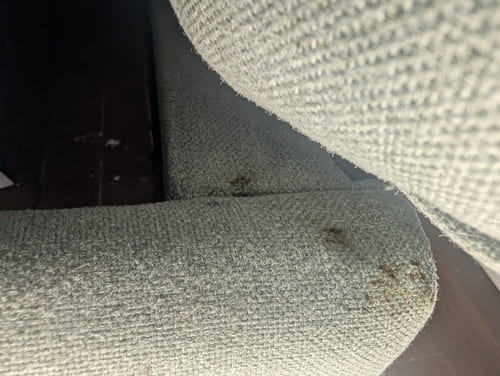
If you find an insect that appears to be a bed bug:
Document the insect before it disappears.
If possible, capture a specimen safely for identification.
Report the room and show staff the evidence you've found.
If your luggage has remained closed and away from the bed, keep it that way.
Moving belongings between beds, chairs and another room may increase the chance of transporting an insect.
The appropriate response may include taking the room out of service and arranging professional pest inspection.
Pay particular attention to:
Moving rooms may be appropriate, but the location matters.
If confirmed bed bug activity is found, the hotel should determine the appropriate response rather than simply moving a guest without considering the location of the new room.
Bed bugs can sometimes spread or be transported between nearby rooms.
For hotels, professional investigation may therefore consider adjacent areas depending on what evidence is found.
If you believe you were exposed to bed bugs while travelling, be careful about bringing luggage directly into bedrooms.
Useful steps can include:
Toronto Public Health recommends cleaning, vacuuming, laundering clothing and bedding, and using the highest appropriate dryer heat as part of bed bug management.
Do not automatically discard all of your belongings.
Bed bug exposure does not necessarily mean you've brought home an established infestation.
The sooner activity is confirmed, the easier it is to make an informed treatment decision.
Look for:
Bites alone are not reliable enough to confirm bed bugs.
Skin reactions vary significantly between people, and other insects or skin conditions can produce similar marks.
If possible, obtain a photograph or physical specimen before treatment.
The Chelsea Hotel story received significant attention partly because Toronto already has a strong association with bed bug complaints.
Orkin Canada currently describes Toronto as ranking number one on its list of Canada's top bed bug cities, based on its own treatment data.
That ranking does not mean every Toronto hotel or neighbourhood has bed bugs.
It reflects the volume of bed bug treatments recorded by that company within the city.
Toronto is also a large, densely populated city with substantial:
Those conditions create plenty of opportunities for bed bugs to hitchhike between locations.
A bed bug complaint should be treated as an inspection problem first.
A sensible hotel response can include:
For high-turnover properties, early detection matters.
A single introduced bed bug is easier to manage than allowing an undetected breeding population to become established.
Bed Bug Treatment depends on what the inspection finds.
Professional methods can include:
Toronto Public Health notes that established infestations may require a licensed pest-control company and multiple pesticide treatments over several weeks.
There is no responsible universal promise that every bed bug problem disappears after one spray.
The treatment programme should follow the size and location of the infestation.
The most important distinction in this story is between a reported incident and a confirmed property-wide infestation.
The viral September 2026 video appears to show insects consistent with bed bugs in a Chelsea Hotel room, and the guest reported bite-like welts.
CityNews covered those allegations and reported that the hotel had not responded to its request for comment by publication time.
That evidence justifies reporting:
“A guest reported apparent bed bugs during a stay at the Chelsea Hotel Toronto.”
It does not justify claiming:
“The Chelsea Hotel is infested with bed bugs.”
Those are materially different statements.
The lesson isn't to panic about one specific hotel.
It's to treat bed bug awareness as part of travelling.
Before unpacking:
After travelling:
Bed bugs can happen in budget accommodation, luxury hotels and private homes.
Early identification is more useful than assuming a particular type of property is safe.
If you've recently stayed in a Toronto hotel and are now finding suspected bed bugs at home, confirm the pest before starting treatment.
Guard More Pest Control provides professional bed bug treatment in Toronto and across the GTA for:
Our bed bug programme can combine professional residual treatment, targeted steam and scheduled follow-up depending on the property and activity found.
Do you have a pest problem that needs to be looked at right away? Contact Guard More Pest Control about your pests and we'll work on solving your pest problem within 24 hours.