.png)

Is It Worth Hiring a Wildlife Management Professional?
Last updated:
September 11, 2026

You see an animal, you want it gone, and the internet offers a range of traps, repellents, and deterrents that suggest the solution is a quick trip to the hardware store. For a squirrel in the garden or a skunk passing through the yard, that instinct is not entirely wrong. But for the situations that most homeowners actually call about such as animals in the attic, animals under the deck, animals denning in the crawlspace with young present, the gap between what DIY can accomplish and what a licensed wildlife management professional can accomplish is significant.
This article covers the four wildlife species most commonly encountered by Greater Toronto Area homeowners: raccoons, squirrels, skunks, and opossums. For each one, the honest answer to “is it worth hiring a professional” is slightly different. But the overall answer, for any situation that has moved beyond casual yard visits, is almost always yes.
Raccoons in the GTA have become remarkably sophisticated urban animals. Toronto’s population of over 100,000 raccoons — one of the densest urban raccoon populations in the world — has spent generations adapting to human infrastructure, garbage systems, and housing stock. The raccoon you are dealing with has almost certainly encountered people, bins, and houses before. Standard deterrents that work in rural or low-density areas are far less effective on a GTA raccoon that has learned what they are.
The timing of removal matters enormously with raccoons. A raccoon excluded from an attic in November, before breeding season, is a single-visit job. The same raccoon in March, when she is pregnant and establishing her den for spring, becomes a more complex removal requiring reunion protocols. The same situation in May, when kits are present and mobile, is the most time-intensive and expensive scenario of all. Every month of delay between October and April increases the complexity of what a professional faces.
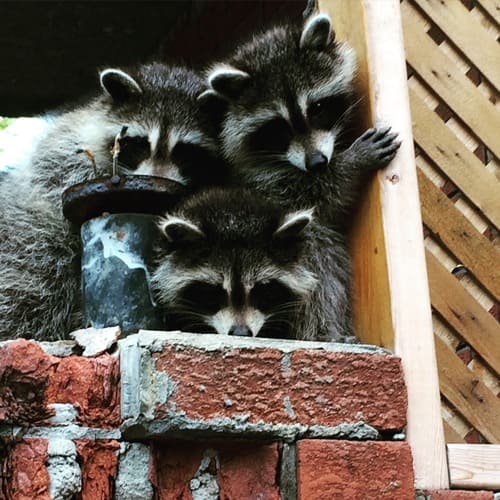
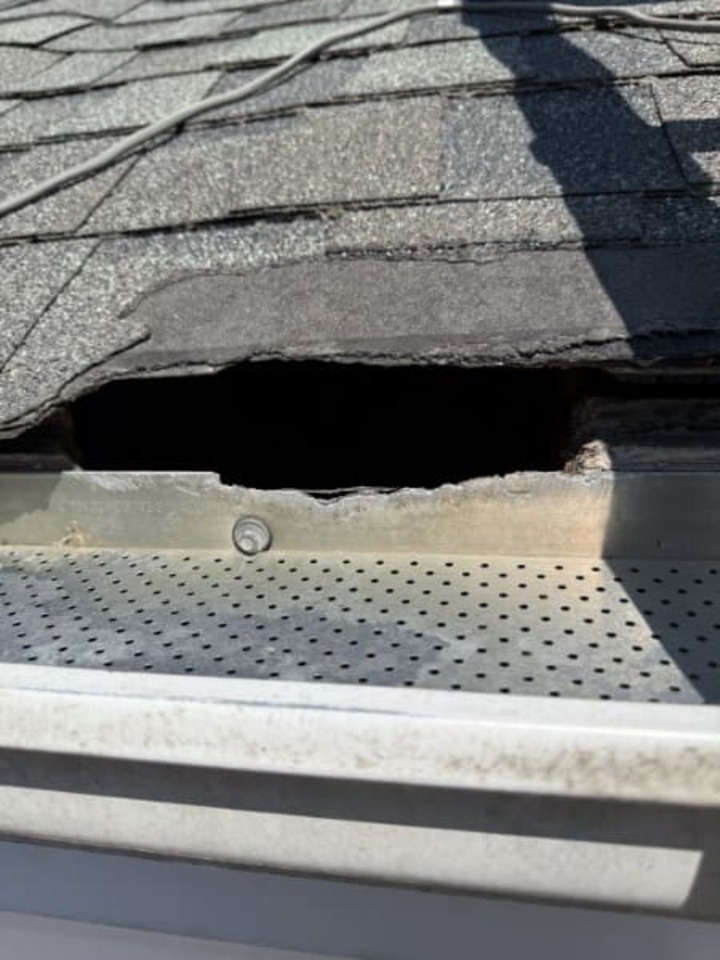
Raccoons are the most structurally damaging and legally complex wildlife problem in the GTA. A raccoon that has entered an attic or wall void is typically a female establishing a den, and Ontario’s animal welfare regulations require that any kits present be located, safely removed, and given the opportunity to reunite with the mother before exclusion work begins. This is not a regulatory technicality — it is a practical necessity. Seal a litter inside an attic and the mother will tear through roofing materials, soffit, and fascia board to re-access them, causing damage that frequently exceeds the cost of professional removal many times over. Raccoon roundworm (Baylisascaris procyonis) in attic droppings is a genuine human health hazard that requires specialist cleanup. And raccoons are intelligent, strong, and site-loyal — a female that has denned successfully in your attic will return the following year unless the entry point is permanently sealed with materials she cannot breach.
Live trapping a raccoon is legal in Ontario for property owners, but relocation requires releasing the animal within a specific distance and in appropriate habitat. Improper relocation can result in the animal dying of stress or exposure, or simply returning. Consumer exclusion materials — wood, foam, and basic hardware cloth — are insufficient for a determined raccoon. Most DIY exclusion attempts are breached within weeks. The most common outcome of a DIY raccoon removal attempt is a temporary absence followed by return, or a sealed litter that dies inside the attic.
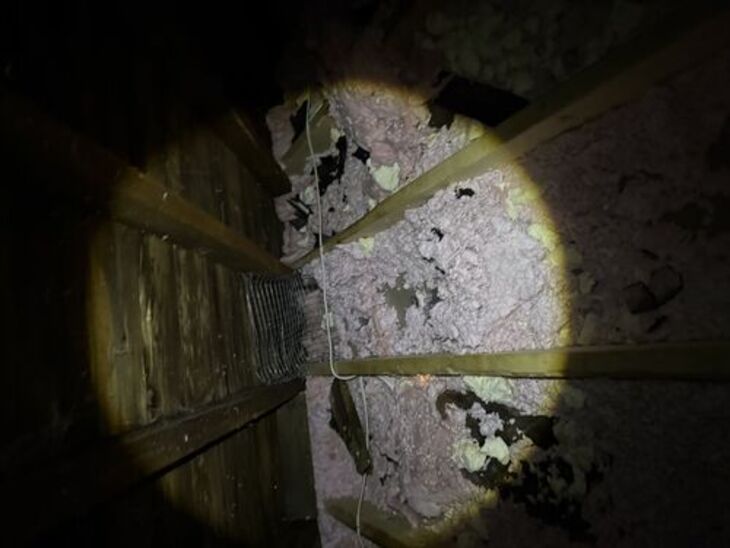
An unresolved raccoon infestation in an attic compounds rapidly. Insulation soaked in urine and feces must be professionally removed and replaced — a cost that grows with every week the animal remains. Raccoon roundworm eggs in droppings can survive in soil and insulation for years and represent a long-term health risk to anyone entering the attic space.
The one scenario where DIY squirrel management genuinely works is prevention: trimming branches to maintain at least three metres of clearance from any limb to the roofline, installing metal squirrel baffles on downpipes and feeder poles, and addressing small gaps on the roofline before a squirrel finds them. These are homeowner tasks. Once a squirrel is inside, the calculus changes.
The Exclusion Masters certification held by Guard More technicians reflects training specifically in the permanent exclusion methods that prevent re-entry: identifying the full scope of entry points, selecting the correct materials for each gap type, and installing them in a way that holds against an animal that will spend significant effort testing every edge. This is not a skill set that transfers from a YouTube video.
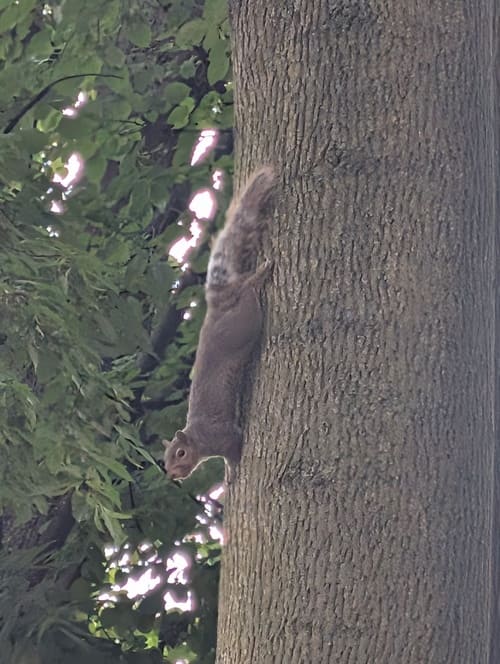
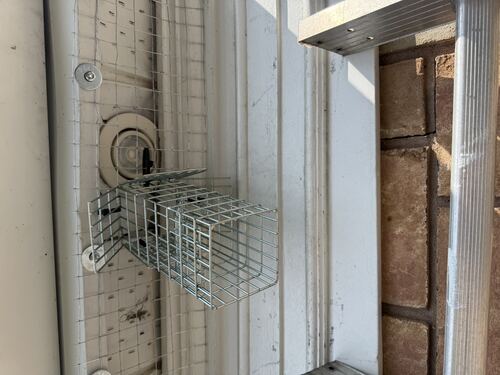
Squirrel removal from an attic is one of those situations where the apparent simplicity — it is a small animal, there is one obvious hole, how complicated can it be — leads many homeowners into a cycle of failed DIY attempts before eventually calling a professional anyway, having spent more on materials and time than the professional service would have cost. The complication is not the removal: it is the exclusion. Eastern Grey Squirrels maintain multiple access points to a nesting site and will simply use a secondary entry if the primary is sealed. A complete exclusion requires identifying and sealing every actual and potential entry point simultaneously, using materials the squirrel physically cannot gnaw through. That means heavy-gauge galvanized steel mesh and custom metal flashing, not foam, wood, or standard hardware cloth. A one-way exclusion door at the primary entry, combined with permanent sealing of all secondary points, followed by a monitoring period to confirm all animals have exited — that is the professional standard. It is a precise, multi-step process.
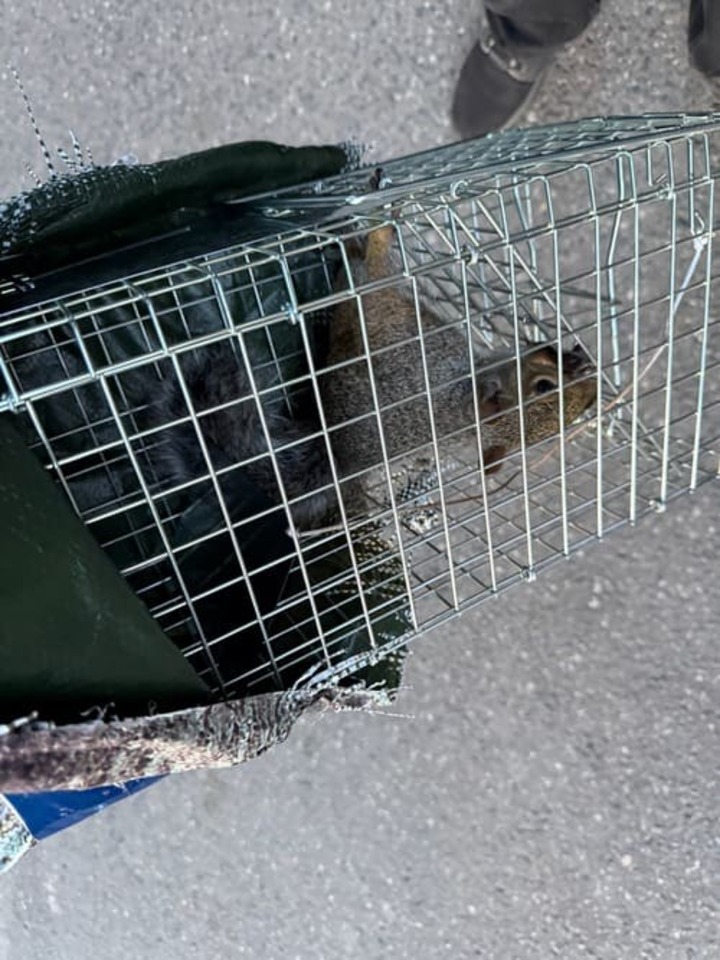
Consumer exclusion materials are the primary failure point in DIY squirrel control. Squirrels chew through expanding foam within hours, soft wood within days, and basic mesh within weeks. Many homeowners seal the primary entry only to find the squirrel re-entered through a gap they had not identified. Sealing a squirrel inside the attic creates a frantic and destructive attempt to exit that causes more damage than the original entry. One-way exclusion doors sold to consumers are often installed incorrectly, leaving the animal unable to exit rather than directing it out.
Squirrel incisors grow continuously and must be worn down through gnawing. Attic wiring is a primary target. A squirrel in residence in an attic for more than a few weeks has almost certainly gnawed something electrical, and the damage may not be immediately visible. The fire risk from chewed wiring discovered months later is the most serious consequence of a delayed squirrel removal.
Skunks are genuinely beneficial animals in most contexts — they consume significant quantities of grubs, beetles, and insects, making them natural lawn pest managers. A skunk foraging in the yard is not a problem that requires intervention. The line is denning proximity to the home, and particularly denning under attached structures where the odour risk is directly adjacent to living areas.
One additional skunk consideration specific to the GTA: striped skunks are one of the primary carriers of rabies in Ontario. While the risk of rabies transmission from a healthy skunk that sprays is low, a skunk that is behaving erratically, appears disoriented, is active during daylight hours, or approaches humans without apparent fear should be reported to Toronto Animal Services (416-338-8227) or the Ontario Ministry of Natural Resources’ animal helpline immediately. Do not approach it.
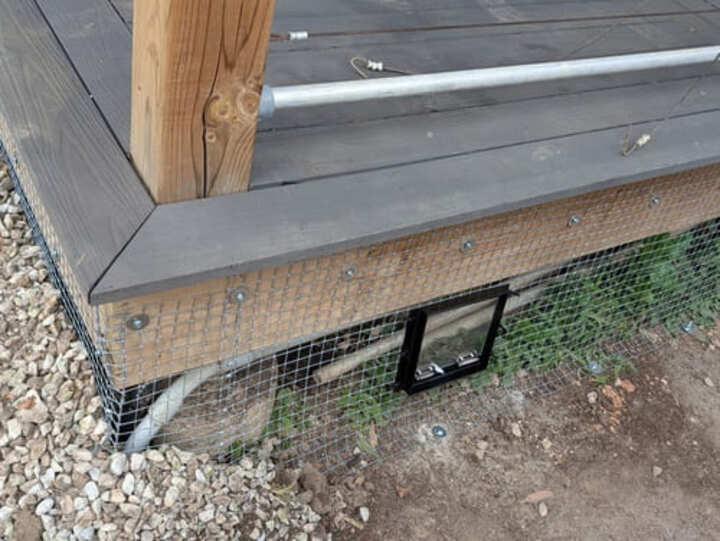
Skunks rarely damage structures directly and are generally less aggressive than raccoons. A skunk passing through a yard at night is a low-concern event that requires no intervention. The situation that warrants professional involvement is a skunk denning under a deck, shed, porch, or concrete stoop — a common GTA occurrence from late winter through fall. A denning skunk, particularly a female with kits, will spray if approached, cornered, or surprised. The spray contains sulphur-containing thiols that bond chemically to surfaces, fabrics, and pet fur with remarkable persistence. Standard cleaning products do not break these bonds. Beyond the odour, skunk dens under structures concentrate droppings in a single area, attract secondary pests, and create a recurring annual occupancy problem because skunks return to established dens. A professional excludes the skunk through a one-way door and seals the structure’s perimeter with buried hardware cloth that prevents re-entry and re-digging.
Attempting to trap or handle a skunk without experience almost always results in a spray event. Startling a skunk — even at a distance, with sudden movement or noise — can trigger defensive spraying. The spray range of a striped skunk is up to five metres with reasonable accuracy. Consumer traps that catch but do not cover the animal do not prevent spraying. Approaching a skunk den with a flashlight to see what is in there is the scenario that most frequently ends with an emergency call to a professional and an emergency order of peroxide, baking soda, and dish soap.
The primary risk of an unresolved skunk den under a deck or shed is not damage — it is repeated occupancy. A den that successfully housed a skunk through one season will attract the next skunk to investigate the area, and the one after that. Without sealing the access point and the perimeter, the structure becomes a recurring wildlife hotel. If a skunk dies under a structure — from natural causes, disease, or a vehicle strike nearby — the odour and secondary pest infestation from the decomposition process is far more severe than any spray event.
Opossums are exceptional tick consumers. A single opossum grooms itself obsessively and researchers at the Cary Institute of Ecosystem Studies found that opossums kill and eat approximately 96% of the ticks that attempt to feed on them — estimated at 5,000 or more ticks per opossum per season. In a GTA that is currently managing rising blacklegged tick populations and Lyme disease cases, an opossum passing through the yard is more of a public health asset than a pest. This does not mean welcoming them into your crawlspace, but it does mean that exclusion is the goal rather than removal and relocation.
The Virginia opossum is the only marsupial native to North America and one of the more misunderstood urban wildlife visitors in the GTA. They are slow-moving, non-aggressive, and have very limited ability to damage structures. An opossum under a deck or in a garage is a much lower-risk situation than a raccoon or skunk in the same location. That said, professional involvement is warranted when an opossum has established denning under a structure, particularly because opossums attract secondary pest issues (their nesting material hosts fleas, ticks, and mites) and because their docile appearance can lead homeowners to approach them in ways that cause stress to the animal and potential bites. Opossums rarely initiate contact but will hiss, bare teeth, and bite if cornered. A professional can exclude and seal the denning site cleanly.
An opossum in the yard is almost never worth intervention. They are transient animals that maintain very loose home ranges and rarely stay in one location for more than a few days unless actively denning. The classic “playing dead” (thanatosis) response to threats makes them appear injured or sick, leading many people to call for help unnecessarily. If the animal is upright and breathing, it is almost certainly fine. The DIY approach of “waiting it out” is often the correct one for yard encounters. For denning situations under structures, a one-way exclusion door and hardware cloth perimeter sealing are effective and can be DIY in straightforward cases — opossums lack the strength and jaw power of raccoons.
The primary opossum-specific risk in the GTA is disease not to humans but to horses: opossums are the only known reservoir for Equine Protozoal Myeloencephalitis (EPM), a serious neurological disease transmitted through opossum feces contaminating horse feed or water. For households near equestrian properties, stable areas, or hobby farms, preventing opossums from accessing feed storage is the key concern. For standard urban and suburban GTA households, the health risk from opossums is low compared to raccoons and skunks.
The honest answer to “is it worth it” is not just about whether you can physically remove the animal. It is about whether the situation is fully resolved afterward. A professional wildlife management service addresses three things simultaneously that DIY approaches almost never address together:
There is also an insurance and liability dimension worth noting. If a wildlife problem in your home — particularly one involving attic damage, wiring, or contamination — is later the subject of a home insurance claim, the documentation that a licensed professional completed the work and the exclusion is a meaningful part of that claim.
Professional help is not always necessary. There are wildlife situations where the right answer is patience, deterrence, or simple property management:
Do you have a pest problem that needs to be looked at right away? Contact Guard More Pest Control about your pests and we'll work on solving your pest problem within 24 hours.