

The Most Common Entry Points for Mice and Rats
A mouse needs a gap the width of a pencil. A rat needs one the width of a quarter. Here is where those gaps actually are on Greater Toronto Area homes.
Last updated:
November 2, 2026

A mouse needs a gap the width of a pencil. A rat needs one the width of a quarter. Here is where those gaps actually are on Greater Toronto Area homes.
Almost every rodent problem starts the same way: not with an invasion, but with an opening. Mice and rats do not materialize inside a wall. They walk in through a gap that has usually been there for years, unnoticed, doing no harm at all until the weather turns and something outside decides your basement looks better than the ravine behind your house.
That is why the single most useful thing a homeowner can learn is not which trap to buy. It is where the openings are. Fix the entry point(s) and the problem ends. Treat the rodents and leave the opening, and you are simply running a non-stop expensive turnstile of pest control service visits.
Trapping without exclusion treats the symptom. The gap is the disease.
Toronto's rodent pressure is not what it was a decade ago, and the City's own numbers show it. Rodent-related complaints to the City rose from 1,165 in 2015 to 2,523 in 2024 — more than double in nine years. A 2025 study tracking rat populations across sixteen cities over twelve years placed Toronto third for rate of increase.
In June 2025 the City Manager released Toronto's first coordinated Rat Response Plan, approved by committee that July and set to launch in 2026. It creates a cross-divisional response team, sets up an enforcement table so bylaw officers can act faster on building standards complaints, and requires contractors on city-led construction sites to prevent infestations from spreading to neighbouring properties. Private construction sites and Metrolinx projects receive advisory guidance.
The causes the City cites are the ones that matter for your house: warming temperatures, a growing urban core, and constant construction. Every excavation for a condo, a basement underpinning, a water main replacement or a transit tunnel displaces an established colony. Those rats do not leave the neighbourhood. They simply move next door, and then they test every house on the block for a way in.
Toronto's older housing stock does not help. Victorian and Edwardian semis in Cabbagetown, Leslieville, the Annex and Parkdale were built on rubble or fieldstone foundations with mortar that has been crumbling for a century. Post-war bungalows in Scarborough and Etobicoke have had forty years of utility retrofits drilled through their foundations, rarely sealed properly. Newer builds are tighter, but the trades that run gas, data and HVAC lines after the envelope is closed leave their own gaps.
People consistently overestimate how big a hole has to be. The limiting factor for a rodent is not its body — it is its skull. If the skull fits, the rest of the animal compresses and follows. A house mouse skull clears roughly 6 mm. A Norway rat, the species that dominates Toronto, clears roughly 13 mm.
It is also worth knowing that these numbers are a starting point, not a ceiling. Rodents gnaw. A mouse that finds a 4 mm gap with a soft edge — old mortar, weathered wood, vinyl, foam sealant — will widen it to 6 mm in a night. Norway rats can work through lead sheeting, aluminium flashing, unreinforced cinder block and most plastics. Treat any opening you can push a pencil into as a live entry point, and any soft material around a smaller opening as an opening in waiting.
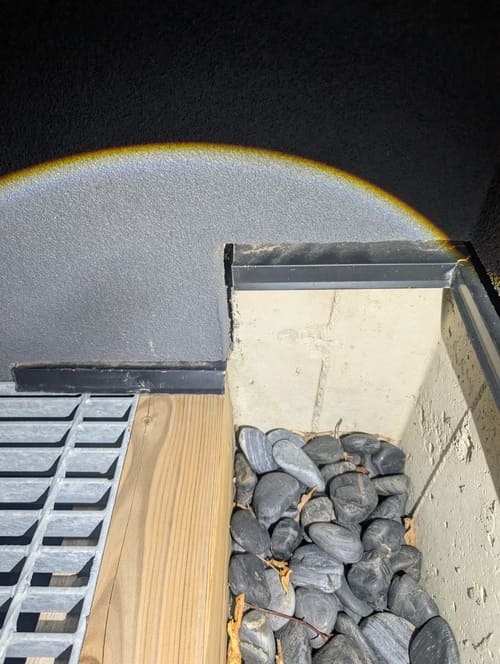
This is where the majority of rat entries and a large share of mouse entries happen. Work your way around the house slowly, at eye level with the foundation.
The single most common entry point on a GTA home. Every line that passes through your foundation was drilled oversized and, more often than not, sealed with nothing, with a smear of caulk, or with expanding foam that has since cracked or been chewed through. Check where these enter:
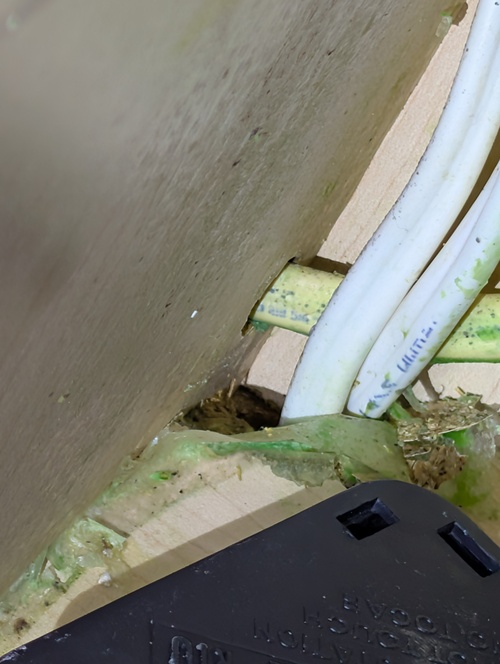
Settlement cracks that run vertically through a poured foundation, failed mortar in a block or rubble wall, and cracked cement walls all create entry points. Pay particular attention to the corners of the house and to the area directly below downspouts, where decades of water has worked on the concrete. On older Toronto homes, the joint where the original foundation meets a later addition is a reliable weak spot.

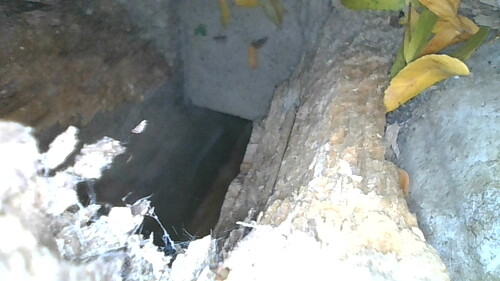
An attached garage is the most common staging area for rodents before they reach the living space, and the bottom corners of the overhead door are the usual way in. The rubber astragal at the base seals well across the flat middle span but almost never seals at the two corners, where the door meets the jamb. Crouch down and look for daylight. If you can see light, a rat can get in. From the garage, the interior door, the firewall drywall gaps and the ceiling joist bays lead everywhere else.
A door sweep is a wear item, not a permanent fixture. Brush sweeps compress, rubber sweeps tear, and thresholds settle. A 6 mm gap under a back door is an open invitation — and basement and side-entrance doors, used less often and inspected less often, are usually the worst offenders. The same applies to the gap beneath a sliding patio door track.
Window wells collect leaves and debris, hold moisture, and give a rodent a sheltered place to work undisturbed on a rotting sill or a failed frame seal. Hopper and awning windows in older basements frequently have gaps at the hinge side. Check the glazing, the frame-to-foundation joint, and the condition of any well cover.
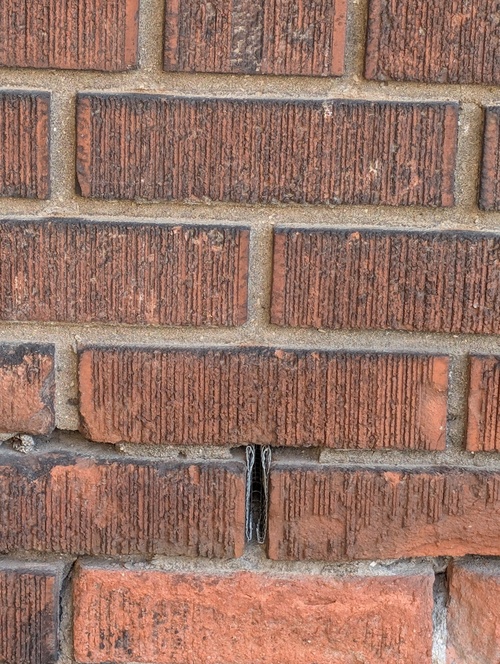
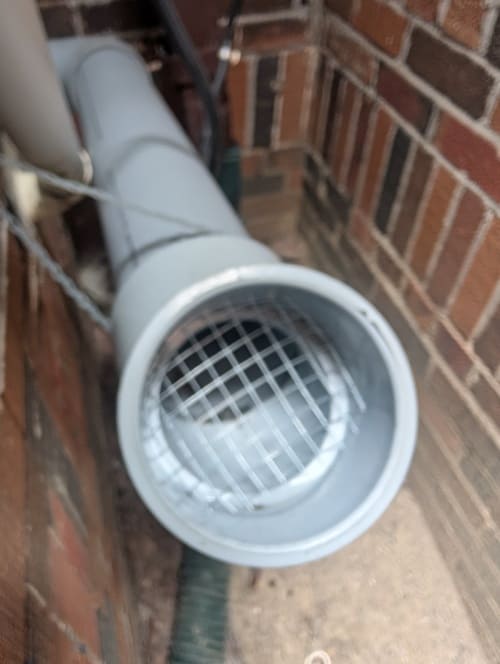
Weep holes in brick veneer are there to let moisture escape and must stay open — do not caulk them. But an open weep hole is also a mouse-sized door into the cavity behind your brick, and from there into the rim joist. The correct fix is a stainless steel weep hole cover that blocks rodents while preserving drainage.
This one surprises people. Norway rats are strong swimmers and routinely travel through municipal sewer lines, entering homes through a broken or disjointed lateral, an unsealed cleanout, a dried-out floor drain trap, or a sump pit with no lid. If you are seeing rats on upper floors with no evidence of an exterior entry point, the sewer is a serious candidate. A backwater valve, a properly sealed cleanout, and keeping floor drain traps primed with water all help.
If a major dig has started within a block or two of your home — a condo excavation, a sewer replacement, a transit project, a neighbour underpinning their basement — treat it as a warning.
Displaced rats typically test surrounding properties within days. This is the moment to seal, not the moment to wait and see whether you get a problem.
Most homeowners inspect the foundation and stop. That is a mistake. Roof rats and mice are excellent climbers, and even Norway rats will readily climb brick, downspouts, vines and rough-cast stucco. Mice can climb a vertical brick wall without difficulty. A large share of mouse infestations in GTA homes enter at the roofline, not the foundation.
The gap where the soffit meets the fascia board, and the point where a sloped roof edge meets a vertical wall, are the two most common upper-level entries. Aluminium soffit panels sag, pull loose at the J-channel, or were never properly fitted at the corners. Squirrels create these openings and mice inherit them — a squirrel hole from three winters ago is still a mouse highway today.
Plastic roof vents become brittle under UV exposure and crack. Turbine vents loosen at the base flashing. Plumbing vent stacks have a rubber boot that dries, splits and pulls away from the pipe, usually around the eight-to-twelve-year mark. Each of these is a direct opening into the attic.
An uncapped chimney is an open shaft into the house. Abandoned chimneys from decommissioned oil furnaces — common in older Toronto homes — are frequently left uncapped because nobody thinks about them anymore. Deteriorated crown mortar and gaps where the chimney passes through the roof line are equally common.
Rodents do not need to climb if they can walk. Any branch within roughly three metres of the roof is a bridge, and rats and mice both travel along hydro and telecom lines as a matter of routine. Trimming back overhanging limbs removes an entire access route and is one of the highest-value preventive measures available to a homeowner.
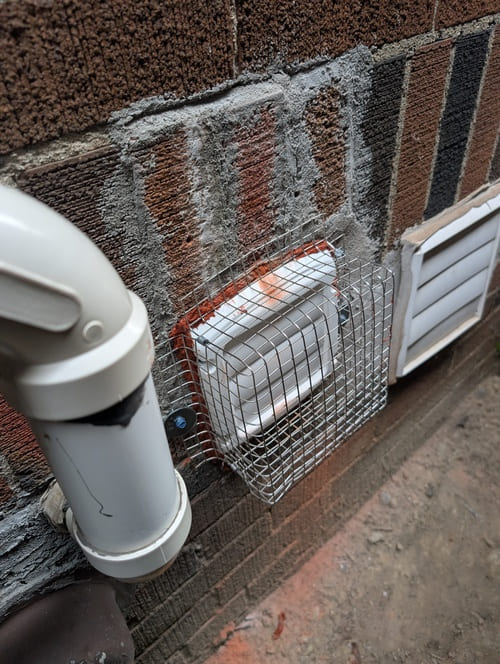
Exhaust vent flaps stick open with lint and grease, or break off entirely. The duct behind them runs straight into the building envelope. A damper that no longer closes is a permanently open door, and lint-packed ducting is attractive nesting material on top of that. Vent guards that allow airflow while excluding rodents solve this without creating a fire risk — but they must be cleaned, not simply installed and forgotten.
Exclusion works best when the property is also less attractive to begin with. Rodents follow food, water and shelter, and the yard is where that calculation gets decided:
A homeowner can reasonably handle door sweeps, vent guards, garage door corner seals and minor sealing work. It is worth calling a licensed pest management professional when:
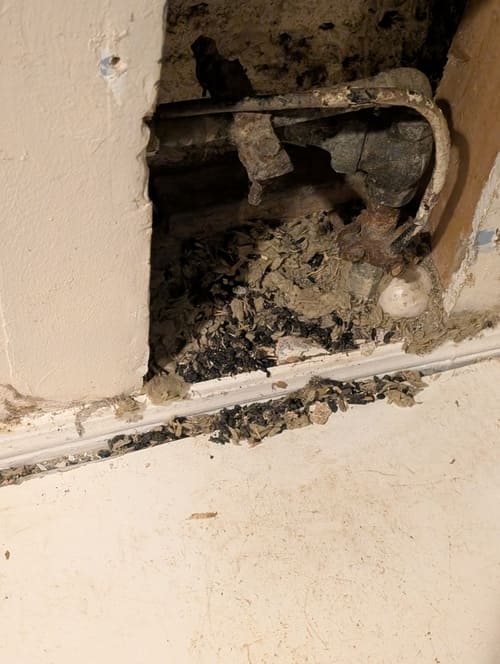
A professional inspection differs from a homeowner walkaround mainly in access and in pattern recognition. We get into attics, crawlspaces and roof areas safely, we read rub marks and droppings to work out where the animals are actually travelling, and we know which entry points are typical of your particular era and style of construction. Gnawed wiring is also a genuine fire hazard, and it is worth having someone identify it before it becomes an electrical problem rather than a pest one.
We inspect the full building envelope — foundation to roofline, interior and exterior — rather than treating only where activity was reported.
Entry points are sealed with rodent-resistant materials: copper mesh, galvanised hardware cloth, sheet metal and masonry repair, not foam alone.
Control and exclusion run together, so the existing population is dealt with while the building is closed up behind them.
Mice need 6 mm. Rats need 13 mm. Those gaps are most often at utility penetrations, foundation cracks, garage door corners, worn door sweeps, soffit junctions, roof vents and — for rats specifically — the sewer. Seal them with metal, not foam. Cut off the food and the cover in the yard at the same time. And if a dig has started down the street, do it now rather than after something moves in.
Rodent control that ends with trapping is a subscription. Rodent control that ends with exclusion is a repair.
Do you have a pest problem that needs to be looked at right away? Contact Guard More Pest Control about your pests and we'll work on solving your pest problem within 24 hours.