What Cockroaches Eat, What Attracts Them, and How to Keep Them Out
Understanding what draws cockroaches into a home and how specific conditions within your living environment will keep there
Last updated:
October 12, 2026
Cockroaches are among the most adaptable animals on earth, and nothing demonstrates that better than their diet. They are omnivorous scavengers with digestive systems capable of processing an extraordinary range of organic material, including a great deal that no other household pest would recognize as food at all.
This matters practically, because the standard advice to “keep your kitchen clean” dramatically understates what a cockroach considers a food source. A spotless kitchen with a dripping tap under the sink and a stack of cardboard boxes in the pantry is a viable cockroach habitat. Understanding what actually sustains them is the starting point for keeping them out.
A cockroach can survive roughly a month without food. It can survive about a week without water. In practice, moisture is usually the limiting factor in whether a cockroach population can establish in your home.
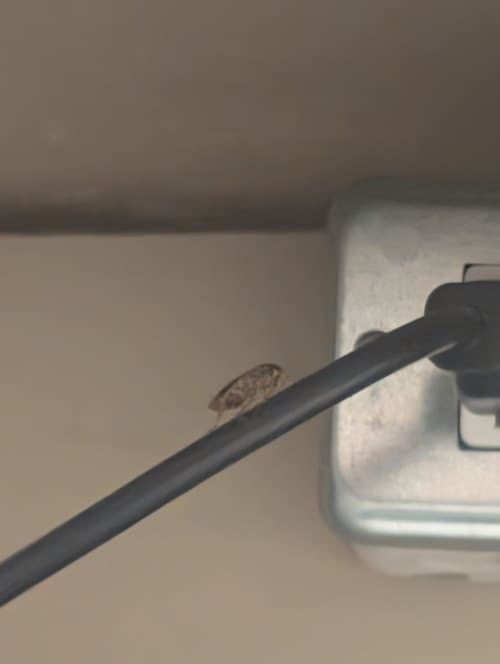
German Cockroach on electric wire
What cockroaches eat
Cockroaches are omnivorous detritivores. In the wild they consume decaying plant matter, fungi, and dead insects. But in the indoors setting, that same opportunistic flexibility translates into a diet that encompasses almost anything organic.
Preferred foods — what they seek out first
Starches and carbohydrates: bread, cereal, pasta, flour, rice, crumbs
Grease and fats: cooking oil residue, grease behind and under the stove, fryer splatter
Meat and protein: pet food, meat scraps, dairy residue
Decaying produce: fruit and vegetables past their prime, compost
Non-food materials they will readily consume
Cardboard and paper with particularly corrugated cardboard as the most common type, which also provides harbourage
Book bindings, wallpaper paste, and envelope glue which are comprised all starch-based adhesives
Soap residue and toothpaste
Hair, fingernail clippings, and shed human skin cells
Leather, fabric sizing, and natural fibre textiles
Dead insects, including other cockroaches
Grease film on surfaces that look visually clean
Behaviours that surprise most homeowners
Cannibalism — cockroaches consume dead and injured members of their own population
Coprophagy — they consume their own droppings and those of other roaches to recover nutrients and gut bacteria
Feeding on shed exoskeletons left behind after moulting
Surviving on the biofilm inside drains and the residue in a dishwasher seal
The practical implication of this range is that eliminating “food” in the conventional sense does not starve a cockroach population out. A kitchen with every crumb removed still offers cardboard storage boxes, grease film behind the stove, drain biofilm, and soap residue in the bathroom.
Sanitation absolutely matters but it is not a standalone solution.
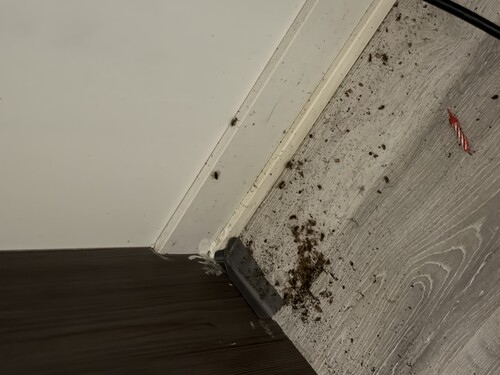
Cockroaches behind kitchen refridgerator
What attracts cockroaches into a home
Cockroaches need three things, and they will establish anywhere all three are present together.
1. Water and moisture — the single biggest attractant
Moisture is the one requirement cockroaches cannot compromise on for long. A German cockroach dies within about a week without access to water, which is why cockroach activity concentrates so reliably around kitchens and bathrooms regardless of where food is stored.
Leaking taps and supply lines: A slow drip under a kitchen or bathroom sink will sustain a cockroach population indefinitely. This is the single most common moisture source in established infestations.
Condensation: On cold water pipes, inside cabinets against exterior walls, and behind the refrigerator. In Toronto homes this becomes more pronounced during the heating season.
Standing water: Pet water bowls, sinks, plant saucers, dish racks, and the drip tray beneath a refrigerator. This is why residents have a dry rag beside their sinks to soak up the remaining water after every usage.
Damp basements and crawlspaces: High relative humidity creates viable habitat even without a direct water source.
Drains and drain biofilm: Floor drains, sink overflows, and the organic film lining drain pipes provide both moisture and food in the same location.
2. Food residue and organic debris
Grease accumulation: Behind and underneath the stove, in the range hood filter, and on the sides of cabinets adjacent to the cooking area. Grease is both a high-value food source and one of the least frequently cleaned residues in a kitchen.
Crumbs in inaccessible places: Under the refrigerator, beneath the dishwasher, in the gap between the counter and the stove, and inside the toe-kick space under cabinets.
Unsealed food storage: Cardboard boxes and paper bags offer no barrier. Cockroaches readily chew into cereal boxes, pasta packaging, and pet food bags.
Pet food left out: A bowl of dry pet food available overnight is a reliable food source. So is the residue in the bowl after it has been emptied.
Garbage and recycling: Uncovered bins, unrinsed recyclables, and compost containers. Recycling is frequently overlooked — an unrinsed jar or can in a bin provides both sugar residue and moisture.
Dirty dishes left overnight: A sink of dishes in standing water provides food, water, and shelter simultaneously.
3. Shelter and harbourage
Cockroaches are thigmotactic, meaning they seek physical contact on multiple sides of their body. They prefer tight, dark spaces where their back and belly both touch a surface. This drives where they establish:
Cardboard: Corrugated cardboard is close to ideal cockroach harbourage — dark, tight-fitting, edible, and often stored undisturbed for long periods. Cardboard storage boxes in a pantry or basement are among the most common harbourage sites in GTA homes.
Appliance motor housings: The warm cavities behind refrigerator compressors, inside dishwasher motor housings, and beneath microwaves provide heat, shelter, and proximity to food.
Cabinet hinges, corners, and voids: The hollow spaces inside cabinet frames and the gaps around hinges.
Cracks and crevices: Gaps where the countertop meets the wall, behind baseboards, around pipe penetrations, and in damaged grout or caulking.
Clutter: Accumulated paper, boxes, and stored items provide an enormous number of undisturbed harbourage sites and make treatment considerably harder.
How cockroaches get in
through a door. The two dominant introduction routes are:
Carried in on items: Grocery bags, cardboard delivery boxes, secondhand appliances and furniture, luggage, and moving boxes. A single cardboard box from an infested environment can introduce an ootheca containing 30 to 40 eggs.
Travel from adjacent units: In apartments, condos, and semi-detached or row housing, cockroaches move between units through shared wall voids, plumbing chases, electrical conduits, and ductwork. In multi-unit buildings this is the most common source, and it is the reason treating a single unit in isolation so frequently fails.
Secondary routes include gaps around exterior doors and windows, utility penetrations, drains connected to shared building plumbing, and — for American cockroaches specifically — sewer and floor drain access, particularly in older Toronto properties.
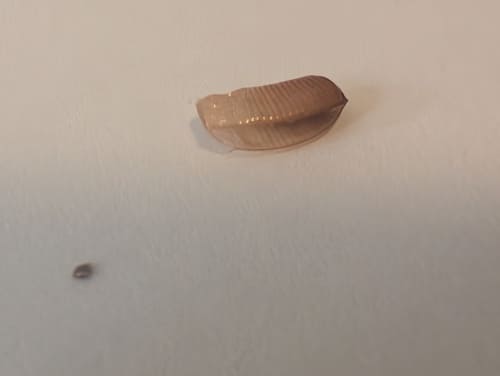
Ootheca Cockroach egg sack
How to prevent a cockroach infestation
Prevention works on the three requirements above: remove the water, remove the food, and remove the harbourage. Address all three and a home becomes a poor environment for cockroaches to establish in, even when individuals are occasionally introduced.
Eliminate moisture
Repair all leaking taps, supply lines, and shut-off valves — particularly under kitchen and bathroom sinks, which is where most established infestations centre.
Insulate cold water pipes in basements and utility areas to eliminate condensation.
Run a dehumidifier in basements and keep relative humidity below 50%.
Empty pet water bowls overnight and dry out dish racks and sink basins before bed.
Ensure bathroom exhaust fans vent properly and run them during and after showers.
Pour a small amount of water into unused floor drains periodically to maintain the trap seal, and clean drain biofilm with an enzymatic cleaner rather than bleach.
Remove food sources
Transfer all dry goods — cereal, flour, pasta, rice, sugar, pet food — into airtight glass or hard plastic containers with sealing lids.
Clean behind and underneath the stove, refrigerator, and dishwasher at least twice a year. This is where grease and crumb accumulation is heaviest and where most people never clean.
Degrease the range hood filter and the cabinet sides adjacent to the cooking surface regularly.
Wash dishes before bed rather than leaving them in the sink overnight.
Use kitchen bins with fitted lids and empty them nightly. Rinse all recyclables before placing them in the bin.
Pick up pet food bowls overnight and wash them rather than leaving residue.
Wipe down counters, stovetops, and the dining table after every meal, paying attention to the gap between the counter and the stove.
Remove harbourage and seal entry points
Replace cardboard storage boxes with sealed plastic bins, particularly in pantries, basements, and storage areas. This is one of the highest-impact single changes a homeowner can make.
Break down and remove delivery and grocery cardboard promptly rather than storing it.
Reduce clutter in kitchens, bathrooms, basements, and storage areas.
Caulk gaps where countertops meet walls, around pipe penetrations under sinks, behind toilets, and along damaged baseboards.
Repair or replace failing grout and caulking in bathrooms and kitchens.
Install door sweeps on exterior doors and repair damaged window screens.
In multi-unit buildings, seal gaps around plumbing and electrical penetrations on shared walls — these are the primary travel routes between units.
Inspect what you bring in
Unpack groceries and remove cardboard packaging immediately rather than storing boxes in the pantry.
Inspect secondhand appliances, furniture, and electronics carefully before bringing them indoors — particularly the motor housings and underside cavities of appliances.
Check moving boxes and any items coming from a multi-unit building or storage facility.
Early warning signs worth acting on
Catching an infestation early makes an enormous difference to the cost and complexity of resolving it. The signs to watch for:
Daytime sightings: Cockroaches are nocturnal and photophobic. Seeing one in daylight generally means the harbourage sites are overcrowded, which indicates an established population rather than a recent arrival. This is the single most urgent sign.
Droppings: Small dark specks resembling ground pepper or coffee grounds, found in cabinet corners, along baseboards, inside drawers, and behind appliances. Larger species leave cylindrical droppings with ridged sides.
A musty, oily odour: Established populations produce a distinctive smell, most noticeable in enclosed spaces like cabinets and around appliance motors.
Egg cases (oothecae): Small brown capsules roughly 8mm long, often found glued into tight protected spaces. Finding oothecae confirms active breeding, not just the presence of individuals.
Shed skins: Cockroaches moult multiple times as they mature, leaving pale discarded exoskeletons near harbourage sites.
Smear marks: In humid conditions, irregular dark smear marks along walls and horizontal surfaces where cockroaches travel repeatedly.
One prevention mistake worth avoiding
Over-the-counter aerosol sprays are the most common first response to a cockroach sighting and one of the least effective. They kill on contact but repel the surviving population deeper into wall voids and adjacent rooms, scattering an infestation that was previously contained. They also have no effect on egg cases, which are not killed by most contact insecticides — meaning a new generation hatches after the spray has dissipated.
Worse, spraying actively undermines the treatment that does work. Professional cockroach control relies on slow-acting gel baits that roaches consume and carry back to harbourage areas, where the active ingredient spreads through the population. Residual spray on or near bait placements repels cockroaches away from the bait and renders it ineffective. If you have sprayed recently and then call a professional, tell them — it changes the treatment approach.
If you are already seeing cockroaches
Prevention keeps a home from becoming a viable habitat. Once a population is established — particularly if you are seeing daytime activity or finding egg cases — sanitation and sealing alone will not eliminate it. Guard More Pest Control provides free cockroach quote for landlords, condo owners, homeowners, tenants, and businesses across Toronto.
If you find our content useful, please add guardmorepests.com as a preferred source on Google.
Keep Your Home/Business Pest-Free Today
Do you have a pest problem that needs to be looked at right away? Contact Guard More Pest Control about your pests and we'll work on solving your pest problem within 24 hours.
.png)