.png)

What's the difference: Rat vs Mouse
Last updated:
September 25, 2026

Rats and mice are both rodents, but they are not the same pest.
They differ in size, appearance, droppings, behaviour, nesting habits and the types of signs they leave behind.
Knowing whether you have rats or mice matters because the inspection and control strategy can be different.
The simplest distinction is:
But size alone is not always enough to identify the problem.
Here is how to tell the difference between a rat and a mouse.
House mice are small rodents with relatively slender bodies.
Common features include:
Because mice are small, they can move through surprisingly tight gaps around buildings.
They may enter around utility penetrations, doors, foundations, garages and other structural openings.
Once inside, mice often remain close to areas where they can find food, water and shelter.
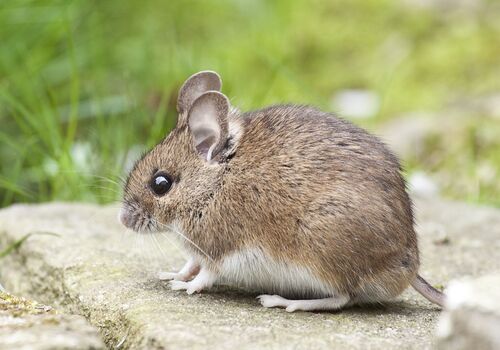
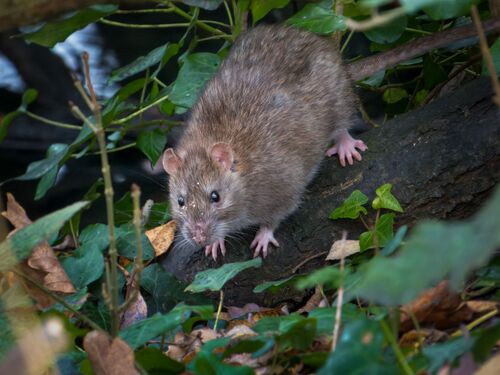
Rats are much larger and heavier than mice.
Common characteristics include:
In the Toronto area, the rodent people most commonly associate with urban rat problems is the Norway rat.
Norway rats frequently spend time at ground level and may create burrows around properties.
They can also enter basements, crawlspaces, garages and other parts of buildings when suitable openings are available.
Droppings are often one of the easiest clues when trying to distinguish rats from mice.
Mouse droppings are relatively small and may appear around:
They are usually much smaller than rat droppings.

Rat droppings are noticeably larger and heavier.
They may be found around:
The size and shape of droppings can provide useful identification clues, but they should be considered alongside other evidence.
Rats are substantially larger than mice.
An adult rat can be several times heavier than a typical house mouse.
This difference also affects the evidence they leave behind.
Rat activity may produce:
Mouse signs can be much smaller and easier to overlook.
One of the biggest differences between mice and rats is the size of opening they can use.
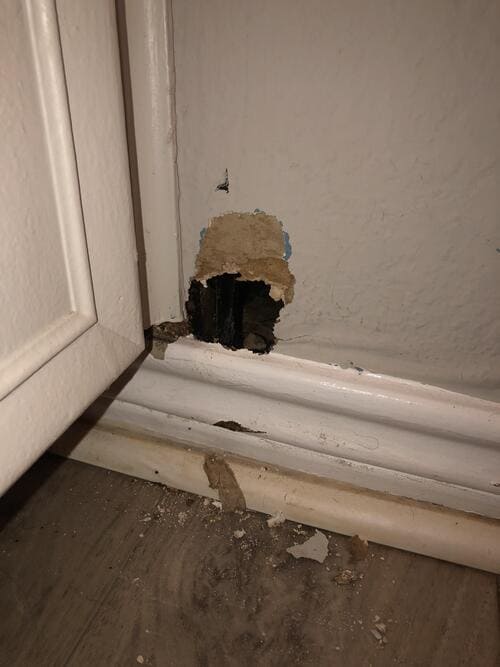
Mice can enter through very small gaps.
Common mouse entry areas include:
Rats generally require larger openings, although they are still capable of exploiting surprisingly small structural weaknesses.
Exterior inspection is important because treating rodents inside the property without addressing how they entered can allow the problem to continue.
Mice and rats also behave differently.
Mice frequently investigate new objects placed in their environment.
This can make trapping strategies different from those used for rats.
They also tend to travel relatively close to walls and other protected routes.
Rats often show greater caution around unfamiliar objects.
A newly placed trap or station may not receive immediate activity.
This behaviour is one reason proper placement and monitoring matter when dealing with rat infestations.
Mice often nest close to food and shelter.
Indoor nesting locations can include:
They may use materials such as paper, fabric and insulation to create nesting areas.
Rats may live both inside and outside buildings.
Norway rats commonly create burrows near:
They may then enter nearby buildings to access food, warmth or shelter.
Indoor activity can occur in basements, wall cavities, garages and other protected spaces.
Both rats and mice can create scratching or movement sounds inside walls and ceilings.
Mouse noises may sound like:
Rat activity can sometimes sound heavier because the animals are larger.
However, noise alone is not a reliable way to identify the rodent.
Squirrels, raccoons and other wildlife can also produce sounds inside walls, ceilings and attics.
The timing and location of the activity can provide additional clues.
Both rats and mice can cause property problems.
Rodents naturally gnaw because their incisors continually grow.
Potential signs of activity include:
Because rats are larger, their gnawing and physical damage can be more substantial.
However, a large mouse infestation can still create significant contamination and property damage.
It is possible for both rats and mice to occur around the same property.
However, they may use different areas and resources.
Finding small droppings in a kitchen does not necessarily mean that larger burrows outside are caused by the same animal.
A professional inspection can help determine whether one or multiple rodent species are active.
Both rats and mice can contaminate areas where they travel.
Rodents may encounter garbage, sewage, contaminated materials and other unsanitary environments before moving through kitchens, storage spaces and food-preparation areas.
The practical issue is not deciding which rodent is "worse".
Both should be dealt with if they are active inside a building.
The correct response is to:
Although some principles overlap, professional rodent control should account for the species involved.
Mouse control may involve:
Rat control may involve:
Simply using the same equipment and placement for every rodent problem is not an ideal strategy.
Look at several pieces of evidence together.
Small droppings usually point toward mice.
Larger droppings may indicate rats.
Very small openings are more likely to be used by mice.
Larger openings may be used by rats.
Rat tracks are larger than Mouse tracks.
Larger, heavier gnawing can indicate rat activity.
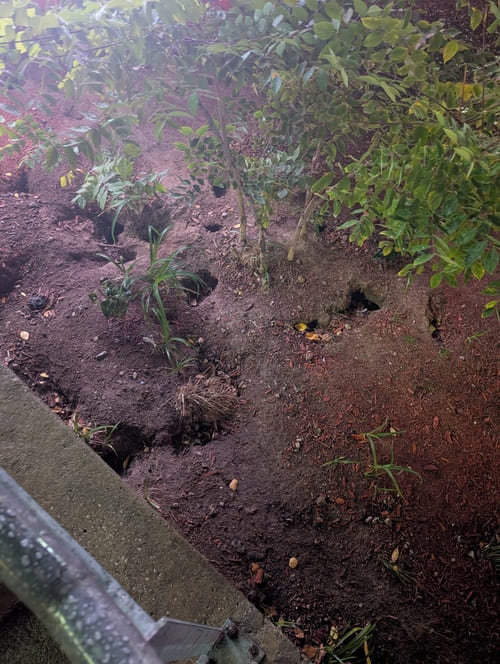
Exterior burrows around foundations, decks or landscaping are commonly associated with Norway rats.
If you actually see the animal, body size, head shape, ears and tail can make identification much easier.
Toronto and the GTA contain a wide range of property types, from detached and semi-detached houses to condos, apartments and commercial buildings.
Rodent pressure can vary significantly depending on:
This means two neighbouring buildings can have very different rodent problems.
A proper inspection should focus on the individual property rather than assuming every mouse or rat infestation has the same cause.
Traps should be appropriately sized for the target rodent.
A mouse trap is designed for a much smaller animal.
Rat traps are larger and built for the size and strength of rats.
Correct trap placement is just as important as selecting the correct equipment.
If rodents are actively using an opening, sealing it without considering where the animals are located can potentially trap them inside the structure.
Rodent control and exclusion should be coordinated.
A better sequence is:
inspect → identify → control → monitor → exclude
The exact order can vary depending on the property.
Both rodents can reproduce quickly under favourable conditions.
That is why small rodent problems should not be ignored.
The practical takeaway is the same regardless of species:
If you are finding repeated droppings, hearing activity or seeing rodents, early inspection and control is easier than waiting until activity becomes more established.
Mice and rats are different animals.
A small mouse does not grow into a rat.
Rat droppings are considerably larger than mouse droppings.
Dropping size is one of the most useful signs for distinguishing between the two.
Both animals are adaptable and capable of learning.
For pest-control purposes, the more important distinction is that rats are often more cautious around new objects, while mice may investigate unfamiliar objects more readily.
Both can create scratching and movement noises, although rats may sound heavier because of their larger size.
Noise alone should not be used for identification.
Mice and rats are separate types of rodents.
Mice can use much smaller openings because of their smaller body size.
Difficulty depends on the property, infestation size, food availability, entry points and surrounding conditions.
Either can become difficult to control if the building continues allowing rodents to enter.
If you are seeing fresh droppings repeatedly, inspect the surrounding area for additional activity and consider professional rodent control.
If you are finding droppings, hearing scratching inside walls or seeing rodents around your property, correct identification is the first step.
Guard More Pest Control provides professional mouse and rat control throughout Toronto, Scarborough and the Greater Toronto Area.
We inspect the property, identify the rodent activity, treat the active infestation and assess potential entry points.
Do you have a pest problem that needs to be looked at right away? Contact Guard More Pest Control about your pests and we'll work on solving your pest problem within 24 hours.