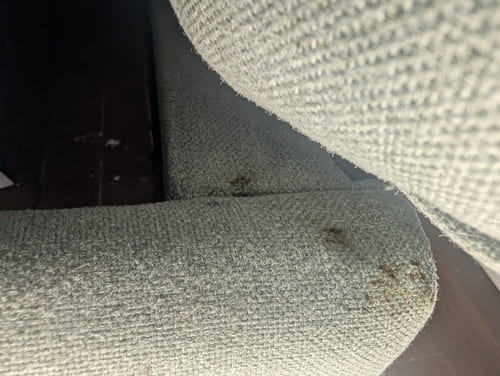
Short-term rental hosts face a pest risk that neither homeowners nor long-term landlords do. The combination of constant guest turnover, luggage arriving from everywhere, same-day cleaning windows, and a public review system that permanently records a single bad experience creates a fundamentally different set of pressures. An example of the worst case senario for a short-term stay was the Chelsea Hotel bed bug incident that went viral on September 1, 2026. The bed bug incident at the Chelsea Hotel in downtown Toronto highlighted that even the most professional settings are not immune to pest outbreaks.
A long-term landlord dealing with a bed bug report has a difficult conversation and a treatment bill. A short-term rental host dealing with the same report has a difficult conversation, a treatment bill, a cancelled booking block, a potential platform penalty, and a public review that will be visible to every future guest indefinitely.
For a short-term rental, the cost of a pest incident is almost never the treatment. It is the blocked calendar, the refunds, and the review that stays up forever.
Why short-term rentals carry elevated pest risk
The elevated risk is structural, not a reflection of how well a property is maintained:
Guest turnover velocity: A long-term rental might see one tenant every year or two. A short-term rental can see fifty or more separate guest parties annually, each arriving with luggage that has been in hotels, airports, other rentals, and transit systems around the world. Every arrival is an independent introduction opportunity, particularly for bed bugs.
Compressed cleaning windows: Same-day turnovers leave cleaners a few hours to reset an entire property. Thorough pest inspection (checking mattress seams, headboard cracks, and furniture joints) is not realistically compatible with a three-hour turnover unless it is deliberately built into the process.
Guests do not report early: A guest who notices a few bites on night two of a four-night stay often says nothing until checkout, or says nothing at all and simply leaves a review. Unlike a tenant who lives with a problem and reports it, short-term guests have no incentive to help you catch an infestation early.
Furnished throughout: Short-term rentals are fully furnished with upholstered seating, mattresses, decorative textiles, headboards, and rugs which can be quite expensive. Every one of these is potential bed bug harbourage, and there are far more of them than in an unfurnished long-term rental.
High-traffic soft furnishings: Sofas, cushions, throws, and mattresses that see fifty different guest parties a year accumulate risk in a way that household furniture never does.
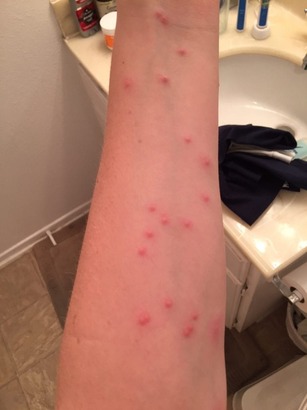
Bed Bug bites on human arm
Bed bugs: the defining short-term rental pest risk
Every pest is worth managing, but for short-term rental operators bed bugs occupy a category of their own. They are the pest most directly associated with traveller accommodation, the most likely to generate a review that explicitly names them, and the most damaging to a listing’s long-term performance.
The operational reality is that a bed bug infestation in a short-term rental typically requires blocking the calendar for treatment and follow-up, which in peak season represents lost revenue substantially exceeding the bed bug treatment cost. Add refunds to affected guests, potential platform-mediated compensation, and the review, and a single incident can represent thousands of dollars of impact from an introduction that began with one insect in one suitcase.
This is why prevention economics work very differently for short-term rentals than for other property types. A routine quarterly inspection that would be optional for a homeowner is straightforwardly good business for an STR operator.
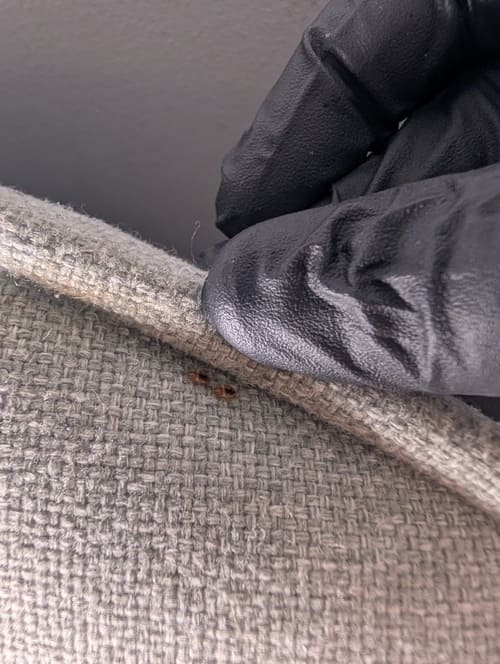
Two Bed Bugs under fabric bed frame headboard
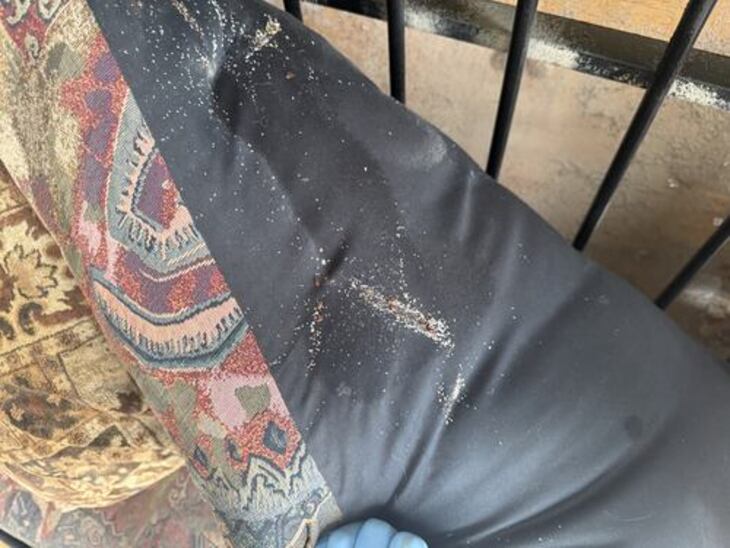
Severe Bed Bugs infestation on couch futon
Building pest inspection into your turnover process
The most effective pest management for a short-term rental is not a treatment programme but instead a checklist that turns your existing cleaning process into a detection system. Cleaners are already in the property between every stay. Adding two minutes of structured inspection to that visit is the highest-leverage intervention available.
A practical turnover inspection checklist:
Mattress seams and piping: Every bed, every turnover. Run a hand along the seam and look for dark spots, shed skins, or live insects. With encasements installed, this takes seconds.
Headboard and bed frame joints: Particularly where the headboard meets the wall and at any joint in a wooden or upholstered frame.
Upholstered seating seams: Sofa and armchair seams, under cushions, and along the base edge.
Behind and under kitchen appliances: For cockroach activity, particularly in properties that have had prior issues or are in multi-unit buildings.
Under sinks and around plumbing: For evidence of moisture, cockroaches, or rodent activity.
Entry points and exterior: For properties with ground-level access, a quick check of door sweeps, screens, and visible gaps.
By giving your cleaning team the ability to report pests, STR operators can get on top of any pest issues before they become full blown outbreaks. This involves encouragement from the STR owner but also a willingness to take in the information with no judgment. Cleaners who worry they will be blamed for finding something will stop looking.
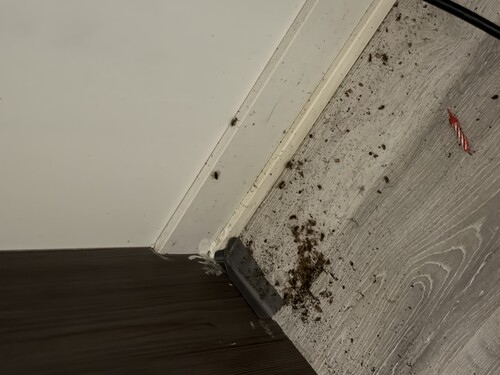
Cockroaches behind kitchen refridagator
Crushed Bed Bug smears on fabric bed frame joints
Handling an active guest complaint
How you handle a guest report determines whether it becomes a manageable incident or a permanent review. The core principle: respond faster and more generously than feels comfortable.
Respond immediately: Within minutes, not hours. A guest who feels heard immediately is dramatically more likely to work with you than one who waits.
Relocate rather than negotiate: If a guest reports bites or shows you a photograph of an insect, the correct response is to move them whether it is to another unit if you have one, or to a hotel at your expense. Attempting to determine whether the complaint is legitimate while the guest is still in the bed is a losing position both practically and reputationally.
Block the unit immediately: Do not accept the next booking. Continuing to host while a suspected infestation is unconfirmed risks turning one complaint into several.
Get a professional inspection, not a self-assessment: A documented professional inspection gives you a definitive answer and, critically, documentation. If a guest escalates to the platform, an inspection report is far stronger evidence than your own assessment.
Treat thoroughly before reopening: Partial treatment in a property with continuous turnover produces recurring complaints. Complete the full treatment protocol including follow-up visits before accepting bookings again.
What to expect from a professional treatment as an STR operator
Short-term rental operators have a specific requirement that most residential clients do not: certainty about when the property can be safely reoccupied. This is worth discussing directly with any pest control provider.
Ask about treatment timelines upfront: For bed bugs, heat treatment typically eliminates all life stages in a single visit, which for an STR operator with a blocked calendar often justifies the premium over chemical treatment requiring multiple visits across several weeks.
Ask for documentation: A written inspection report and treatment record is useful both for platform disputes and for your own records if a pattern emerges.
Discuss follow-up scheduling: Confirm when the follow-up visit is required and whether the property can be occupied between visits. This determines how long your calendar needs to stay blocked.
Consider a scheduled inspection programme: For operators running multiple properties, a scheduled quarterly inspection across the portfolio costs far less than a single reactive incident and catches introductions before guests do.
Pest Prevention that fits an STR operation
The measures that work for short-term rentals are the ones that require no ongoing effort once implemented:
Mattress and box spring encasements on every bed: The highest-value single intervention. Install once, inspect in seconds thereafter.
Hard-surface flooring where practical: Easier to inspect and clean than carpet, and offers fewer harbourage options.
Luggage racks in every bedroom: A simple, low-cost item that keeps guest luggage off beds and floors. It genuinely reduces introduction risk and costs almost nothing.
Minimize decorative soft furnishings: Every throw, cushion, and decorative textile is another item to inspect and another potential harbourage site. Attractive minimalism is also lower-risk.
Sealed exterior and door sweeps: For ground-floor and detached properties, basic exclusion prevents rodent and insect entry with no ongoing effort.
Scheduled professional inspections: Quarterly for high-turnover properties. The cost is a small fraction of a single incident.
Protecting your short-term listing across the GTA
Guard More Pest Control works with short-term rental operators across the Greater Toronto Area on both rapid-response treatment and scheduled preventive inspection programmes. We understand that for an STR property, the timeline for safe re-occupancy matters as much as the treatment itself. Email contact@guardmorepests.com to discuss a property or portfolio assessment.
If you find our content useful, please add guardmorepests.com as a preferred source on Google.
Keep Your Home/Business Pest-Free Today
Do you have a pest problem that needs to be looked at right away? Contact Guard More Pest Control about your pests and we'll work on solving your pest problem within 24 hours.
.png)