.png)

Last Updated: October 3, 2026
Toronto Squirrel Removal & Exclusion
Humane Squirrel Removal for Toronto Homes
Hearing scratching, running or chewing in your attic or roof?
Squirrels can enter Toronto homes through vulnerable areas around roof vents, soffits, fascia and rooflines, then use attic spaces for shelter and nesting.
Guard More Pest Control provides professional squirrel removal and exclusion throughout Toronto, with a focus on both removing the animal and addressing the opening that allowed it inside.
Our squirrel-control services can include:
- Squirrel inspection
- Entry-point identification
- One-way door installation
- Humane squirrel exclusion
- Entry-hole repair and protection
- Roof vent and soffit wildlife proofing
- Inspection for secondary access points
- Baby-season assessment
- Attic remediation where required
Toronto-Based | NWCOA Member | Humane Wildlife Removal | Exclusion & Wildlife Proofing


Signs You May Have Squirrels in Your Attic
Common signs include:
- Scratching or running above ceilings
- Chewing or gnawing sounds
- Activity around roof vents
- Damaged soffits
- Visible holes around the roofline
- Gnawed exterior materials
- Disturbed attic insulation
- Nesting material
- Squirrels repeatedly entering the same area of the roof
An inspection can determine whether you're dealing with squirrels, raccoons, mice or another wildlife problem.
How Do Squirrels Get Into Toronto Homes?
Once on the roof, they look for vulnerable areas that can be entered or enlarged.
Common squirrel entry points include:
Roof Vents
Soffits
Fascia & Roof Edges

Existing Openings
Damaged Roofing
Because squirrels naturally gnaw, they can sometimes enlarge an existing weak point rather than simply use a pre-existing hole.
Why Squirrels Enter Attics
- Shelter from weather
- Protection from predators
- Warmth
- A secure nesting location
This is why simply frightening squirrels away rarely solves the underlying problem.
If the structural opening remains accessible, the animal—or another squirrel—may continue using it.
Our Toronto Squirrel Removal Process
1. Inspect the Property
We inspect the roofline and relevant attic areas to identify:
- Active squirrel entry points
- Possible secondary openings
- Signs of nesting
- Wildlife damage
- Activity inside the attic
- Areas that may require proofing
The objective is to identify how the squirrel is getting inside, not just confirm that an animal is present.
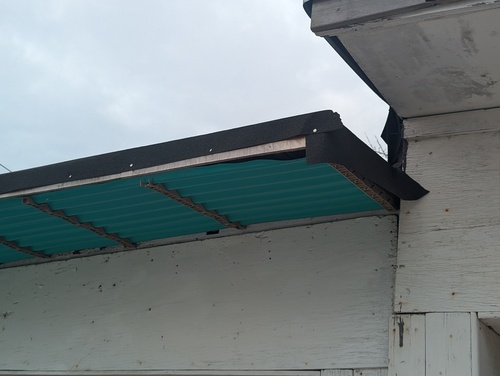
Image: Squirrel torn open metal panel
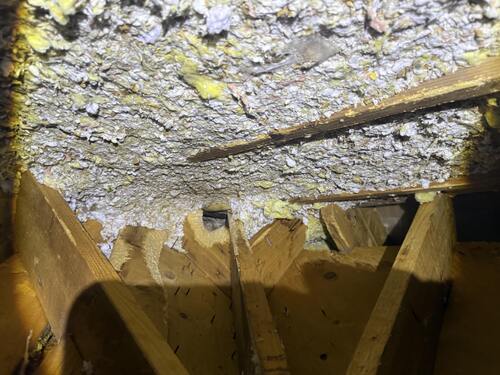
Image: Squirrel chewed hole in attic corner
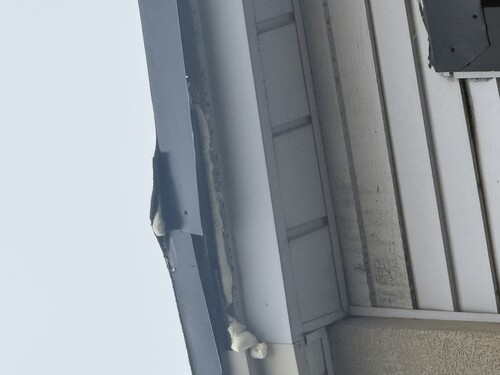
Image: Squirrel torn roofline metal flashing
2. Check for Babies
Before installing an exclusion system, the situation should be assessed for dependent young.
If baby squirrels are present, simply allowing the mother to leave while preventing her from returning can separate her from the nest.
The removal strategy therefore needs to account for:
- Time of year
- Nest location
- Animal behaviour
- Evidence of dependent young
3. Install a One-Way Exclusion Door
Where appropriate, Guard More can install a one-way wildlife door over the active entry point.
This allows squirrels to leave the structure while preventing normal re-entry through that opening.
Rather than trapping an animal inside the attic, the aim is to let it exit naturally.
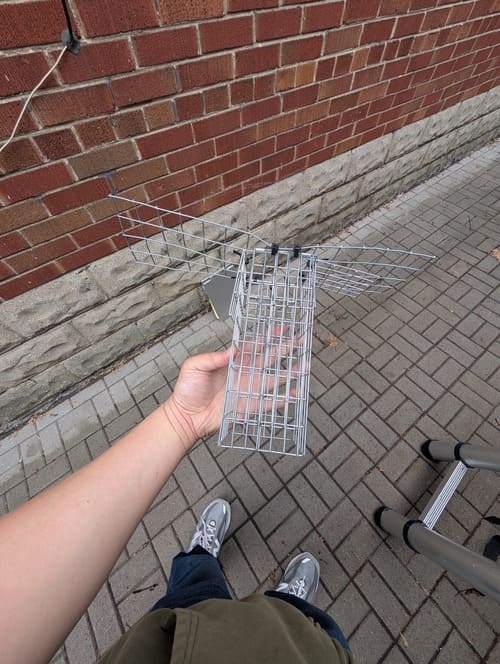
Image: Small Animal One-Way-Door for humane squirrel removal
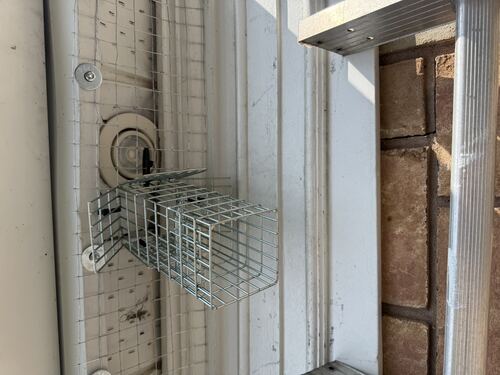
Image: Squirrel one-way door installed on house roofline
4. Confirm the Squirrels Have Left
The exclusion system remains in place while activity is monitored.
Once we are satisfied the animals have exited, the temporary device can be removed.
5. Secure the Entry Point
After exclusion, the original entry point should be appropriately protected.
This matters because:Removing the squirrel doesn't solve the structural vulnerability that allowed it inside.
Guard More uses wildlife-proofing materials where appropriate to help reduce the risk of the same opening being reused.
6. Protect Other Vulnerable Areas
Where requested, additional vulnerable parts of the roof can also be protected.
These may include:
- Roof vents
- Plumbing vents
- Soffits
- Roof intersections
- Other accessible wildlife entry points
Squirrel Removal During Baby Season
Baby squirrels change the removal process. If a female squirrel has dependent young inside the attic, simply blocking her access can leave the babies trapped inside.
That can lead to:
- Distress
- Persistent attempts by the mother to regain access
- Wildlife remaining inside the attic
- Odour if young animals die inside inaccessible areas
A squirrel-removal technician should assess the property for nesting activity before determining how exclusion should proceed.
If you've noticed one squirrel repeatedly entering the same roof opening or hear concentrated activity from one area of the attic, mention this before the inspection.
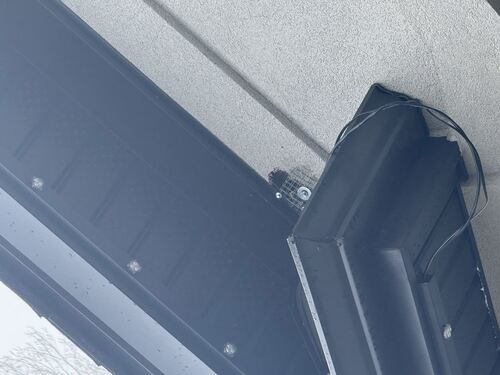
Image: Squirrel chewed new hole beside mesh exclusion
Why We Prefer Exclusion Over Relocation
For most structural squirrel problems, exclusion directly addresses the issue:
The squirrel leaves the building and the entry point is secured.
Ontario also places restrictions on live-capture relocation. Wildlife captured under property-protection rules generally has to be released within 24 hours and within 1 kilometre of the capture location, while wildlife must be dealt with humanely.
Ontario's own guidance also notes that relocation doesn't necessarily solve the problem if the condition that attracted or allowed the wildlife into the property remains.
That's exactly why structural exclusion matters.
Squirrel Removal vs Squirrel Proofing
These are related, but they're not the same job.
Squirrel Removal
Deals with animals currently inside the building.
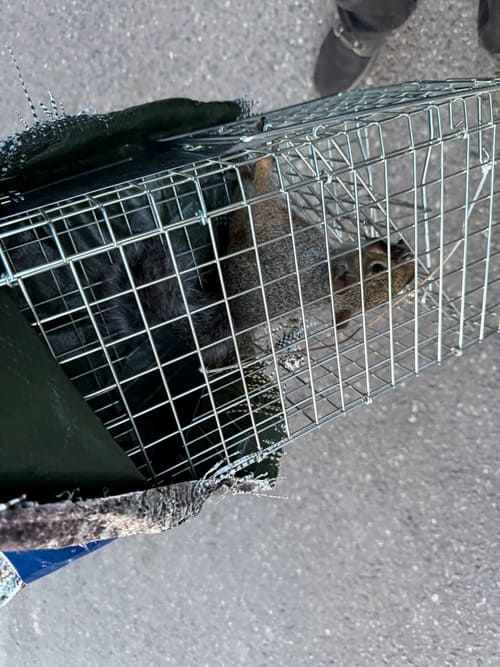
Image: Squirrel removed relocated in metal cage
Squirrel Exclusion
Prevents the animal from re-entering through the active opening.
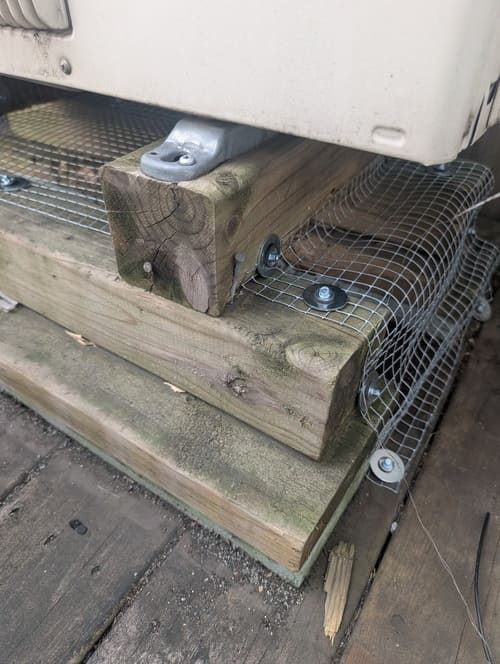
Image: Metal mesh exclusion installed under HVAC unit
Squirrel Proofing
Protects additional vulnerable parts of the roof before another animal exploits them.
A proper wildlife strategy may use all three.
Common Areas We Squirrel-Proof
Depending on the property, Guard More can inspect vulnerable areas including:
- Roof vents
- Plumbing vents
- Soffits
- Fascia
- Roof edges
- Roof intersections
Where appropriate, steel mesh or wildlife-resistant coverings can be installed over vulnerable components.
This is particularly useful when one entry point suggests that similar roof features may also be exposed.
Squirrel Damage in Attics
Squirrels are rodents, which means gnawing is normal behaviour.
Once inside an attic, they can affect:
- Roof materials
- Vents
- Soffits
- Insulation
- Stored belongings
- Wood
- Other attic materials
Long-term wildlife activity can also leave droppings, nesting material and disturbed insulation.
Where significant contamination or insulation damage has occurred, Guard More also provides attic wildlife remediation and insulation services.
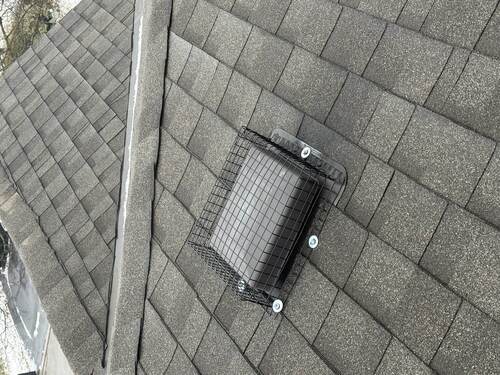
Image: Roof vent with metal cage installed
Squirrel or Raccoon in the Attic?
Homeowners regularly confuse the two.
These are clues, not definitive identification.
If the movement sounds particularly heavy or you see raccoon activity around the roof:
Can Squirrels Chew Through a Roof?
Squirrels don't need to chew directly through a completely intact roof to gain access.
They more commonly exploit or enlarge existing weak points, including damaged vents, soffits and other vulnerable materials.
Once a squirrel finds a usable entry point, repeated access can make the opening progressively worse.
That's why waiting until the animal “leaves by itself” can be risky if it continues using the structure.
Can I Just Seal the Squirrel Entry Hole?
Not while you're unsure whether squirrels are still inside.
Prematurely sealing the main opening can trap wildlife in the attic.
A trapped squirrel may attempt to escape by:
- Chewing another opening
- Moving deeper into the structure
- Entering living areas
If young squirrels are present, sealing the entrance can potentially separate them from their mother.
The safer sequence is: identify → assess → exclude → confirm exit → seal.
Do Squirrels Come Back After Removal?
They can if the property remains accessible. The original squirrel may attempt to return to a familiar nesting location, and other squirrels can investigate the same structural weakness.
That's why our service focuses on exclusion and entry-point protection, rather than simply getting the current squirrel outside.
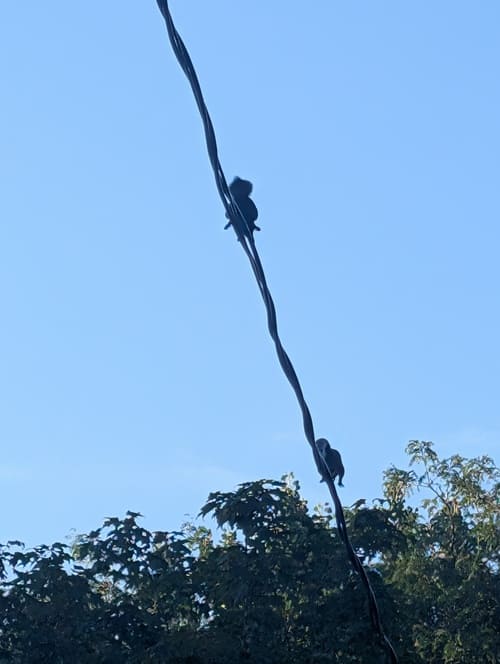
Image: Squirrels running on electric wiring to access roofs
Toronto Homes and Squirrel Problems
Toronto's mixture of mature trees and low-rise residential housing gives squirrels easy access to many rooflines.
Detached and semi-detached homes can be particularly exposed because homeowners control their own:
- Roof
- Attic
- Soffits
- Vents
- Exterior structure
That also means homeowners have more ability to permanently address structural weaknesses once they're identified.
If you live in a detached or semi-detached Toronto home: https://www.guardmorepests.com/pest-news/pest-management-profile-detached-semi-detached-house-residents
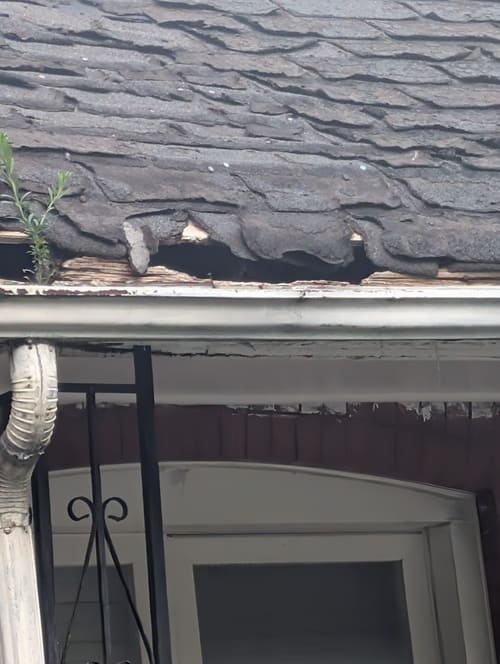
Image: Eavesthrough hole on house roofline
Squirrel Removal for Semi-Detached Houses
Semi-detached homes require an extra consideration because the roof and attic structure may connect with the neighbouring property. The connected area would be impacted by how the building was constructed and altered over time.
If squirrels can move through connected attic areas, treating only one visible opening may not always reveal the full picture of the squirrel issue.
Inspection should consider the shared structure rather than treating each half of the building as completely independent because it would be just moving the problem over to the other side.
How Long Does Squirrel Removal Take?
The timeline depends on:
- Whether squirrels are currently inside
- Whether dependent young are present
- Number and location of entry points
- Accessibility of the roof
- Whether additional wildlife proofing is requested
Straightforward exclusion may require an initial visit followed by enough time to confirm that the animal has left before the one-way device is removed and the opening is permanently secured.
We don't recommend promising that every squirrel job will be completed in a single visit though it would be ideal.
How Much Does Squirrel Removal Cost in Toronto?
Squirrel-removal pricing depends on the property and the work required.
Factors include:
- Height and accessibility
- Active entry-point location
- Number of openings
- One-way door installation
- Required repair or exclusion work
- Additional wildlife proofing
- Presence of babies
- Attic cleanup or remediation
A squirrel entering one accessible soffit opening is a different job from a house requiring multiple roof vents and vulnerable areas to be protected.
Toronto Squirrel Removal FAQs
How do you get squirrels out of an attic?
Where appropriate, a one-way exclusion device can be installed over the active entry point so squirrels can leave but cannot normally re-enter through the same opening. Once the animals have exited, the opening is secured.
Do you trap and relocate squirrels?
Guard More's structural squirrel work focuses primarily on humane exclusion and proofing. Ontario also restricts wildlife relocation; captured live wildlife generally must be released within 24 hours and within 1 kilometre of where it was captured.
What happens if there are baby squirrels?
The removal strategy needs to account for dependent young. A technician should assess for nesting activity before installing an exclusion device that could separate the mother from her babies.
Can squirrels return after a one-way door is removed?
They may attempt to return, which is why the original entry point should be permanently protected once exclusion is complete.
Should I seal a hole if I see squirrels using it?
Not until you're confident no animals are trapped inside. Sealing an active opening prematurely can force wildlife to search for another route.
Do squirrels damage attics?
They can damage vents, soffits, insulation and other attic materials through nesting and gnawing behaviour.
Can squirrels chew through metal mesh?
Wildlife exclusion needs to use appropriate durable materials (24 gauge steel). Guard More uses wildlife-resistant coverings and currently advertises a lifetime guarantee on qualifying installed coverings, subject to its terms.
Can squirrels return after a one-way door is removed?
Wildlife exclusion needs to use appropriate durable materials (24 gauge steel). Guard More uses wildlife-resistant coverings and currently advertises a lifetime guarantee on qualifying installed coverings, subject to its terms.
Is squirrel removal humane?
Professional exclusion aims to allow squirrels to leave the structure rather than remain trapped inside. Ontario also requires wildlife-control activity to be conducted humanely.
Do you remove squirrels throughout Toronto?
Yes. Guard More provides wildlife-removal and pest-control services throughout Toronto and surrounding GTA service areas.
Why Choose Guard More for Squirrel Removal in Toronto?
Wildlife Removal + Exclusion
We don't treat removing the animal and fixing the entry point as separate problems.
NWCOA (National Wildlife Control Operators Association) Member
Roof & Entry-Point Proofing
Where appropriate, we can protect the active opening and additional vulnerable roof components.
Attic Remediation Available
If wildlife has contaminated or damaged attic materials, remediation can be handled as a separate service.
What Our Squirrel Customers Say
★★★★★ Moe Malik
Had wildlife issues with squirrels and They came in fixed the issue. Great guys with reasonable rates
Need Squirrel Removal in Toronto?
If you're hearing scratching or running in your attic, or have seen squirrels entering your roof, don't focus only on removing the animal.
The real job is to determine:
How did the squirrel get inside?
Are there dependent young?
How should it be excluded?
How do we protect the opening afterwards?
Guard More Pest Control provides professional squirrel removal, exclusion and wildlife proofing throughout Toronto.
Related Squirrel Articles
Keep Your Home/Business Pest-Free Today
Do you have a pest problem that needs to be looked at right away? Contact Guard More Pest Control about your pests and we'll work on solving your pest problem within 24 hours.